 Water damage drying
 Fire & smoke cleanup
 Mold remediation
 Storm response
 Sewage cleanup
 Reconstruction
Free visual inspection and a written scope of work before any mitigation begins - photos, moisture readings, and drying logs go in your claim file
The scope we write is the scope we bill. Anything new gets shown to you, in writing, before we touch it.
Get your free estimateFast, Reliable Mold Remediation Across Costa Mesa
Mold remediation in Costa Mesa costs $1,500 to $6,500 for a typical residential job, with crawl space treatments running $800 to $2,400 and full containment projects for black mold starting around $3,000. Most jobs we handle in Costa Mesa are scoped, documented, and underway within 24 to 48 hours of the first call. If you’re seeing staining on drywall, smelling something earthy near a garage or laundry wall, or you’ve had a water event in the past 90 days, call us at (855) 855-9631. We know exactly where mold hides in Costa Mesa homes, and more importantly, why it starts there in the first place.
Why Guild Water Damage Is Costa Mesa’s Preferred Mold Remediation Company
Costa Mesa throws two very different problems at restoration crews depending on which side of the 405 you’re on. The westside near the bluffs fights salt air, and the eastside around South Coast Metro fights slab leaks and flat-roof ponding. Both create mold, but they create it through different entry points and at different rates. A crew that treats every Costa Mesa mold job the same misses half the problem. We don’t.
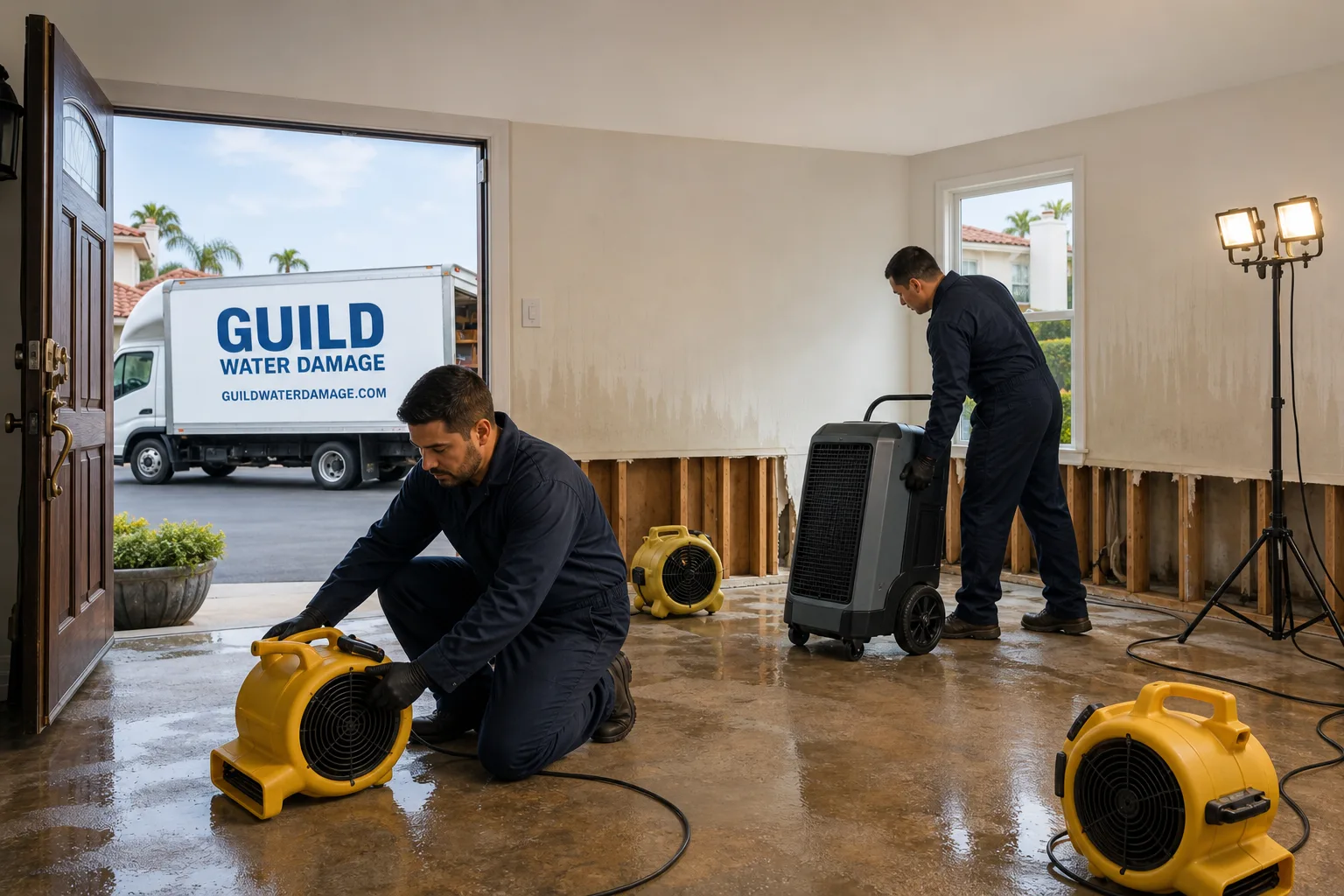
Our technicians hold IICRC certification, the restoration industry’s most recognized technical credentialing body, and Guild Water Damage maintains RIA membership and IFA affiliation. That combination matters in a city where mold is often misdiagnosed as a simple surface cleaning issue. Noel Hargrove, our owner, built the company’s operating standard on documented, certification-backed protocols, not technician intuition. Every mold job in Costa Mesa gets photo documentation, moisture mapping, and a written scope before any work begins. We also run professional-grade Dri-Eaz and XPOWER equipment rather than rental units, because drying a 1960s Costa Mesa tract home to true pre-loss condition takes equipment that moves air properly, not just loudly.
For more detail on our full process, visit our Mold Remediation hub page. If you want specific local context on how we operate in the area, see Mold Remediation in Costa Mesa.
Restoration work we handle
Mold Remediation Services in Costa Mesa
Mold Remediation Services in Costa Mesa start with a moisture assessment that treats the garage-door threshold and westside salt air as primary suspects, not afterthoughts. When a Costa Mesa homeowner calls us with visible mold or a lingering musty smell, the job involves source identification, containment of the affected area, air filtration, removal of colonized materials, antimicrobial treatment of remaining surfaces, and structural drying to pre-loss moisture levels. Most full-scope residential remediations in Costa Mesa run from $2,900 to $6,500 depending on how far the growth has traveled, while localized treatments on a single wall or ceiling typically land between $1,500 and $2,800. The city’s housing stock from the 1950s through 70s means popcorn-era drywall and original framing are common, and that material holds water differently than modern gypsum board, so we dry longer and verify more aggressively than standard timelines suggest.
Containment and Air Filtration
Mold spores move with air currents, and Costa Mesa’s westside sees steady marine-layer airflow that pushes spores from a colonized garage into living space through interior door gaps. We isolate the work area with physical containment barriers, run HEPA-filtered air scrubbers during the entire removal process, and keep the home’s HVAC system from recirculating contaminated air. This step is the difference between removing visible mold and resetting the entire house.
Surface Treatment and Material Removal
Drywall, insulation, and cardboard that have absorbed enough moisture to support fungal growth get removed, not painted over or bleached. After removal, we apply antimicrobial treatment to surrounding framing and surfaces, then verify that moisture readings match pre-loss benchmarks for the specific building materials involved. On a Costa Mesa garage where salt corrosion was the root cause, this step means treating the lower drywall zone where humid marine air condensed over months, not just the studs behind it.
What happens when you call
- 1
A real person answersNo phone trees — you reach a local pro.
- 2
You get an upfront price rangeHonest numbers before anyone is dispatched.
- 3
A background-checked tech heads outLicensed & insured, dispatched right away.
- 4
You approve before work beginsNothing starts until you say go.
Professional Mold Removal in Costa Mesa
Professional Mold Removal in Costa Mesa is the only approach that addresses the cause rather than the symptom, especially when the cause is storm-driven moisture or salt-air corrosion pushing humidity into building cavities. When a Costa Mesa property manager calls about a unit with visible mold, the job involves finding every colonized surface, removing it under containment, treating adjacent materials, and drying the structure to a standard that supports long-term occupancy. Full professional mold removal in Costa Mesa typically costs $1,800 to $5,800 for residential spaces, with commercial interiors in 92626 running higher because demising walls and shared plenums require more containment and longer equipment runtime. The work always starts with a scope document, because hidden mold behind a slab crack or flat-roof penetration needs a plan that gets written down before any material comes out.
Source Identification and Moisture Mapping
We don’t treat mold we can’t trace. Moisture mapping across floors, walls, and ceilings tells us where water is entering and how far it has traveled through porous material. In a Costa Mesa eastside commercial building, that often means tracing category 2 water from a flat-roof ponding event down through slab cracks and into the lower chord of a demising wall. The mapping step is fast, but it’s not skippable.
Post-Remediation Verification
After material removal, antimicrobial treatment, and structural drying, we take follow-up moisture readings and air samples to confirm the space is back to a stable, dry condition. If we’re setting a post-remediation verification on a 92627 garage where we also swapped corroded door hardware for galvanized springs and stainless hinges, we verify both the interior air quality and the threshold seal that caused the problem in the first place. A mold removal that leaves the original moisture source active is a removal that gets redone.
Trusted Brands We Service in Costa Mesa
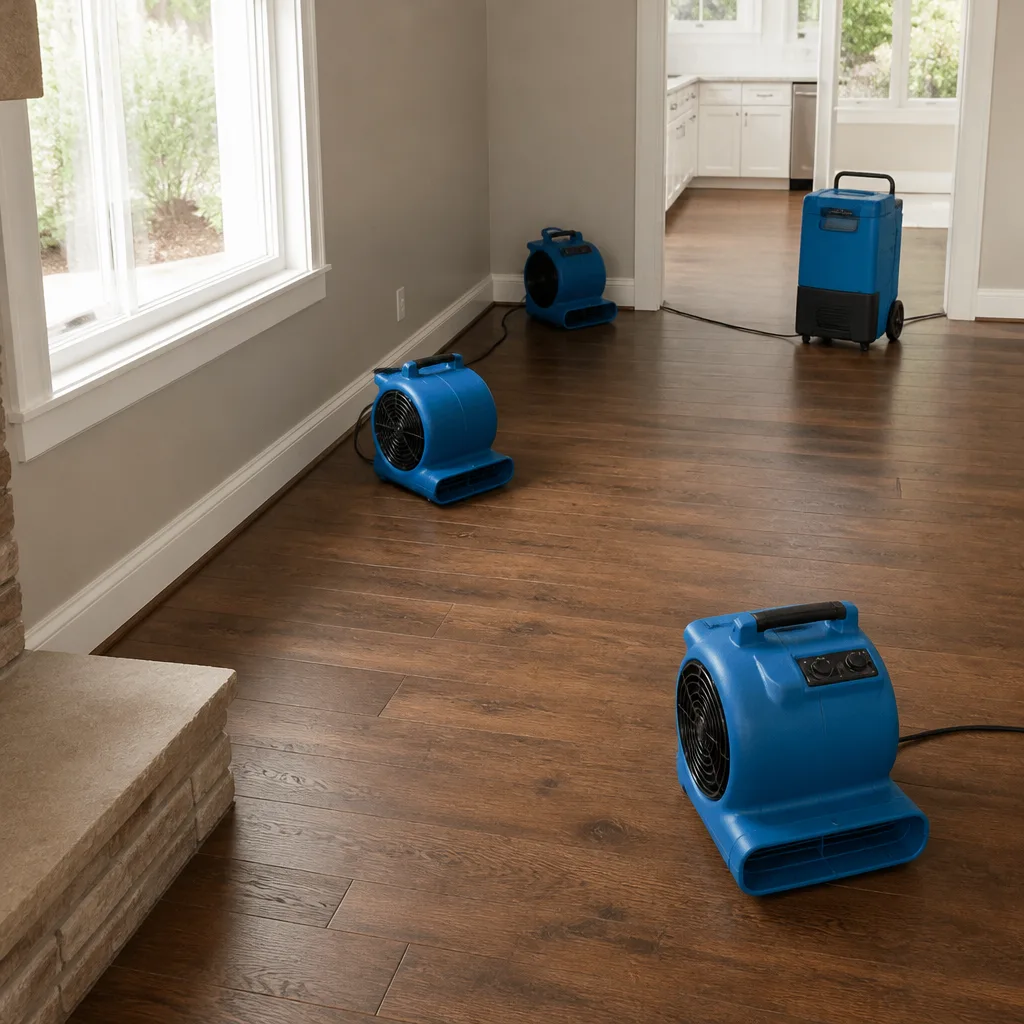
Our Costa Mesa mold remediation work relies on professional-grade equipment from Dri-Eaz, Phoenix, and XPOWER, the same brands specified by restoration engineers on commercial losses. We also run Injectidry cavity-drying systems, which let us dry inside walls and subfloors without tearing out every affected cavity. That matters in Costa Mesa, where preserving original mid-century construction is worth more than replacing it. We maintain stocked parts and equipment locally so Costa Mesa jobs don’t wait on shipping. When a blower fails during a containment, the fix is minutes away, not days.
See the difference
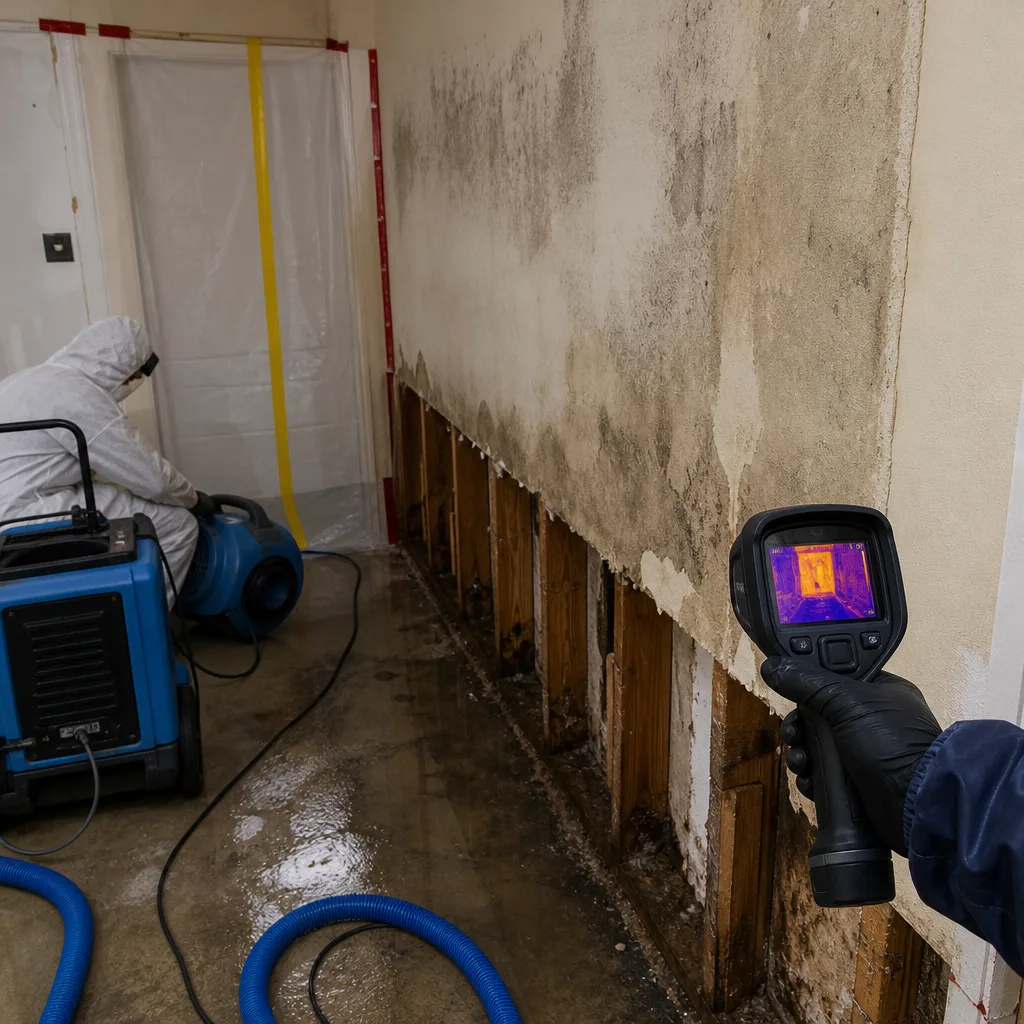 Before
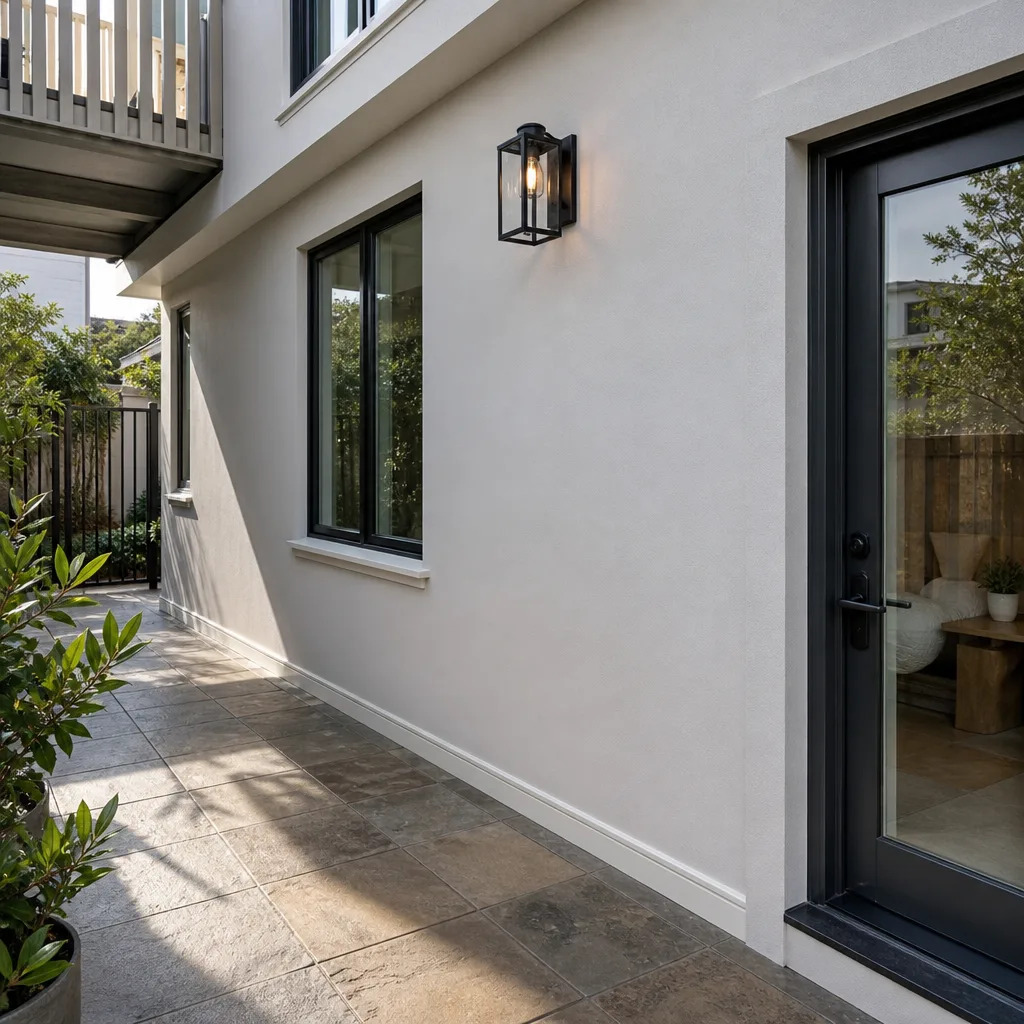 After
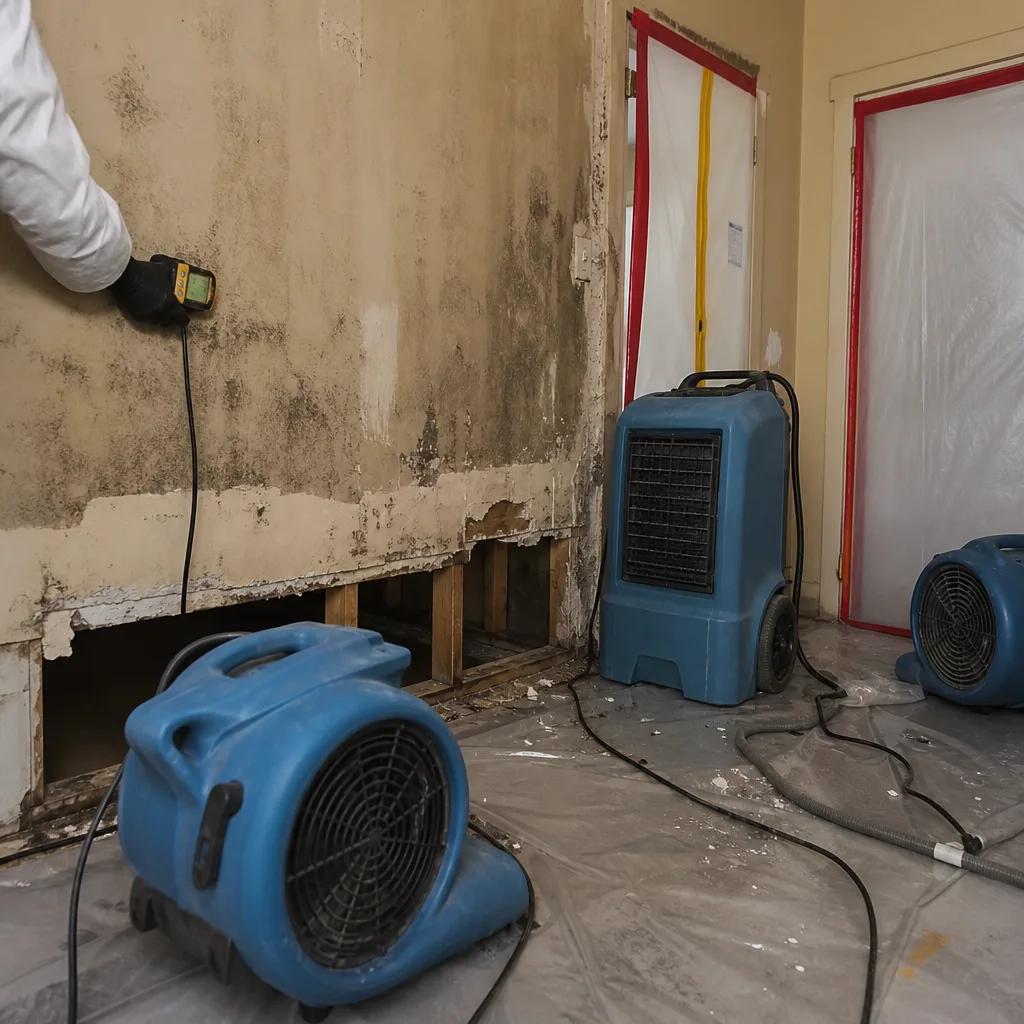 Before
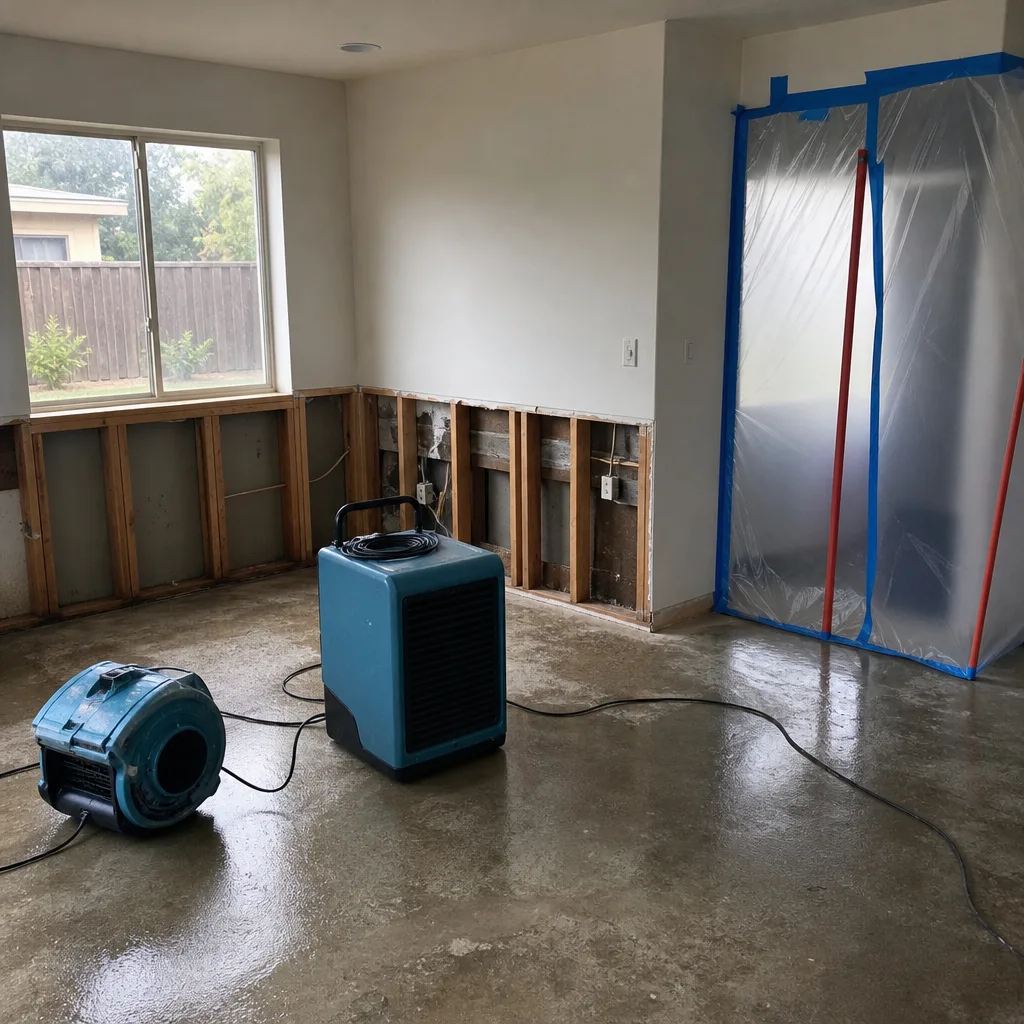 After
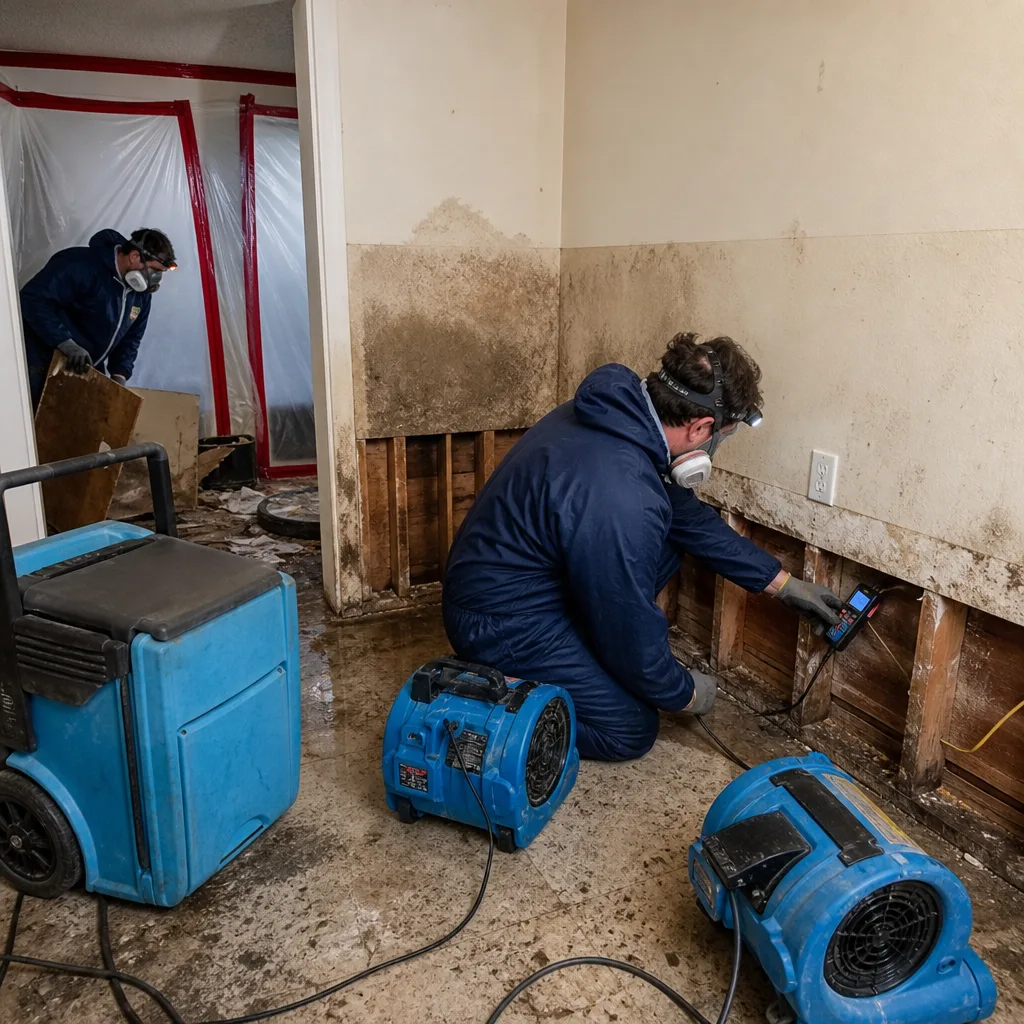 Before
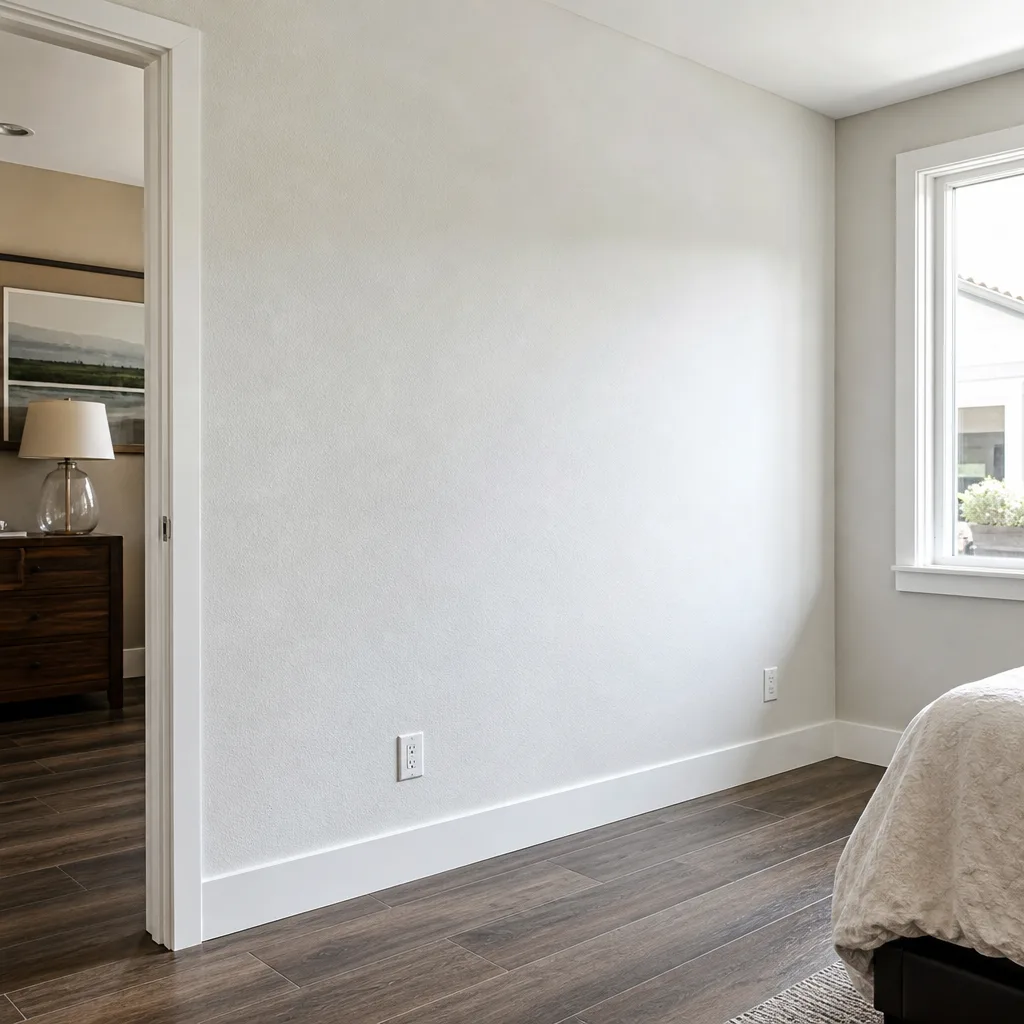 After
Common Mold Remediation Problems We See in Costa Mesa Homes
- Salt-air garage hardware that quietly invites humidity. In Costa Mesa’s 92627 westside, corroded torsion springs, hinges, and opener chains let garage doors sit slightly open, and the marine layer does the rest. Mold blooms on stored cardboard and lower drywall long before the house interior shows any sign. No interior moisture mapping catches this source unless the garage threshold is inspected first.
- Popcorn-era drywall that holds water longer than you’d think. Both 92626 and 92627 are full of 1950s to 70s construction, and the gypsum board and insulation from that era absorb and retain moisture differently than modern materials. Drying logs that stop at 48 hours often undercount residual moisture, which means regrowth risk. We stretch drying timelines based on material, not calendar days.
- Flat-roof ponding on eastside commercial buildings. Around South Coast Metro in 92626, the first big winter storm leaves standing water on low-slope roofs, and that water finds its way down slab cracks and into demising walls. The mold appears weeks later, and the landlord assumes the roof is fine because nobody sees a leak. Actually the ponding water moved through the slab, not the ceiling.
- Hidden mold behind walls that were never moisture-mapped. When a previous cleanup only addressed the visible staining and skipped a full moisture map, the mold usually returns within 60 to 90 days. We see this repeatedly in Costa Mesa homes with slab-on-grade construction, where subsurface moisture wicks up through concrete and feeds cavity growth that never touches an interior wall surface.
Pricing for Mold Remediation in Costa Mesa, CA
We Also Serve Cities Near Costa Mesa
Our mold remediation coverage extends wherever Costa Mesa’s restoration patterns repeat. We handle salt-air and slab-leak mold work in Newport Beach and Fountain Valley, storm-driven moisture in Huntington Beach, and hillside humidity conditions in San Joaquin Hills. If your property sits within a 20-minute drive of our Newport Beach base, we can typically get a crew to you within one business day of your initial call. Full local service details are on our Costa Mesa page.
Serving Costa Mesa, CA — Our Local Coverage Area
We’re based in the Costa Mesa area and know this community well. Use the map below to see our service coverage — if you’re nearby, we can almost certainly help.
FAQs About Mold Remediation in Costa Mesa
Does Costa Mesa’s salt air make mold more likely in my garage even if I don’t see a leak?
Yes. In Costa Mesa’s 92627 westside, salt air from the bluffs and Santa Ana River corridor corrodes garage-door springs, hinges, and opener chains fast enough that doors stop sealing, letting humid marine air condense inside for months. We routinely find mold on stored cardboard and lower drywall in westside garages with no plumbing leak anywhere near the space. The fix starts with a garage-door threshold inspection, then antimicrobial treatment and structural drying if mold is present, then replacing corroded hardware with galvanized springs, stainless hinges, and nylon rollers so the door seals properly again. Call (855) 855-9631 and we’ll walk you through what’s happening in your garage.
How quickly can mold start after a winter storm soaks my Costa Mesa home?
Mold colonization typically begins within 24 to 48 hours of a water event in Costa Mesa’s coastal climate. The concentrated winter storms that hit both 92626 and 92627 deliver enough moisture in a single afternoon to saturate drywall, insulation, and framing, and the mild temperatures that follow keep the material wet long enough for spores to activate. If flat-roof ponding or a slab crack introduced water into a building cavity, the visible mold may not appear for two to three weeks, but the colonization has already started by day two. The faster you get professional drying started, the less material gets removed.
What’s the difference between Category 1, 2, and 3 water when mold is involved in my Costa Mesa property?
Category 1 water is clean-source water from a supply line or a leaking water heater. Category 2 water carries contaminants, commonly from a slab leak that has pulled soil or dissolved minerals into the flow. Category 3 water is grossly contaminated, including sewage, storm-surge water, or floodwater that has contacted exterior soil and debris. Category 1 water left sitting for 48 hours often degrades to Category 2 conditions, and any Category 2 or 3 intrusion requires antimicrobial treatment on top of drying and material removal. Mold is a secondary risk in every category, but the remediation protocol is very different depending on what the water carried into your Costa Mesa walls or slab.
Do you use antimicrobial treatment in Costa Mesa garages where salt corrosion is the root cause?
Yes. After removing colonized drywall and insulation from a 92627 garage where salt corrosion drove the moisture problem, we apply antimicrobial treatment to the remaining framing, studs, and sill plates. That step kills residual spores that moisture mapping doesn’t see. Then we dry the space with XPOWER air movers and a Dri-Eaz dehumidifier until moisture readings return to pre-loss condition, and only then do we install the replacement galvanized springs, stainless hinges, and nylon rollers that keep the door sealed against future marine-layer intrusion. The treatment and the hardware swap go together, because one without the other means the mold comes back.
Why does my eastside 92626 commercial building get mold after storms when the roof isn’t leaking?
The leak isn’t at the roof surface. In Costa Mesa’s 92626 eastside around South Coast Metro, the flat roofs on mid-century commercial buildings pond water after the first major storm of the season, and that water travels down through roof penetrations, parapet caps, and eventually through slab cracks into the lower portions of demising walls. Because the water moves through the slab rather than through a visible ceiling stain, the mold appears at the base of the wall without any sign of a roof leak above. A proper remediation starts with moisture mapping the slab and lower wall cavities, not patching the roof. Call (855) 855-9631 and we’ll scope the actual entry point before any remediation begins.
What should I do if I find mold but I’m not sure if it’s from salt air or a plumbing leak?
Call us and we’ll figure that out in the first hour. Salt-air mold in Costa Mesa’s westside garages and slab-leak mold in eastside interiors follow different moisture tracks, and the source determines the scope. We’ll moisture-map the affected area, trace the water, and give you a written scope before any work begins. The estimate is free and the answer is specific to your Costa Mesa building, not a generic checklist.
If you’re dealing with mold in a Costa Mesa home, garage, or commercial property, get it scoped before it spreads. Call Guild Water Damage at (855) 855-9631 for a free estimate and a written scope of work from an IICRC-certified team that knows exactly where Costa Mesa mold starts.
Written by Noel Hargrove, Owner at Guild Water Damage, serving Costa Mesa and Orange County since 2009.