 Water damage drying
 Fire & smoke cleanup
 Mold remediation
 Storm response
 Sewage cleanup
 Reconstruction
Free visual inspection and a written scope of work before any mitigation begins - photos, moisture readings, and drying logs go in your claim file
The scope we write is the scope we bill. Anything new gets shown to you, in writing, before we touch it.
Get your free estimateFast, Reliable Water Damage Restoration Across Santa Ana
In Santa Ana, water damage rarely announces itself politely. A pinhole leak in a 1950s galvanized supply line can run silently under a slab for months before the first musty smell reaches the living room. By then, mold is already moving through wall cavities. If you’re seeing water where it shouldn’t be or smelling something that doesn’t belong, call (855) 855-9631. Our Water Damage Restoration crews run commercial-grade extraction and drying equipment from Newport Beach into Santa Ana’s older neighborhoods daily, and we know exactly what these pre-1960s homes conceal.
Why Guild Water Damage Is Santa Ana’s Preferred Water Damage Restoration Company
Santa Ana is one of the only cities in Orange County where a water damage call is as likely to involve a 1930s bungalow on a pier-and-beam foundation as a stucco tract home from 1955. That range matters. A restoration crew that only knows slab-on-grade newer construction will misread moisture patterns in an older home with unpermitted additions and irregular framing. We don’t. Our IICRC-certified process is built around moisture mapping and documentation, not guesswork, and we hold RIA membership and IFA affiliation as well. Noel Hargrove built Guild Water Damage around the principle that restoration work should follow documented, certification-backed protocols, not technician intuition. That’s what our Santa Ana customers get.
We carry Dri-Eaz and Phoenix equipment on every Service Area run into Santa Ana because these are the brands specified by commercial restoration engineers, not whatever the nearest rental counter had available. The difference shows up in drying times, in how much drywall can be saved, and in whether mold comes back.
Restoration work we handle
Emergency Water Damage Restoration in Santa Ana
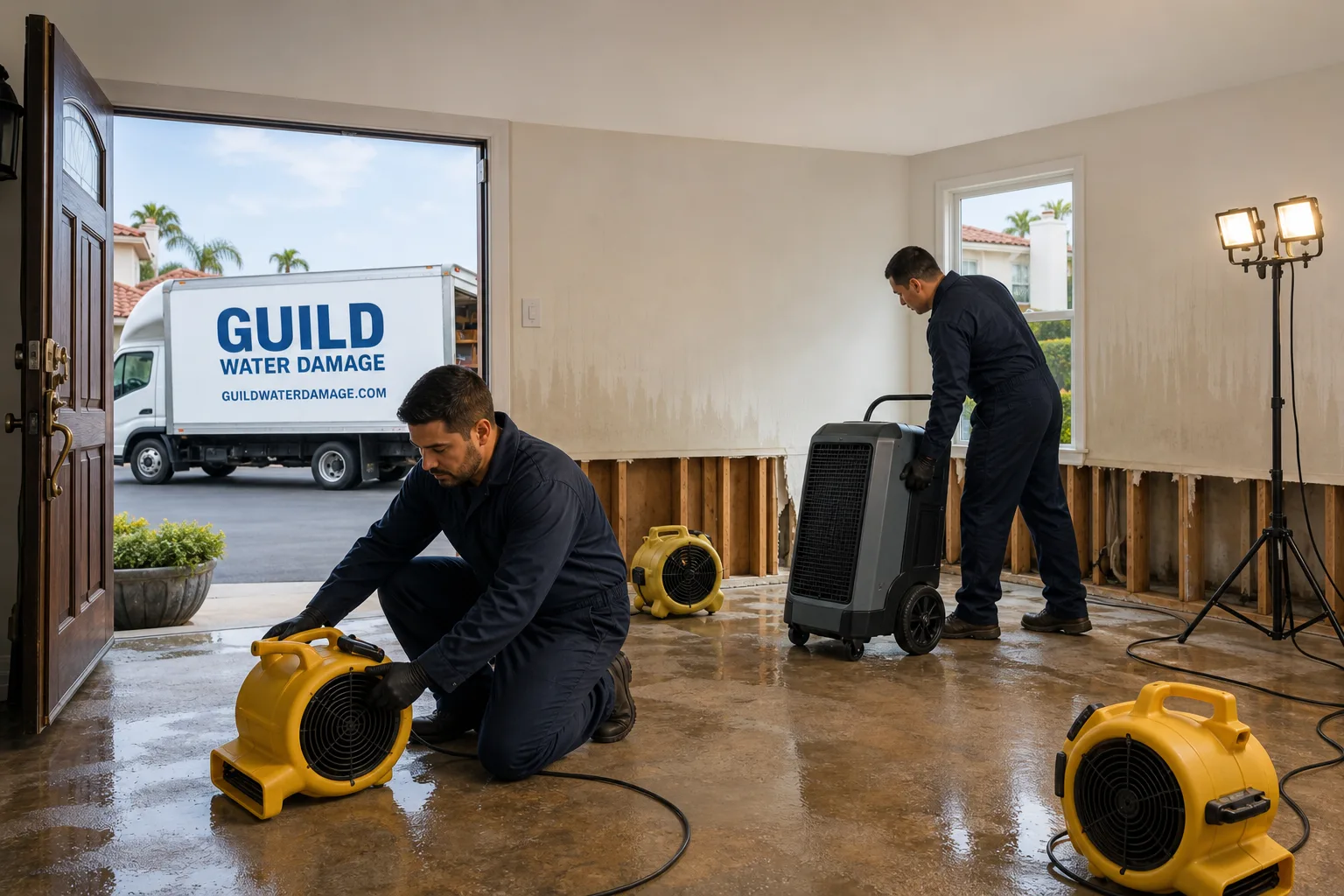
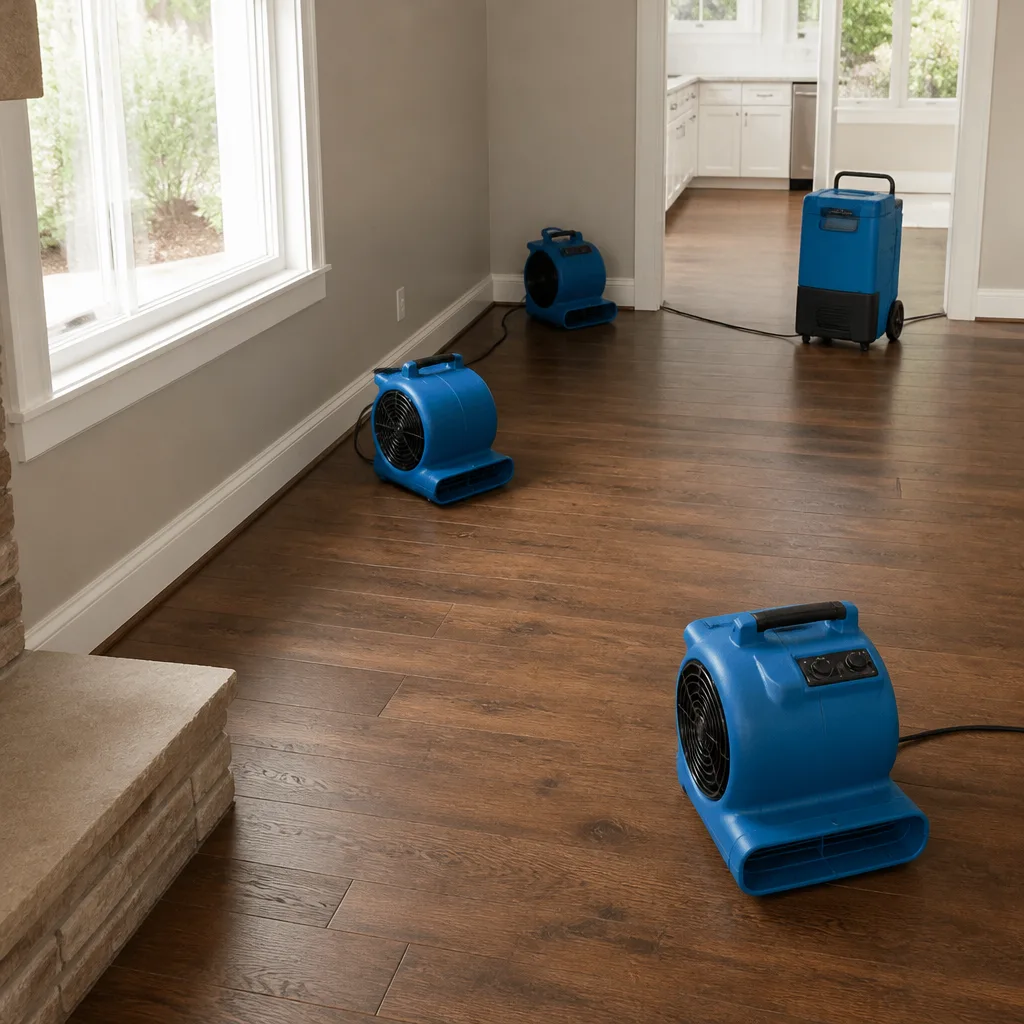
Emergency Water Damage Restoration in Santa Ana usually starts with water that wasn’t there an hour ago: a supply line burst, a water heater let go in the 92701 ZIP code near downtown, a ceiling draining into a living room after a rare intense storm. The first hour decides how much of your home can be saved. Standing water wicks into drywall, into baseboards, into hardwood, and once it hits drywall paper, mold has a food source. Our crews extract first, then set up professional-grade air movers and dehumidifiers sized to the square footage and the materials affected. On a typical Santa Ana emergency extraction with drying, plan on $2,400 – $4,800 depending on affected area and how long the water sat. We document everything photographically for insurance from the first walkthrough.
Slab Leak Response for Older Homes
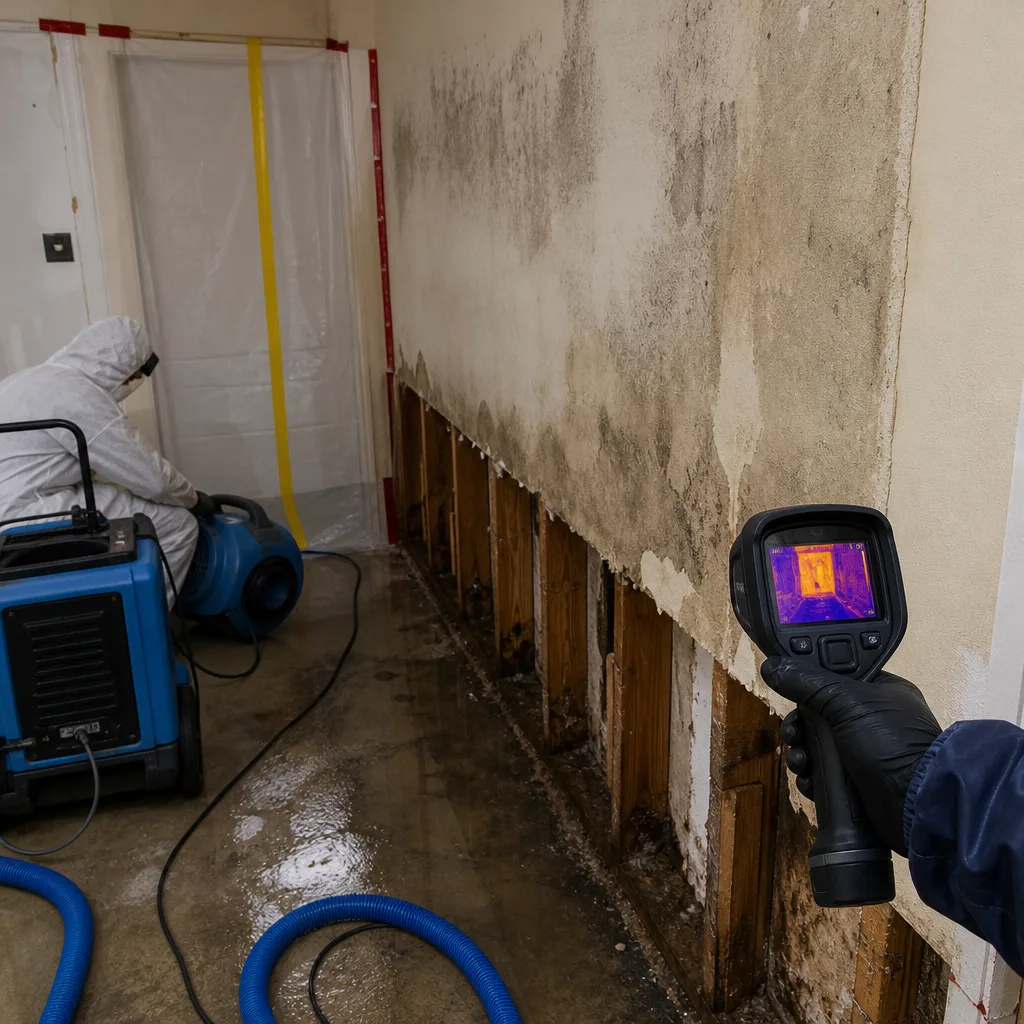
A slab leak under a 1950s Santa Ana house is not a plumbing-only event. Water travels under the slab, finds a cold joint or a plumbing penetration, and moves upward through wall cavities. We run thermal imaging and moisture meters before touching anything, because drying only the visible wet area without finding the hidden migration path is how mold comes back in three weeks.
Storm and Roof Leak Intrusion
When one of Santa Ana’s rare intense winter storms overloads an aging composition-shingle roof, water enters at the roof line and travels laterally before pooling in ceilings or running inside walls. We contain the affected rooms, extract, and dry the structural cavities before any reconstruction starts. Those original roof decks on 1920s bungalows hold water longer than newer plywood does.
Water Damage Repair in Santa Ana
Water Damage Repair in Santa Ana covers what comes after the standing water is gone: the damaged drywall, the waterlogged baseboards, the insulation that has to come out, the reconstruction to put the room back together. On Santa Ana’s older wood-frame and stucco homes, repair often means opening wall cavities that haven’t been touched since the original build. That’s where we find the unpermitted additions, the irregular framing, the moisture paths nobody documented. Repair and reconstruction on a typical single-room Santa Ana water loss runs $3,900 – $9,800 depending on finish level and how much of the cavity has to be opened. We provide a written scope before any demolition starts, so there’s no surprise expansion once the wall is open.
Non-Invasive Drying First
Our Injectidry systems let us dry inside wall and subfloor cavities through small access points instead of tearing out entire sections of drywall. On a 1950s Santa Ana tract home with original lath and plaster under later drywall, that can mean saving finishes that would otherwise be lost. We preserve more and tear out less wherever certification protocols allow it.
Reconstruction After Water Damage
When cavities have to be opened, our in-house team handles the reconstruction as well. One credentialed contractor from extraction through final paint means no handoff to a third-party remodeler, no finger-pointing, and one point of contact for your insurance adjuster. For Santa Ana homes with unpermitted additions, we document existing conditions before work begins so the scope is auditable.
Trusted Brands We Service in Santa Ana
Most water damage restoration companies in Orange County don’t have a meaningful equipment position. They rent. We run Dri-Eaz, Phoenix, XPOWER, B-Air, and Injectidry because these are the machines restoration engineers specify and our IICRC-certified crews are trained to run them properly. In Santa Ana, where older homes mean longer equipment run times and tighter cavity spaces, the equipment brand determines how fast a structure actually dries. We also maintain a parts inventory for common older systems so a Santa Ana repair doesn’t wait on a parts shipment from out of state.
See the difference
 Before
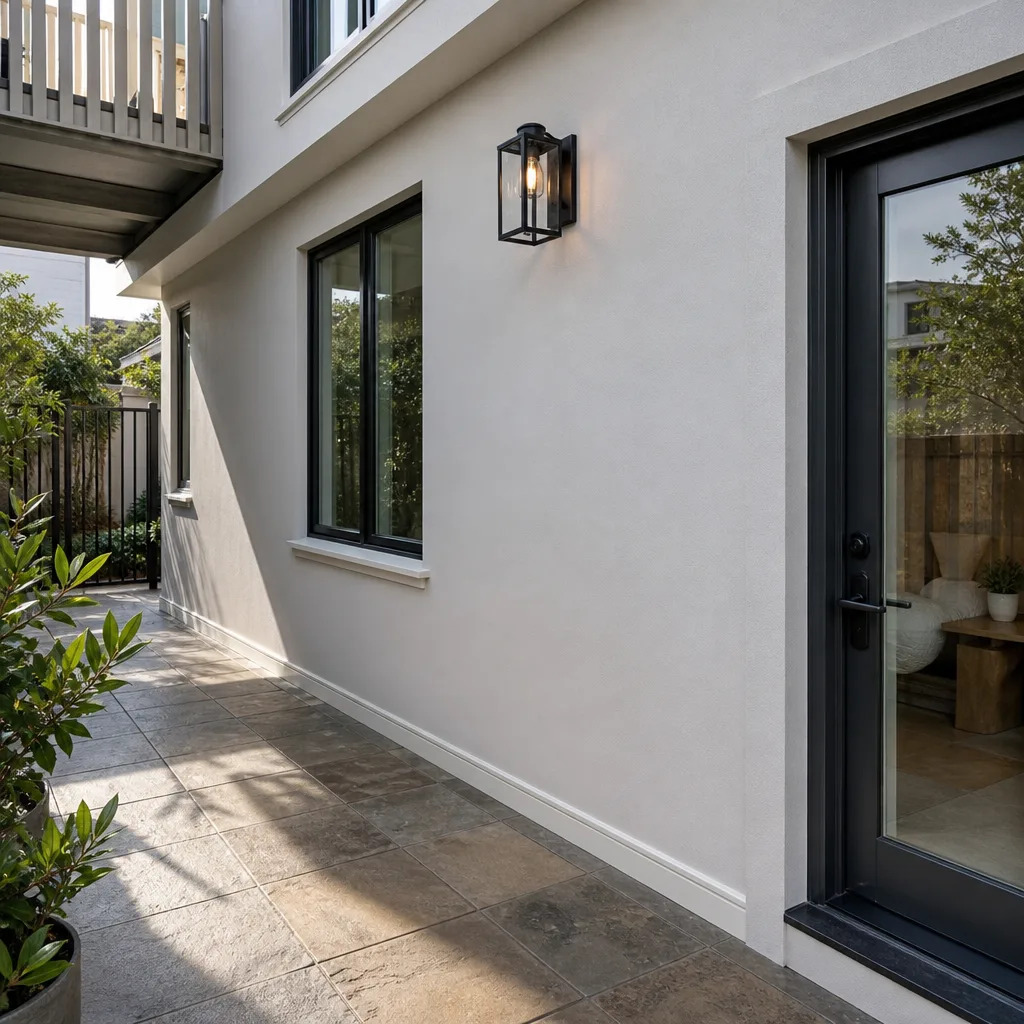 After
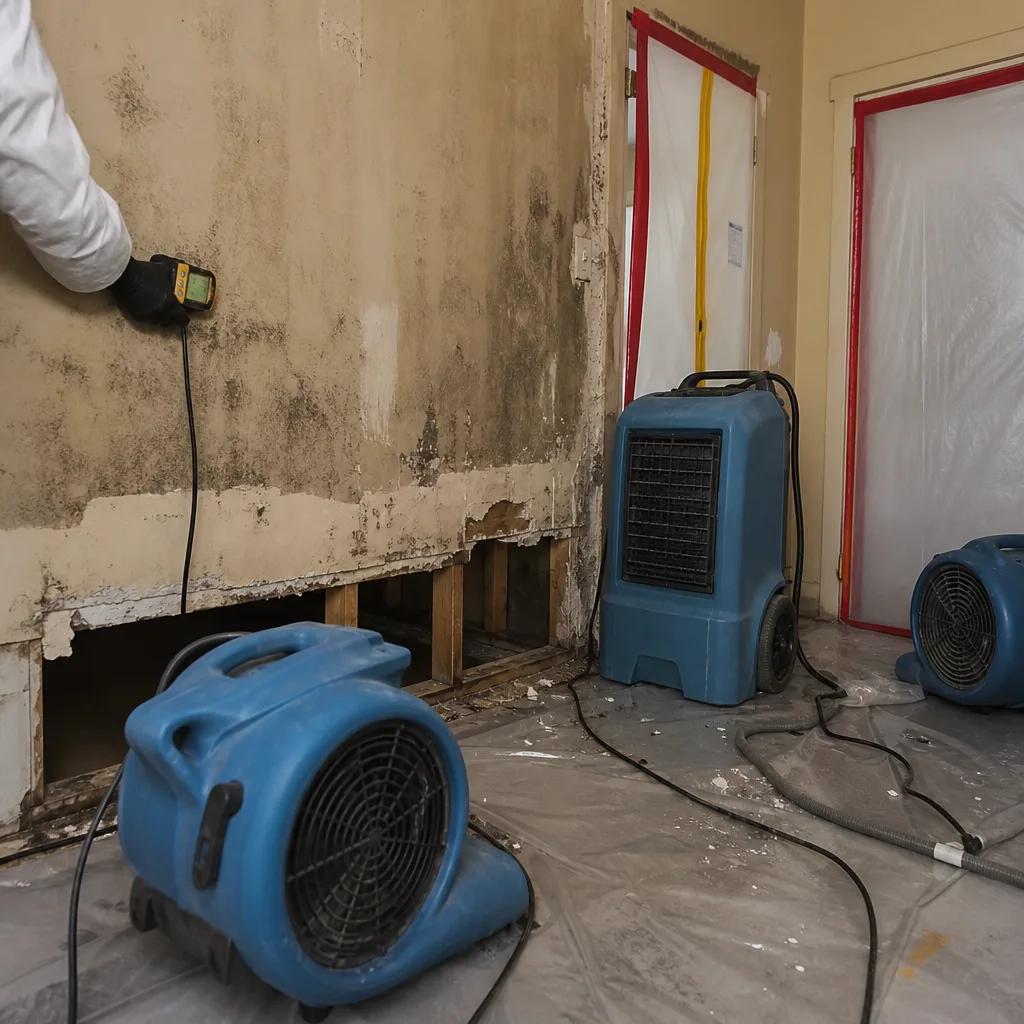 Before
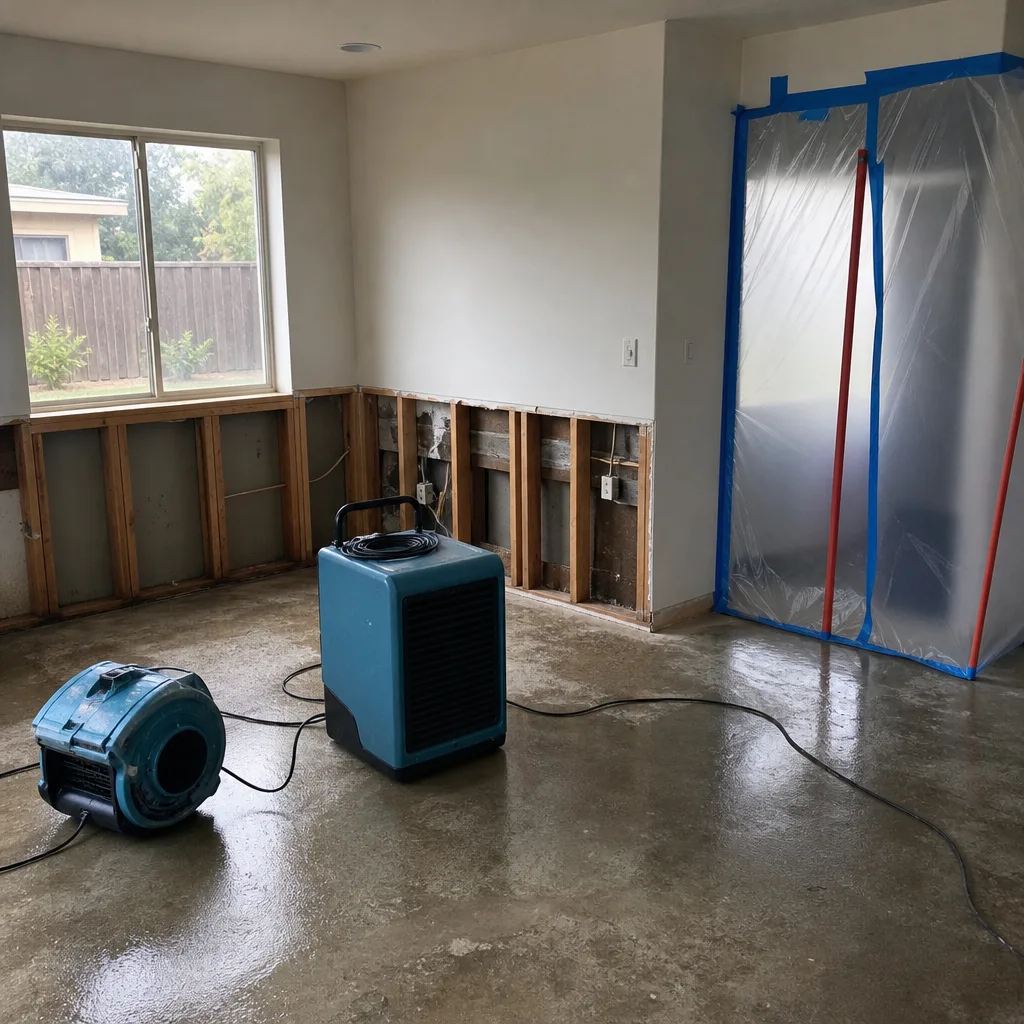 After
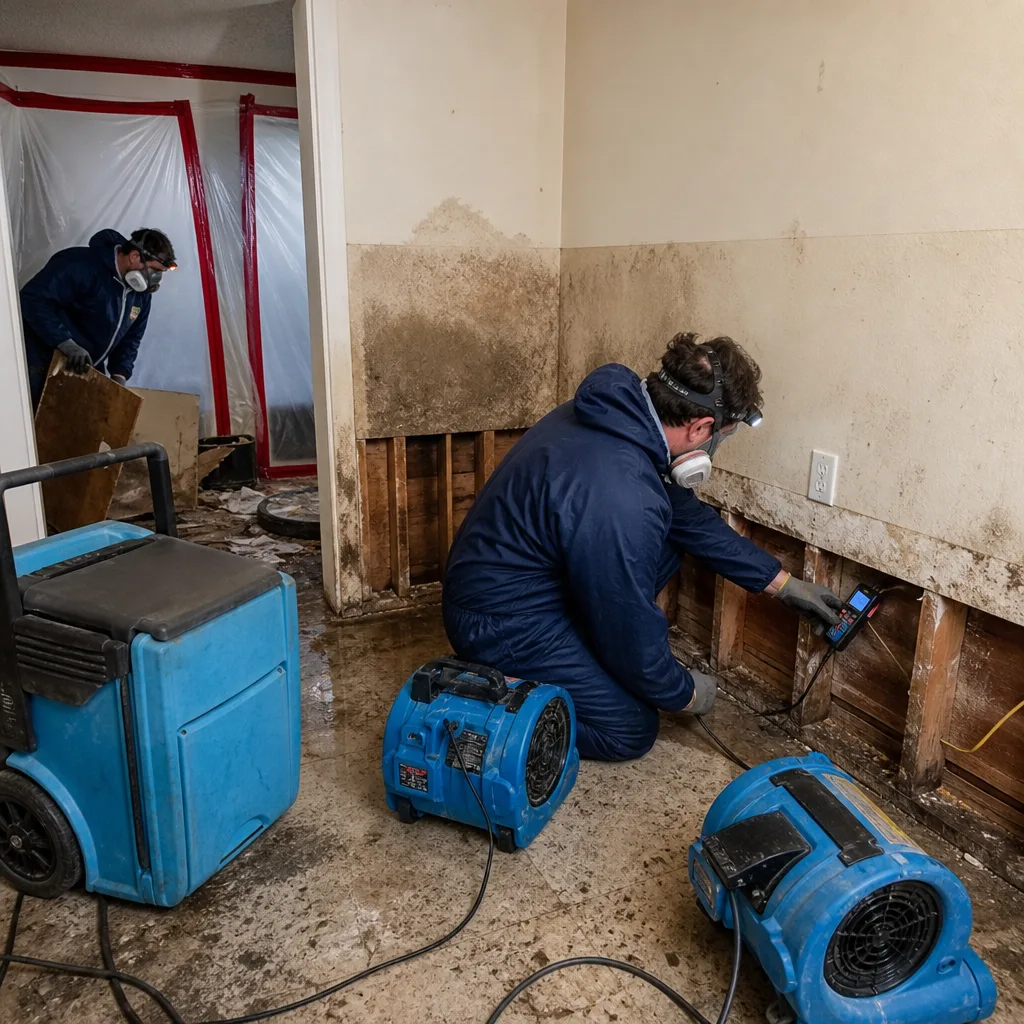 Before
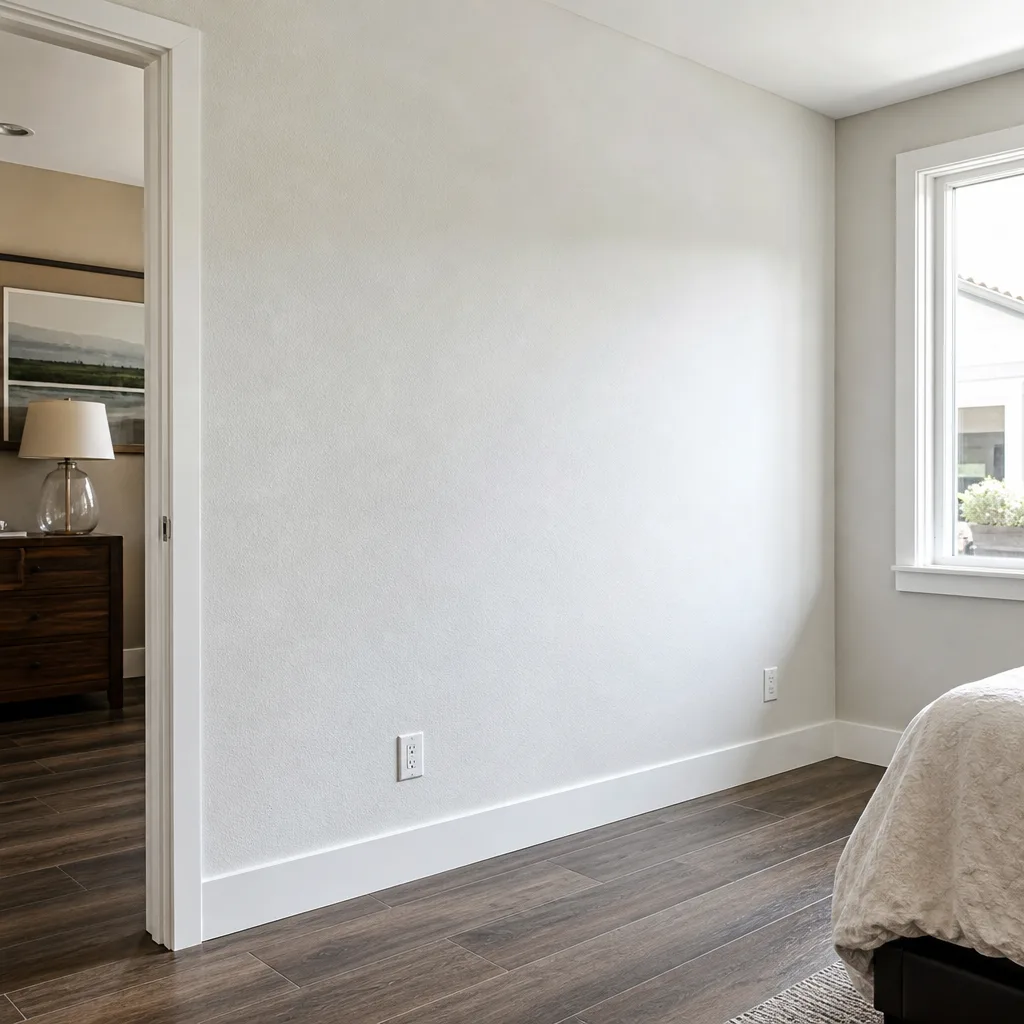 After
Common Water Damage Restoration Problems We See in Santa Ana Homes
- Hidden slab leaks from original galvanized supply lines. Santa Ana’s hard water corrodes 60-to-90-year-old galvanized pipes from the inside. A pinhole leak under a 1950s slab can feed mold into wall cavities for months before anyone detects it.
- Unpermitted additions creating hidden moisture paths. Many older Santa Ana homes have converted garages or added rooms without permits. Irregular framing and missing vapor barriers give water a path into places a moisture meter won’t find unless the technician knows to look.
- Aging composition roofs that fail during winter storms. Santa Ana’s dry climate lets small roof leaks go unnoticed. Then a rare intense storm overwhelms the roof, and water moves inside walls and ceilings before drying systems can be placed.
- Misclassified water categories causing contamination spread. A Category 3 water source, like sewage backup or storm intrusion, cannot be treated like a Category 1 clean-water leak. Improper categorization spreads contamination instead of containing it. This matters in older Santa Ana neighborhoods where sewer lines share original clay tile.
Pricing for Water Damage Restoration in Santa Ana, CA
Santa Ana pricing reflects the age and construction of the housing stock. A straightforward emergency extraction and drying job in a room under 300 square feet runs $2,400 – $4,800. Slab leak work with containment and cavity drying runs $5,200 – $11,500 because of the thermal imaging, the containment setup, and the extended equipment run times. Full reconstruction after a hidden slab leak that went undetected for months runs $9,800 – $24,000 depending on how far the mold spread inside the walls. Every Santa Ana job starts with a free on-site estimate and a written scope. Call (855) 855-9631 to schedule an assessment. We photograph everything for your insurance file whether or not you file a claim.
We Also Serve Cities Near Santa Ana
Our crews from Newport Beach run daily into Tustin, North Tustin, Fountain Valley, and Orange. If you’re in one of those bordering cities and dealing with water damage, the same IICRC-certified process applies. You can learn more about our Water Damage Restoration in Santa Ana coverage area or call us for a service run to your neighborhood.
Serving Santa Ana, CA — Our Local Coverage Area
We’re based in the Santa Ana area and know this community well. Use the map below to see our service coverage — if you’re nearby, we can almost certainly help.
FAQs About Water Damage Restoration in Santa Ana
Santa Ana’s original galvanized supply lines have been corroding in hard water for 60 to 90 years. When a pinhole finally opens under a 1950s slab, the water has nowhere visible to go. It travels under the slab until it finds a crack, a cold joint, or a plumbing penetration, then wicks upward through wall cavities. Because Santa Ana’s semi-arid climate lets small amounts of moisture evaporate from the surface, homeowners never see water; they smell mold months later. By then the wall cavities need containment and antimicrobial treatment, not just drying. If you smell must but see no water, call (855) 855-9631 for a moisture-mapping assessment.
Santa Ana has one of Orange County’s oldest housing stocks: 1920s through 1960s single-story wood-frame and stucco bungalows and tract homes. Many have pier-and-beam or slab foundations, original composition roofs, and additions built without permits that created irregular framing. Restoration here requires thermal imaging and moisture mapping before any extraction begins, because water migrates differently through these older materials than through modern engineered construction. A crew trained only on newer homes will miss hidden moisture paths in a Santa Ana bungalow. We run our IICRC-certified process with that specific housing stock in mind.
Category 1 water is clean: a supply line break or a water heater leak. Category 2 has significant contamination: washing machine overflow, dishwasher discharge. Category 3 is grossly contaminated: sewage backup, storm intrusion from outside ground water. Each category requires different containment, drying, and antimicrobial protocols. A Category 3 loss in a Santa Ana home with original clay sewer lines cannot be treated like a clean-water leak; improper categorization spreads contamination instead of removing it. We classify every loss during the initial assessment and document that classification for your insurer.
Often yes. Our Injectidry cavity-drying systems work through small access holes to dry inside wall and subfloor cavities, which is especially useful in Santa Ana homes with original lath and plaster under later drywall. If the wall cavity is already contaminated with Category 3 water or mold has established itself, the affected drywall has to come out; drying alone will not remove mold. The determination is made by moisture mapping and a visual inspection, not by a guess. We write the scope before work begins so you know exactly what stays and what goes.
Roof leak water in Santa Ana often enters during a winter storm but goes unnoticed for weeks because the climate dries the visible surface. Water travels from the roof line along rafters or trusses, pools in a ceiling, then drops into wall cavities. We contain the affected rooms, extract standing water, and set up structural drying before any reconstruction. The original composition roofs on 1950s Santa Ana homes hold moisture longer than newer materials, so we run extended drying cycles where needed. Call (855) 855-9631 for a roof leak assessment; we can refer a licensed roofer if the leak source itself needs repair before restoration begins.
Written by Noel Hargrove, Owner at Guild Water Damage, serving Santa Ana since opening our Orange County operation out of Newport Beach.