Last updated October 30, 2026
 Water damage drying
 Fire & smoke cleanup
 Mold remediation
 Storm response
 Sewage cleanup
 Reconstruction
Free visual inspection and a written scope of work before any mitigation begins - photos, moisture readings, and drying logs go in your claim file
The scope we write is the scope we bill. Anything new gets shown to you, in writing, before we touch it.
Get your free estimateDamage Restoration Permits, Codes & Inspections in CA: What You Need to Know
A restoration job that removes and replaces more than 50% of a wall assembly in Newport Beach may trigger a Title 24 energy compliance review, a requirement that surprises most contractors who treat drywall replacement as a cosmetic task. The California Building Code doesn’t care whether the damage came from a burst pipe, a kitchen fire, or a roof leak. What matters is the scope of the repair, the type of materials being replaced, and where the property sits. In a city like Newport Beach, where coastal zone boundaries run through residential neighborhoods and HOA architectural committees hold real power, permitting mistakes on restoration work don’t just delay a project. They can block a future sale or give an insurance carrier a reason to deny a claim. This guide walks through the permit triggers, the code sections, and the inspection paperwork that actually matter after a property loss.
Quick Answer
Most water damage restoration, mold remediation, and fire damage restoration work in California does not require a building permit when the scope is limited to drying, cleaning, and replacing surface finishes like drywall, insulation, and flooring with like materials. A permit becomes necessary when the work touches structural framing, changes the footprint or window configuration, involves major electrical or plumbing replacement, or exceeds the 50% wall assembly threshold that triggers Title 24 energy compliance in cities like Newport Beach. When in doubt, ask the contractor to confirm the scope in writing against the local building department’s permit matrix before work begins, or consult our step-by-step guide to hiring a damage restoration contractor in Newport Beach.
Restoration work we handle
Table of Contents
- When Does a Restoration Job Require a Permit in California?
- California Health and Safety Code Section 17920.3: The Habitability Trigger
- Title 24 Energy Compliance: The 50% Rule That Catches Contractors Off Guard
- Newport Beach Coastal Development Permits: When Restoration Crosses a Line
- Mold Remediation and Cal/OSHA Title 8 Section 5199
- The Certificate of Completion: The Document Most Contractors Won’t Provide Unless Asked
- HOA and Coastal Overlay Approvals in Newport Beach
- What the Inspection Process Actually Looks Like for Restoration Work
When Does a Restoration Job Require a Permit in California?
California’s permit requirements for restoration work are not a single list. They are a matrix of triggers defined by the California Building Code (CBC), the California Residential Code (CRC), and local amendments adopted by each city. Newport Beach has its own additions to those base codes, and the coastal zone adds a separate approval layer that most inland contractors have never dealt with.
A restoration permit is generally required when any of the following conditions exist:
- Structural framing is altered or replaced. Cutting out and replacing studs, joists, rafters, or shear wall panels requires a permit. So does sistering damaged framing members.
- The work changes the building’s footprint. If fire or water damage leads to adding square footage, even a small bump-out, a permit is mandatory.
- Window or door openings are resized or relocated. Replacing a window with the same size unit is typically exempt. Enlarging an opening to meet egress requirements is not.
- Electrical wiring is replaced beyond fixture-level work. Swapping a damaged outlet is a repair. Replacing an entire branch circuit run through a water-damaged wall is a permitted electrical scope.
- Plumbing lines inside walls are replaced. Replacing a section of supply line after a slab leak or freeze damage requires a plumbing permit. Draining and capping a line is more likely to be classified as maintenance.
- The wall assembly removal exceeds 50% of a single wall. This is the Title 24 trigger discussed below, and it’s the one that surprises even experienced restoration companies working in Newport Beach.
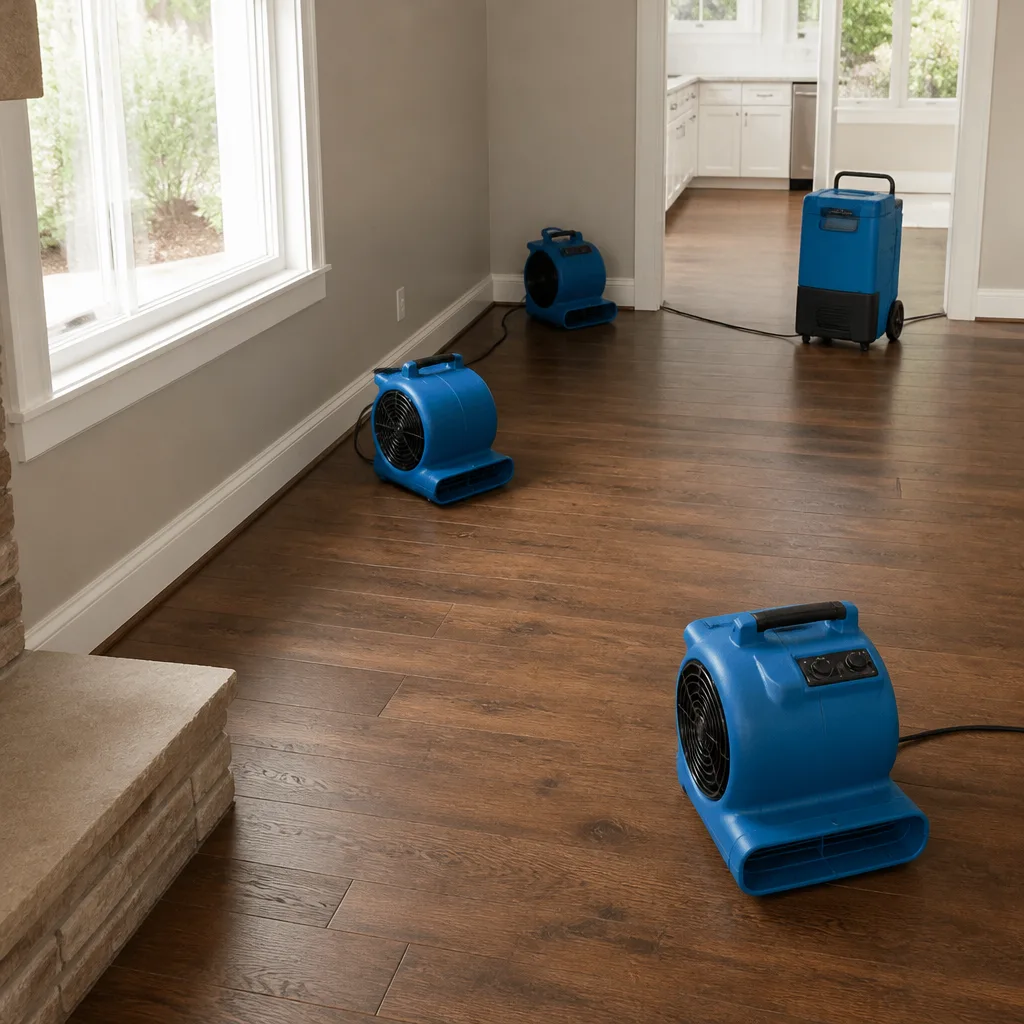
Restoration-only scopes, meaning water extraction, structural drying with equipment like Dri-Eaz or Phoenix units, antimicrobial treatment, and the removal of damaged drywall to expose framing, generally fall under the building department’s repair exemption when the materials are replaced in kind. The moment the scope drifts into improvement territory, replacing materials with different products or changing assemblies, the permitting discussion changes. In our experience, the cleanest way to avoid a permit surprise is to have the contractor put the scope in writing and submit it to the Newport Beach Building Division for a pre-job determination when the work is anywhere near a threshold.
To understand the broader context of how water damage restoration projects are scoped, see our Water Damage Restoration in Newport Beach page.
California Health and Safety Code Section 17920.3: The Habitability Trigger
Section 17920.3 of the California Health and Safety Code defines what makes a building substandard. The list matters to restoration work because it creates a legal obligation that exists separate from any insurance claim or homeowner preference. When a property meets the substandard definition, the local enforcement agency, in Newport Beach that is Code Enforcement within the Community Development Department, can compel repairs even if the owner would prefer to wait.
The substandard conditions most relevant to water, mold, and fire restoration include:
- Dampness of habitable rooms. A wall cavity that stays wet because of an unresolved supply line leak creates a dampness condition. The code does not care whether the homeowner is “keeping an eye on it.”
- Visible mold growth. Section 17920.3 does not use the word “mold” directly, but visible fungal growth on interior surfaces is consistently interpreted as unsanitary and a health and safety hazard by enforcement agencies.
- Deteriorated or inadequate structural components. Floor joists, wall studs, or roof rafters compromised by rot, termite damage, or char from a fire meet the substandard threshold.
- Lack of required sanitation facilities. A water loss that takes a bathroom out of service for an extended period can trigger substandard findings if the home has no other functioning bathroom.
- Electrical hazards. Water-damaged wiring that has not been properly evaluated creates a substandard condition under the code’s electrical safety provisions.
The practical effect in Newport Beach is this: if a neighbor files a complaint about a property with visible water staining or mold at a window line, Code Enforcement can open a case. Once a case is open, the owner has a compliance deadline. That timeline does not pause because an insurance carrier is slow to respond or because the owner is accumulating bids. The health and safety code runs on its own clock. This is one reason why property managers in Newport Beach tend to move quickly on restoration after a loss. A code enforcement case is a complication no one wants layered on top of an active insurance claim.
Title 24 Energy Compliance: The 50% Rule That Catches Contractors Off Guard
Title 24, Part 6 of the California Code of Regulations, is the state’s energy efficiency standard. It applies to new construction and to certain alterations. The trigger that matters for restoration work is the wall assembly rule: when more than 50% of a wall assembly is removed and replaced, the entire wall must be brought into current energy code compliance.
What constitutes “the wall assembly” is where the surprises come from. It is not the entire wall surface of the room. It is one wall plane. If a water loss wicks up 3 feet of drywall across a 20-foot exterior wall in a Newport Beach home built in 1984, and the restoration includes removing and replacing all of that drywall plus the insulation, that single wall assembly has crossed the 50% threshold. The repair now requires verification that the wall’s framing cavity insulation meets current R-value requirements, which for exterior walls in climate zone 6 (which includes Newport Beach) is R-19 cavity insulation, and often requires adding a continuous insulation layer on the exterior or a vapor retarder that did not exist in the original 1984 wall.
The cost difference between replacing drywall and insulation in kind versus bringing an entire wall assembly into Title 24 compliance can be thousands of dollars on a single wall. The inspector may require opening additional wall area to confirm insulation values beyond the visibly damaged section. Some contractors know this. Most restoration technicians do not, because their training focuses on drying and rebuilding to the pre-loss condition, not on the layered compliance requirements that California layers on top of that rebuild—one reason to weigh DIY vs professional damage restoration carefully.
The practical question to ask a restoration contractor is direct: “Does this scope cross the Title 24 wall assembly threshold, and if so, who is handling the compliance documentation?” The answer tells you whether the contractor has experience with the California-specific scope of restoration work, or whether they are applying a general approach that works in any state. This question is as relevant for fire damage restoration, where charred wall assemblies are common, as it is for water losses. See our Fire Damage Restoration in Newport Beach page for more on how fire scopes are handled.
Newport Beach Coastal Development Permits: When Restoration Crosses a Line
Newport Beach sits almost entirely within the California Coastal Zone. The city holds a certified Local Coastal Program, which means the city issues coastal development permits (CDPs) under the authority delegated by the California Coastal Commission. For a homeowner doing restoration work after a loss, this matters more than most realize.
A coastal development permit is required for any development within the coastal zone, which includes most exterior work and some interior work when the activity constitutes “development” under the Coastal Act. Restoration work generally falls into one of three categories:
- Exempt repair and maintenance. Like-for-like replacement of existing materials that does not change the structure’s size, location, or intensity of use is typically exempt from a coastal development permit. Replacing damaged siding with the same material, re-roofing with a comparable product, or repairing a deck board are examples. The exemption is narrow. Changing siding from wood to fiber cement or from asphalt shingles to standing seam metal may cross the line into “development.”
- Minor CDP (administrative approval). When restoration work changes materials, alters elevations by more than a threshold amount, or adds exterior features like a new deck railing system, the city may process the application administratively. Staff review happens without a full public hearing, but the application still takes time and requires drawings and documentation.
- Full CDP (public hearing). Restoration work that expands a structure’s footprint toward the ocean, changes the roofline, or involves work seaward of the beachfront property line can require a noticed public hearing before the Newport Beach Planning Commission. This adds months to a restoration timeline and costs significantly more in fees and consultant time.
A common point of confusion is repair work to decks, balconies, and railings. These exterior assemblies are exposed to the marine environment and fail frequently in Newport Beach. A railing replacement using the same footprint and a comparable material is generally repair. Changing the deck surface from wood to composite, or modifying railing height to meet current code, can trigger a CDP review. Ask your contractor to check the city’s coastal permit threshold before any exterior scope starts. If the contractor doesn’t know what a coastal development permit is, that is the signal to bring in someone who does, and a red flag worth noting in our Damage Restoration Warning Signs: A Newport Beach Homeowner’s Reference Guide.
For more context on how restoration scopes are evaluated in Newport Beach specifically, start with our Guild Water Damage home page.
Mold Remediation and Cal/OSHA Title 8 Section 5199
California is one of the only states with a dedicated occupational standard for mold in the workplace. Title 8, Section 5199 of the California Code of Regulations applies to all employers whose workers may be exposed to mold, which translates directly to any contractor performing mold remediation inside a Newport Beach home or commercial building. The standard does not regulate homeowners doing their own work. It regulates the contractor’s obligation to protect workers, which becomes the protection you get inside your home.
The key requirements under Section 5199 that homeowners should know about:
- Written assessment before work begins. A contractor performing mold remediation must determine the extent of the mold-affected area before disturbing it. If the affected area exceeds 100 square feet, a written assessment is required. This is one of the clearest quality signals in the industry. A contractor who starts ripping out moldy drywall without a documented assessment is not following the California standard.
- Containment for large jobs. For contamination areas over 100 square feet, Section 5199 requires containment and negative air pressure to prevent mold spores from spreading to unaffected rooms. This is non-negotiable workplace safety law, not a best practice. Contractors that skip containment on large mold jobs are violating the regulation.
- Worker protection requirements. Respiratory protection, protective clothing, and proper training are mandated. A remediation crew working without respirators inside a confirmed mold area in a Newport Beach home is a red flag.
- Post-remediation verification. Section 5199 does not mandate clearance testing, but best practice in the industry, and the standard we hold ourselves to, is post-remediation verification using a third-party assessor to confirm the space is dry and free of visible mold before rebuilding begins.
The square-footage threshold is worth remembering: 100 square feet of visible mold is the dividing line between a cleaning scope and a full-containment remediation scope under California’s occupational standard. That is a 10-foot by 10-foot area. In a Newport Beach garage that sat wet through a coastal winter, a 100-square-foot mold area is not unusual. The remediation protocol completely changes at that threshold. See our Mold Remediation in Newport Beach page for more on how these scopes are handled in practice.
The Certificate of Completion: The Document Most Contractors Won’t Provide Unless Asked
A Certificate of Completion is a written document signed by the restoration contractor that confirms the scope of work has been completed according to the agreed protocol. It should describe what was done, when it was done, what equipment was used, and what the final moisture readings or clearance criteria were. It is not a permit document. It is a performance record.
Most restoration companies do not provide a Certificate of Completion unless a customer asks for one. This is a failure of industry practice, because the document matters in two contexts that every Newport Beach homeowner eventually faces:
- Resale disclosure. When you sell a home in California, the Transfer Disclosure Statement and the supplemental seller disclosures ask about past damage, repairs, and insurance claims. A Certificate of Completion gives the buyer’s agent and the buyer’s inspector a documented answer to the question “What was done and was it done properly?” Without it, the seller is left describing the work from memory, which is never as credible as a dated, signed document from the company that did the work.
- Insurance claim audit. Insurance carriers can and do audit restoration claims after the fact, particularly on larger losses involving multiple trades. A Certificate of Completion that ties the scope to the original estimate and the carrier-approved line items makes the audit cleaner. If the carrier asks for proof that drying was actually performed, the certificate with final moisture readings is the answer.
We prepare Certificates of Completion as a standard deliverable on every project where we perform the restoration work. It includes the scope, the dates, the equipment used, the drying log summary, and the final moisture readings. If a customer asks for a third-party clearance test, we coordinate it. This is part of what we mean when we talk about the Guild standard: documented, repeatable, and auditable, not just a verbal assurance that the job was done right.
HOA and Coastal Overlay Approvals in Newport Beach
Newport Beach has a dense layer of homeowners associations. Many of the city’s residential neighborhoods, from the Peninsula to Newport Coast to the communities around the Back Bay, have CC&Rs that add approval layers on top of the city’s permitting process. Restoration work is not exempt from HOA review, even in an emergency.
The typical HOA requirement for restoration work involves:
- Architectural committee review for exterior changes. If restoration includes exterior paint, siding, roofing, windows, or landscaping, the HOA’s architectural committee generally requires a submission and approval before work starts. Emergency repairs may have an after-the-fact approval process, but the requirement does not disappear because of urgency.
- Work hours and staging restrictions. Many Newport Beach HOAs restrict construction hours and specify where dumpsters, equipment, and vehicles can be staged. On a street with narrow access, this matters. A restoration crew that violates HOA work-hour rules creates neighbor complaints that can end up back at the owner’s door.
- Insurance requirements. Some HOAs require that contractors performing work on a property carry minimum insurance limits and name the HOA as an additional insured. Provide the contractor’s certificate of insurance to the HOA manager before work starts to avoid a stop-work order from the association.
- Restoration material limitations. Coastal HOAs often restrict exterior materials. Replacing a damaged window with a different frame color or a different grille pattern can require HOA approval even when the city permit is an over-the-counter repair permit. The city and the HOA are two separate approval tracks, and neither one cares what the other allows.
The lesson is simple: check the CC&Rs and contact the HOA management company before exterior restoration work starts. The city’s permit is not the only approval that matters in Newport Beach.
What the Inspection Process Actually Looks Like for Restoration Work
When a permit is required for restoration work in Newport Beach, the inspection process follows the same sequence as new construction, just on a smaller scale. Knowing what to expect removes a lot of the anxiety around inspections.
For a typical water damage restoration project that goes to permit, the inspection sequence is generally:
- Initial site inspection by the building official. Before the work starts, the inspector reviews the scope, the permit documents, and the proposed work area. This is often combined with the permit issuance process for simple scopes.
- Rough inspection. After the damaged wall cavities are open and before the new drywall goes up, the inspector verifies that the framing is sound, that any rot or damage has been fully removed, and that electrical or plumbing rough-in work meets code. This is the critical inspection for restoration work because it is the only time the inspector sees what is inside the wall.
- Insulation inspection. If the Title 24 compliance path requires upgraded insulation or a vapor retarder, the inspector verifies the insulation before the wall is closed.
- Final inspection. After drywall, texture, paint, trim, flooring, and fixtures are complete, the final inspection closes out the permit. The inspector verifies the finished work matches the approved plans and that all required inspections have passed.
For mold remediation work that operates under the Cal/OSHA framework rather than a city permit, the equivalent of an inspection is the post-remediation verification. A third-party assessor, not the remediation company, takes moisture readings and collects surface or air samples after the remediation is complete and before rebuilding starts. We coordinate this step routinely, and we recommend that homeowners insist on third-party verification, not a clearance letter written by the same company that did the remediation.
Common Mistakes to Avoid
- Treating all drywall replacement as non-permit work. In Newport Beach, the 50% wall assembly rule can trigger Title 24 compliance on what appears to be a routine drywall replacement. The trigger is per wall, not per room, which catches people off guard.
- Skipping the coastal permit check on exterior work. Replacing damaged siding, windows, or deck components in the coastal zone can require a CDP even when the building department’s repair exemption applies. Checking one agency does not check the other.
- Using a contractor who doesn’t know Section 5199. California’s mold standard is unique. A contractor not familiar with Cal/OSHA Title 8 Section 5199 may not provide containment or worker protection on a mold job, which spreads contamination and creates a larger remediation problem.
- Closing walls before the rough inspection. If a permit was pulled and the contractor closes wall cavities before the inspector reviews the framing, the inspector can require the drywall to be re-opened. This happens more often than it should and adds weeks to the timeline.
- Not requesting a Certificate of Completion. Most contractors won’t provide one unless asked. Ask. The document matters at resale and during insurance audits, and asking for it before the work starts signals that you expect a documented process.
- Assuming HOA rules don’t apply to emergency repairs. Even emergency restoration work falls under HOA review in many Newport Beach communities. After-the-fact approval may be available, but no approval at all can trigger HOA fines and a forced modification review.
- Waiting on an insurance decision before mitigating. California’s Health and Safety Code enforcement clock does not pause for insurance timelines. A property left with visible mold or structural dampness can trigger a code enforcement case even while the carrier is still reviewing the claim.
See the difference
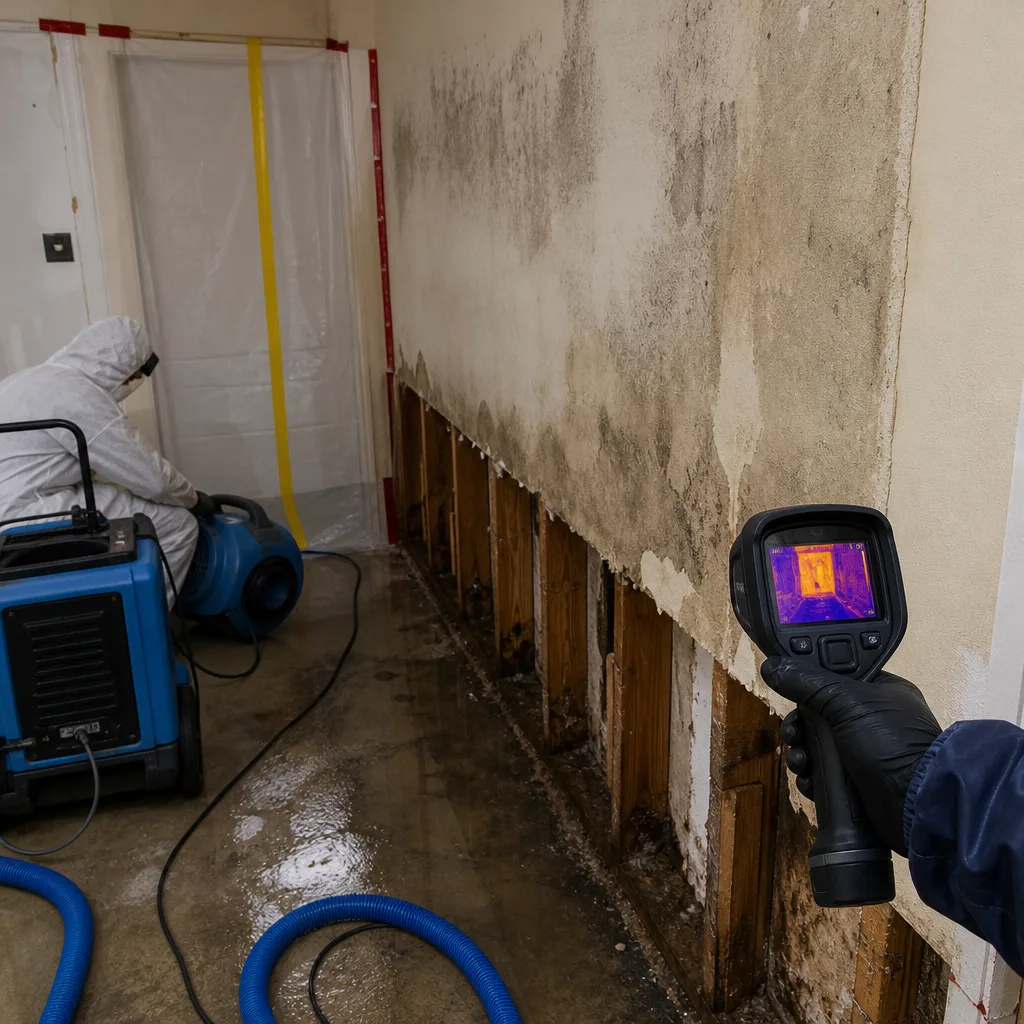 Before
 After
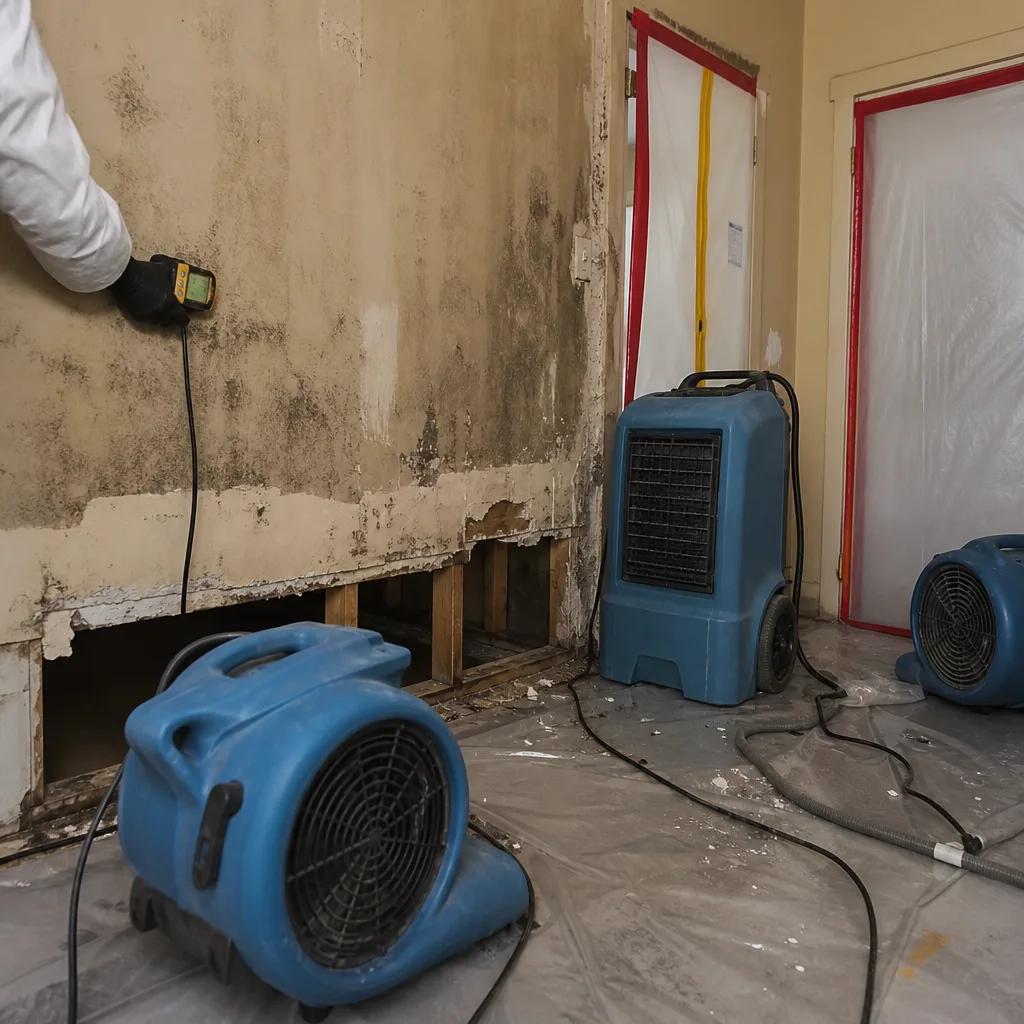 Before
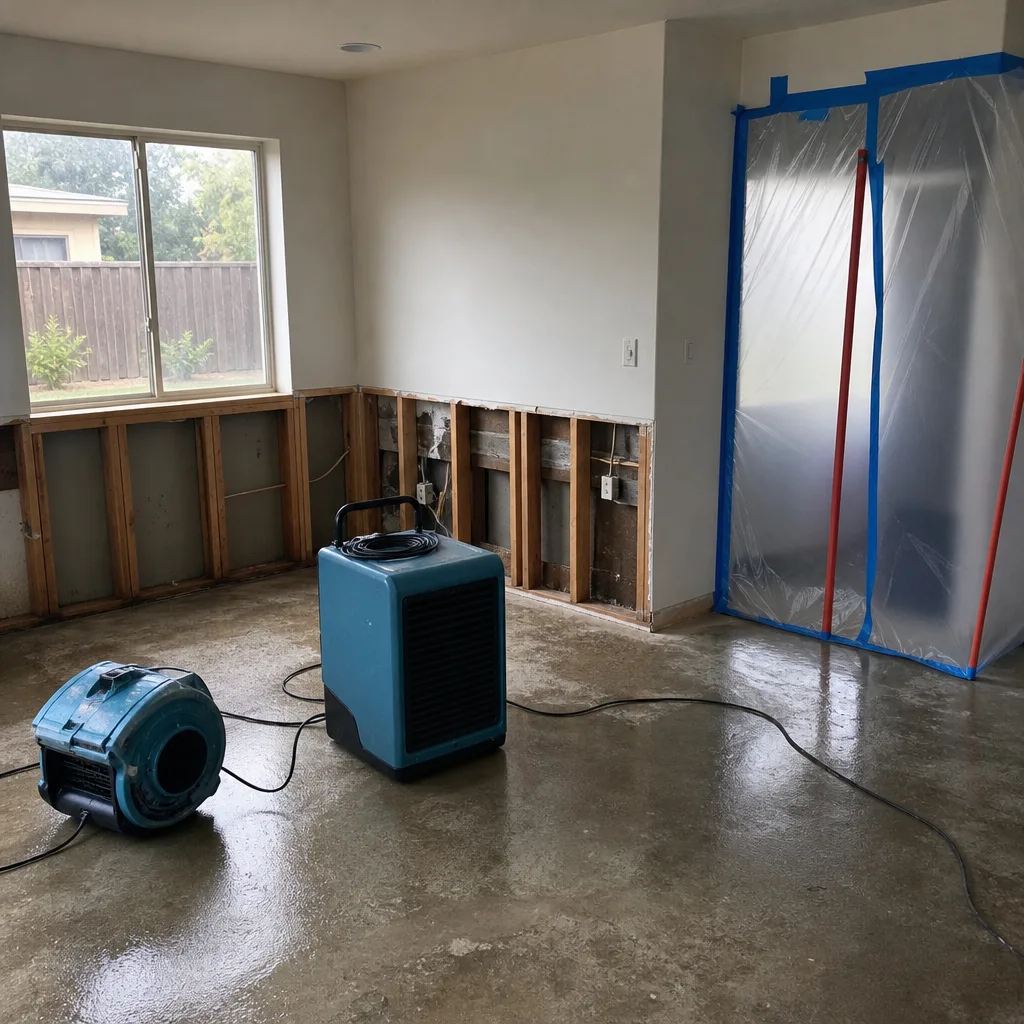 After
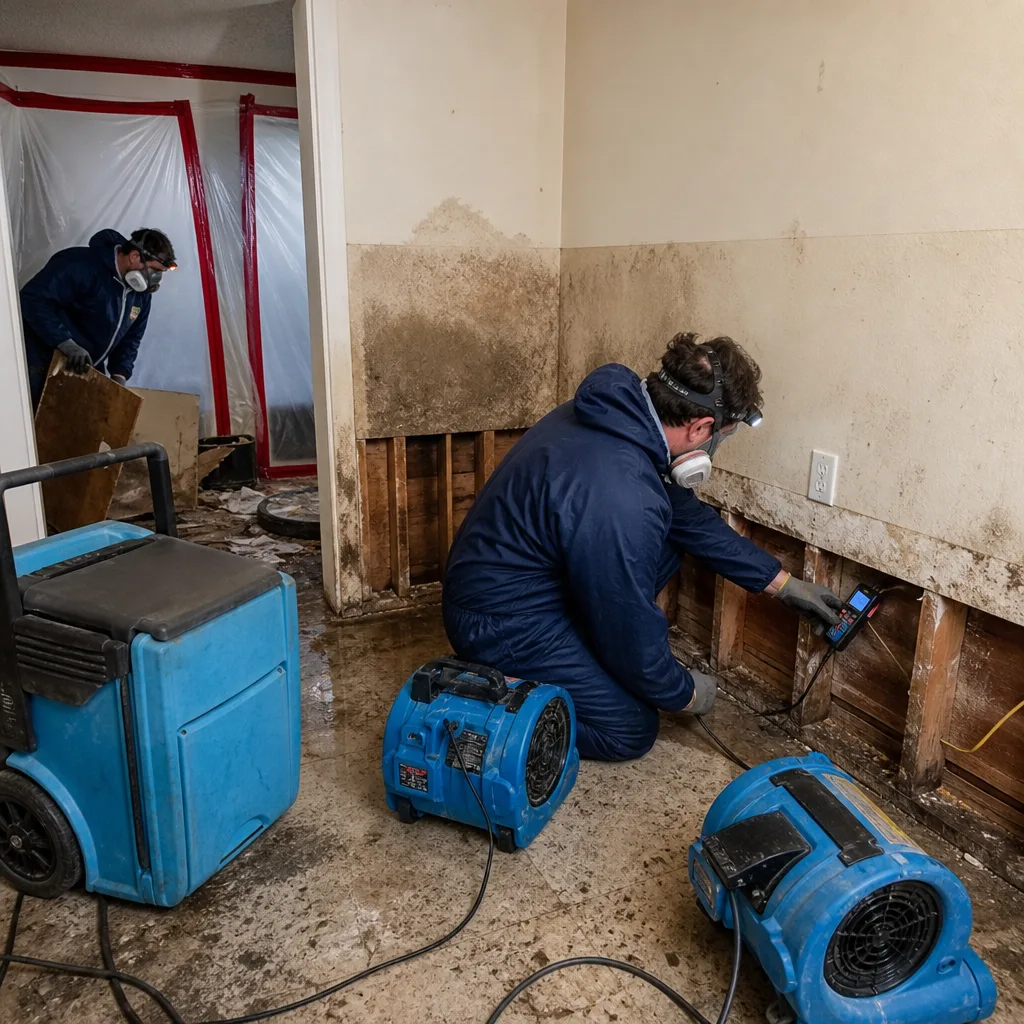 Before
 After
When to Call a Professional
If the restoration scope involves structural framing, exterior assemblies, or a wall area that might cross the Title 24 threshold, get a professional involved before work starts. If the damage includes visible mold beyond a small patch, a contractor with Cal/OSHA-compliant remediation protocols is the right call, not a handyman with bleach. If the property is in the Newport Beach coastal zone or under an HOA, the contractor needs to know both approval tracks. If you are managing an insurance claim, the contractor should be prepared to document the scope for the carrier and provide a Certificate of Completion at the end. Guild Water Damage offers free estimates in Newport Beach. Call (855) 855-9631 to discuss your specific property and scope before you pull a permit you may not need, or skip one you do.
Frequently Asked Questions
Most water damage restoration work that involves drying, cleaning, and replacing damaged drywall, insulation, and flooring with like materials does not require a permit. A permit is required when structural framing is altered, when more than 50% of a single wall assembly is replaced which triggers Title 24, or when electrical and plumbing work goes beyond simple fixture replacement. When in doubt, ask your contractor to confirm the scope in writing against the Newport Beach Building Division’s permit thresholds.
The 50% wall rule requires that when more than 50% of a single wall assembly is removed and replaced, the entire wall must be brought into current Title 24 energy code compliance. This means verifying insulation R-values and potentially adding continuous insulation or a vapor retarder that did not exist in the original construction. The rule applies per wall plane, not per room, so a single long exterior wall in a Newport Beach home can trigger compliance on what looks like a routine drywall job.
Yes. Cal/OSHA Title 8, Section 5199 regulates mold remediation as an occupational standard, and it requires written assessment for contamination areas over 100 square feet, containment with negative air pressure for larger jobs, and proper worker protection. The standard applies to contractors, not homeowners, but it directly affects the quality and safety of the remediation work performed inside a home.
Exterior restoration work that qualifies as like-for-like repair and maintenance is generally exempt from a coastal development permit even in the Newport Beach coastal zone. Changing materials, altering elevations, or modifying exterior features can trigger a minor CDP or full CDP review. Confirm with the Newport Beach Community Development Department before exterior restoration work starts, because the building permit and the coastal permit are separate approval tracks.
Most Newport Beach HOAs require architectural committee review for exterior work, including siding, windows, roofing, and deck repairs, even when the work is repair and replacement after a loss. Emergency work may qualify for after-the-fact review, but skipping the HOA process entirely can create fines and a forced modification review. Check the CC&Rs and contact the HOA management company before exterior work starts.
A Certificate of Completion is a written document from the restoration contractor confirming the scope of work was completed according to the agreed protocol, with dates, equipment used, and final moisture or clearance data. It matters at resale, where California disclosure forms ask about past damage and repairs, and during insurance claim audits, where the carrier may ask for proof that the work was actually performed. Most contractors don’t provide one unless asked. Ask before the work starts.
The Bottom Line
California’s restoration permitting framework is layered, and Newport Beach adds coastal and HOA dimensions that barely exist anywhere else in the state. The permit triggers that matter most are structural alterations, the Title 24 50% wall assembly rule, the coastal development permit threshold for exterior work, and the Cal/OSHA containment requirements for mold remediation over 100 square feet. Health and Safety Code Section 17920.3 creates a compliance timeline that runs separate from any insurance negotiation. A Certificate of Completion protects the homeowner at resale and during claim audits, and it should be requested, not assumed. When the scope is unclear, the cheapest insurance against a permit mistake is a ten-minute call to a contractor who knows the local code landscape. For more guides & resources on navigating restoration in Newport Beach, explore our blog.
Written by the team at Guild Water Damage, serving Newport Beach since 2017.