Last updated October 30, 2026
 Water damage drying
 Fire & smoke cleanup
 Mold remediation
 Storm response
 Sewage cleanup
 Reconstruction
Free visual inspection and a written scope of work before any mitigation begins - photos, moisture readings, and drying logs go in your claim file
The scope we write is the scope we bill. Anything new gets shown to you, in writing, before we touch it.
Get your free estimateDamage Restoration Cost Breakdown: The Newport Beach Homeowner’s Reference for 2026
The lowest restoration bid in Newport Beach is almost never the cheapest outcome. We’ve watched too many homeowners accept a price that looked reasonable in the moment, only to discover six months later that their walls were still holding moisture above what the IICRC S500 standard allows. That hidden moisture becomes a mold remediation claim, and that secondary claim averages 2.4 times the original restoration cost. This guide breaks down what restoration actually costs in Newport Beach in 2026, line by line, so you can evaluate a bid for completeness rather than just price. For Damage Restoration Warning Signs: A Newport Beach Homeowner’s Reference Guide, see our companion resource.
Restoration work we handle
Quick Answer
Water damage restoration in Newport Beach typically ranges from $2,400 to $7,800 for a standard Category 1 loss affecting 300 – 500 square feet. The spread comes down to three variables: the water category, the equipment days required to hit drying targets, and whether rebuild work meets coastal-grade material requirements. Expect to pay 20 – 35% above national averages in this market, and treat any bid that’s dramatically lower as a signal that scope is being cut.
Table of Contents
- 2026 Labor Rate Ranges in Newport Beach
- Equipment Line Items That Belong On Every Invoice
- Category 1 vs. Category 2 vs. Category 3: The Cost Difference
- How Xactimate Shapes Your Claim (And Where Newport Beach Costs Get Undercut)
- Rebuild Costs: Coastal-Grade Materials Change the Math
- Mold Remediation and Fire Damage: Scope-Based Pricing
- How Insurance Actually Pays for Restoration
- Common Mistakes to Avoid
- When to Call a Professional
- Frequently Asked Questions
- The Bottom Line
2026 Labor Rate Ranges in Newport Beach
Labor is the largest single line item in any restoration bid, and Newport Beach rates sit well above the national baseline. Here’s what you should expect to see in 2026, broken out by role so bundled pricing becomes transparent.
Water mitigation technicians bill between $85 and $145 per hour in Newport Beach. These are the crews running extraction, setting equipment, and monitoring drying progress. The range reflects certification level and whether the company employs W2 staff or subcontracts. A W2 crew with IICRC-certified technicians costs more per hour but resolves the job faster because they’re not switching between three other active losses the same day.
Certified industrial hygienists come in at $150 to $250 per hour. You’ll typically encounter one for mold assessments, post-remediation clearance testing, or when a Category 3 loss requires environmental sampling before and after work. This is a third-party role in most cases, which matters: an independent hygienist has no financial incentive to overstate or understate contamination levels.
Rebuild contractors in Newport Beach bill $95 to $175 per hour depending on trade. Finish carpenters, drywall specialists, and painters fall at the lower end. Licensed electricians and plumbers at the upper end. The coastal market premium shows up here most clearly: contractors who work the Balboa Peninsula and Lido Isle routinely price 10 – 15% above those serving inland Orange County, driven by parking logistics, HOA access requirements, and the age of the housing stock.
When you review a bid, ask for labor to be line-itemed by role. A bid that lumps “labor” into one number makes it impossible to tell whether you’re paying an electrician’s rate for drywall work.
Equipment Line Items That Belong On Every Invoice
Equipment charges are where under-scoped bids hide their cost-cutting. A legitimate drying project in Newport Beach should show specific equipment categories with daily rates and quantities. Here’s what to look for.
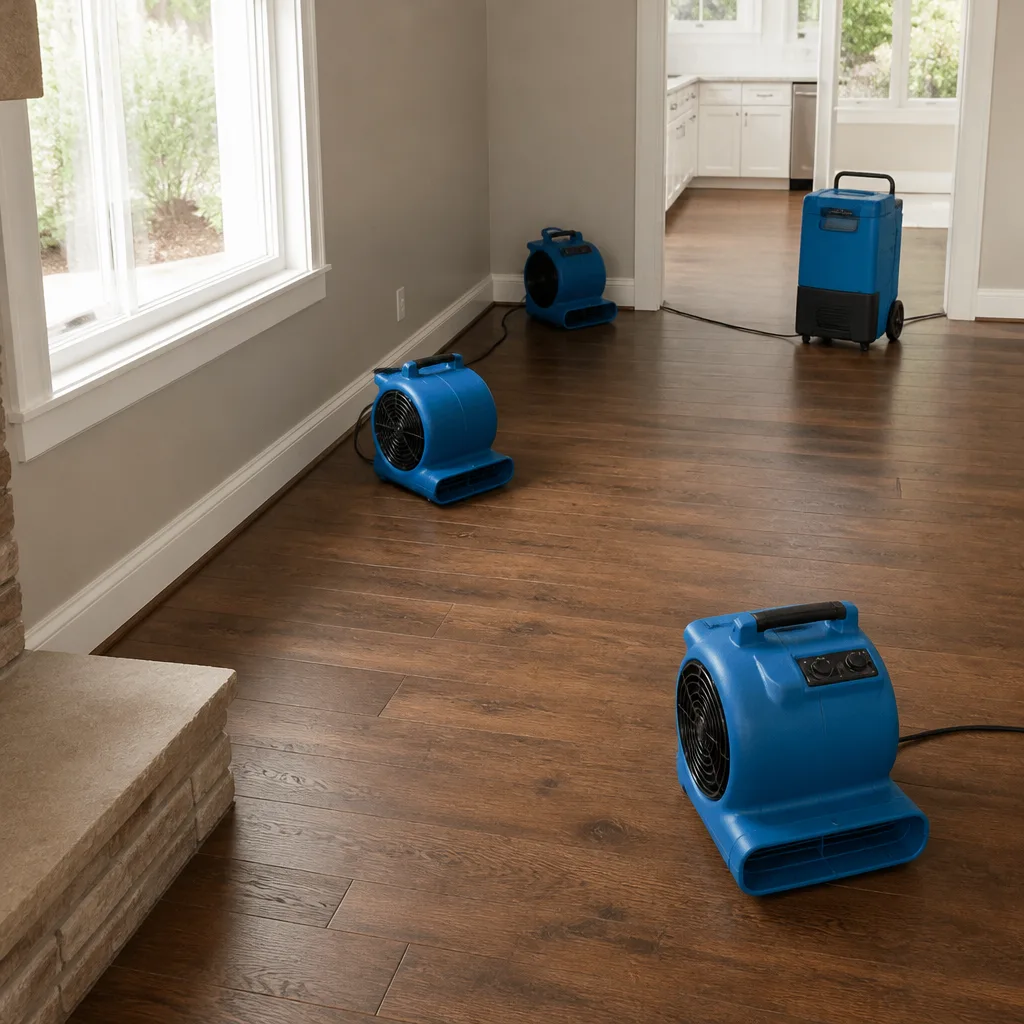
LGR dehumidifiers (low-grain refrigerant) run $55 to $85 per day per unit in 2026. The number of units needed scales with affected square footage and the water class. A 400-square-foot living room with wet carpet pad needs one to two LGRs. A Category 2 loss that wicked up drywall needs twice that because the wall cavities are now part of the drying equation. If your bid shows one dehumidifier for a multi-room loss, the drying plan is inadequate.
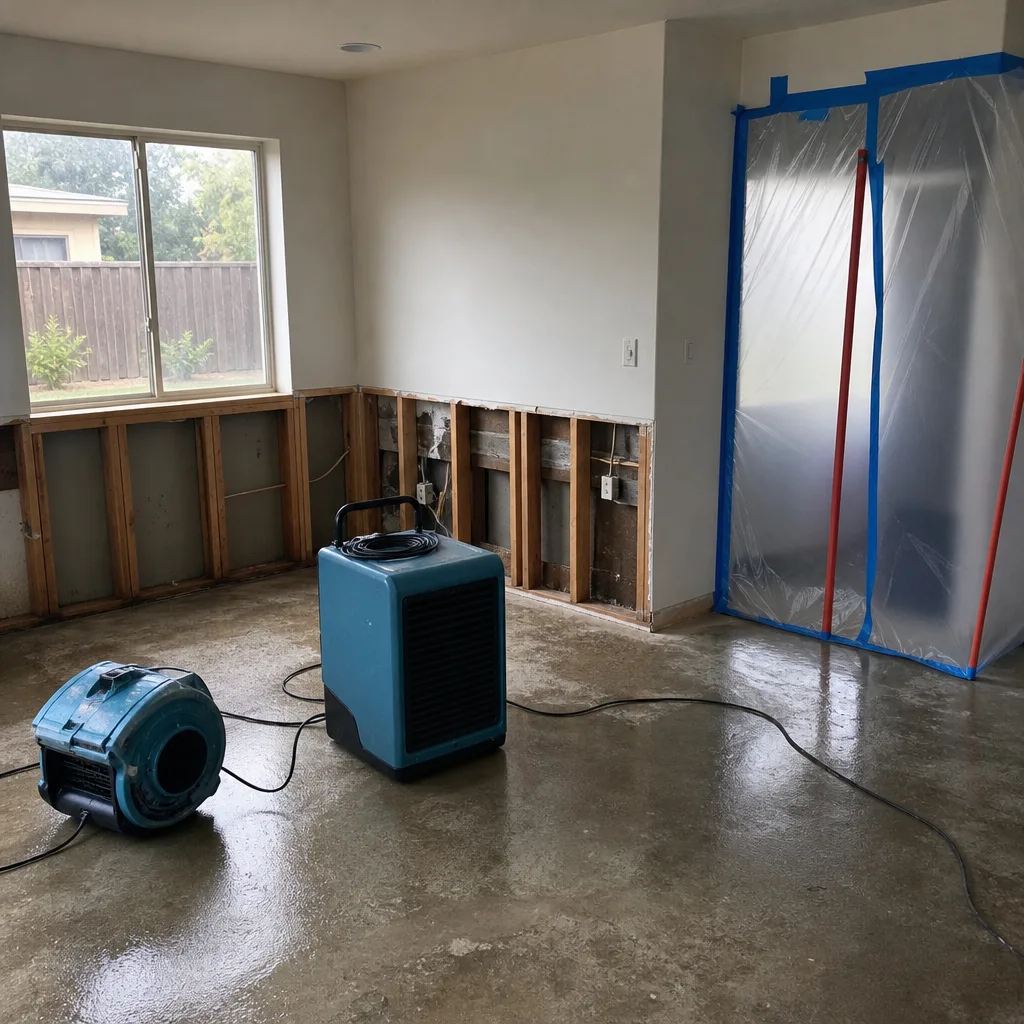
Air movers bill at $18 to $28 per day each. Industry standard is roughly one air mover per 50 to 70 square feet of affected flooring surface. A 500-square-foot great room should show eight to ten air movers on the invoice. Fewer than that means the technician intends to rely on passive evaporation, which extends the drying timeline by days and raises the risk of secondary mold growth in Newport Beach’s marine air.
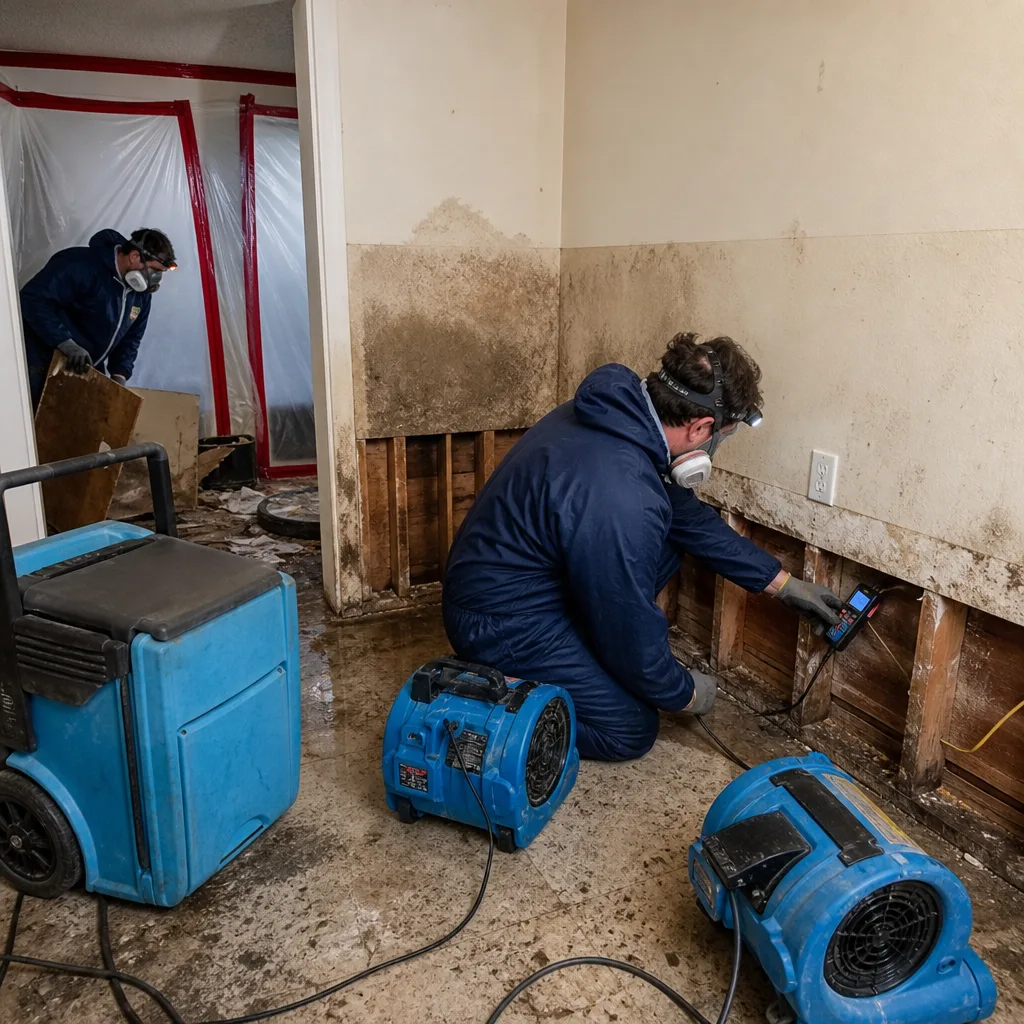
HEPA air scrubbers at $45 to $75 per day appear when there’s any suspicion of mold, Category 3 water, or pre-existing respiratory concerns in the household. They’re negative-pressure machines that prevent contaminated air from migrating into unaffected areas. Not every water loss requires one, but every mold remediation job does.
We run Guild Water Damage home equipment fleets built on Dri-Eaz and Phoenix LGRs with XPOWER air movers. The reason matters to your bottom line: professional-grade equipment hits drying targets in 3 – 4 days rather than the 7 – 10 days typical of rental-grade machines, and equipment days are a direct cost multiplier on every invoice.
Category 1 vs. Category 2 vs. Category 3: The Cost Difference
Water category classification is the single biggest scope dispute in Newport Beach restoration claims. The IICRC S500 standard defines three categories, and each one changes what must be removed, what can be dried in place, and what the job ultimately costs.
Category 1: Clean Water
This is water from a supply line, a failed water heater, or an overflowing bathtub with no contaminants. At 300 square feet of affected flooring, a Category 1 loss in Newport Beach typically runs $2,400 to $4,200. Most materials can be dried in place: carpet can often be saved, drywall that wicked less than 24 inches can be dried in the cavity, and the job wraps in 3 – 5 days.
Category 2: Gray Water
Gray water contains significant biological or chemical contaminants. Washing machine overflow, dishwasher discharge, and sump pump failures all fall here. The same 300-square-foot loss costs $3,800 to $6,500 because contaminated materials must be treated or removed. Carpet pad is almost always replaced at this level, affected drywall is typically cut out to 24 inches above the water line, and antimicrobial application becomes a required line item.
Category 3: Black Water
Sewage backups, floodwater from outside, and any water that has sat for more than 72 hours is Category 3. Expect $6,000 to $11,000 for 300 square feet. Everything porous goes: carpet, pad, baseboards, drywall up to the moisture line plus 24 inches, and sometimes subfloor sections. The job requires HEPA air scrubbers, full antimicrobial treatment, and often a hygienist’s clearance test before rebuild begins.
Misclassification is the most common scope dispute we see in Newport Beach because Category 3 looks different to different people. An adjuster reviewing photos remotely might classify a loss as Category 2 when the field technician saw sewage solids. That $2,500 classification difference is worth arguing over with documentation in hand.
How Xactimate Shapes Your Claim (And Where Newport Beach Costs Get Undercut)
Nearly every insurance carrier in Southern California uses Xactimate, the industry’s dominant estimating software, as the pricing backbone for restoration claims. Adjusters and restoration contractors both work from Xactimate line items, which means understanding how it functions gives you real leverage in a negotiation.
Xactimate prices are updated monthly and reflect regional cost data. When an adjuster writes an estimate for water mitigation in Newport Beach, the software pulls rates from the Orange County coastal market. In practice, that means replacement costs for drywall, baseboard, and labor reflect the local premium. The problem emerges in how the software handles specific cost codes.
Here’s what the underpayment pattern looks like in practice:
- Flooring codes default to builder-grade materials. If your Newport Beach home had wide-plank oak or tile that matches a specific pattern, the standard Xactimate line item will under-spec it. Restoration contractors with experience in Balboa Island and Corona del Mar know to upgrade the material spec before submitting the estimate.
- Coastal-grade drywall is not a default selection. Xactimate assumes standard 5/8-inch drywall unless told otherwise. Homes within the Newport Beach coastal zone often have moisture-resistant gypsum board specified in their original construction, and the replacement should match. If the estimate shows standard drywall, that’s a downgrade you’ll pay for later in maintenance costs.
- Permit costs often get missed entirely. Rebuild work in Newport Beach that touches structural framing, electrical, or plumbing requires city permits. Xactimate has permit line items, but adjusters frequently omit them. If your contractor’s estimate doesn’t show a permit line and the rebuild scope includes anything past finish work, that’s an underpayment.
For homeowners in Newport Beach, the practical takeaway is this: your restoration contractor should be walking you through the Xactimate estimate line by line, explaining what’s covered, what’s been omitted, and where the gaps are. Our Damage Restoration Permits, Codes & Inspections in CA: What You Need to Know explains when those line items trigger regulatory requirements. If a contractor won’t show you the line items, that’s a red flag.
Rebuild Costs: Coastal-Grade Materials Change the Math
Rebuild is the second phase of restoration, and it’s where Newport Beach prices diverge most sharply from inland California. The marine environment dictates material choices that simply don’t appear in standard bids, and choosing the cheaper option sets up a future claim.
Moisture-resistant gypsum board runs $18 to $24 per sheet compared to roughly $13 to $15 for standard drywall. In a 400-square-foot room with 8-foot ceilings, that’s a difference of only a few hundred dollars in material, but it matters. Standard drywall in a home three blocks from the harbor absorbs ambient humidity differently than in Irvine. The coastal-grade product is specified for a reason.
Closed-cell foam insulation in exterior walls costs $2.50 to $4.00 per square foot installed, roughly double fiberglass batts. Any exterior wall opened for water damage in Newport Beach should be refilled with closed-cell foam. It doesn’t wick moisture, doesn’t support mold growth, and acts as a vapor barrier in a climate where the RH hovers above 70% much of the year.
Mold-inhibiting primer adds $35 to $50 per gallon and should be specified on all new drywall and wood surfaces before paint. It’s a line item that gets cut from bids regularly because it’s invisible in the finished product. The value shows up three years later when your neighbor’s rebuilt wall has a musty smell and yours doesn’t.
We’ve handled Water Damage Restoration in Newport Beach projects where the rebuild estimate from an inland contractor came in $1,500 lower, only for the homeowner to pay for material upgrades on change orders once the project was underway. Always ask whether coastal-grade materials are included in the base price.
Mold Remediation and Fire Damage: Scope-Based Pricing
Mold remediation and fire damage restoration don’t fit the same neat per-square-foot calculations as water mitigation. Both are priced by scope, and understanding how scope is determined helps you spot inflated bids.
Mold Remediation Pricing
Mold remediation in Newport Beach typically runs $1,800 to $6,500 per affected area, with containment zones, HEPA air scrubbing, and antimicrobial treatment as core line items. The spread depends on two factors: the square footage colonized and whether the mold is hidden in wall cavities or visible on surfaces. Surface mold covering 50 square feet of a bathroom wall is on the low end. Mold hidden behind baseboards from a slow plumbing leak, where the drywall must be removed to access it, is on the high end.
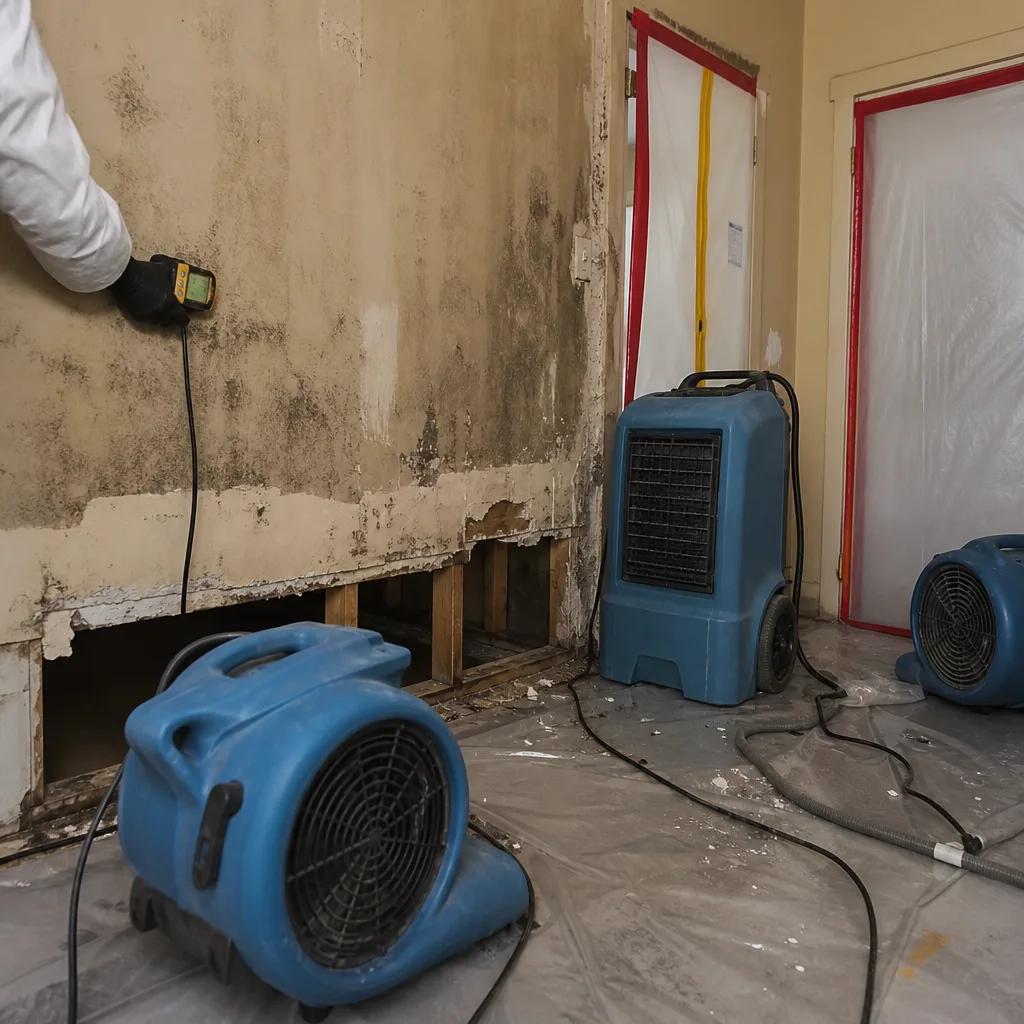
What separates a defensible bid from an inflated one is the containment plan. A legitimate Mold Remediation in Newport Beach project includes physical containment (plastic barriers enclosing the work area), negative air pressure, and a post-remediation visual inspection or clearance sample. A bid that charges $4,000 for wiping down visible mold with no containment isn’t remediation, it’s surface cleaning, and it will not hold up if the moisture source wasn’t addressed.
Fire Damage Restoration Pricing
Fire damage is the most variable restoration category because it includes a wider range of work: soot and smoke cleaning, structural repair, water damage from suppression efforts, and odor removal that often requires ozone or thermal fogging. A small kitchen fire contained to one room might run $8,000 to $15,000 all-in. A whole-home incident with structural involvement easily reaches $50,000 to $150,000.
The line item that drives fire restoration cost most visibly is content cleaning. It’s also the line item most often disputed, because homeowners undervalue it until they see the soot. Professional content cleaning in Newport Beach, with ultrasonics for small items and soft-goods processing, runs $1,500 to $6,000 for a typical home. If your Fire Damage Restoration in Newport Beach estimate omits content cleaning entirely, it’s an under-scope.
How Insurance Actually Pays for Restoration
Insurance is part of almost every Newport Beach restoration project, whether the policyholder is filing a claim or deciding to pay out of pocket. Understanding how the payment flow works changes how you read a contractor’s bid.
When you file a claim, your adjuster writes the initial scope using Xactimate. That estimate is the ceiling for what the carrier will pay on a standard claim. Your restoration contractor submits their own Xactimate estimate, and the two numbers get reconciled. The difference between those two estimates is where disputes happen, and where an experienced contractor earns their fee.
Here’s the sequence that matters for your financial protection:
- Documentation comes first. Before any demo work begins, the restoration contractor should be photographing every affected area and moisture reading. These photos are the evidence that anchors your claim amount.
- The written scope precedes the work. You should have a line-itemed estimate in hand, signed by you and validated against the adjuster’s scope, before equipment gets set or drywall gets cut.
- Supplementals are normal. Hidden damage is discovered during almost every restoration. When the contractor opens a wall and finds more moisture than the original scope anticipated, they file a supplemental estimate with the carrier. This is routine, not a red flag.
- Direct billing to insurance is common. Most restoration companies in Newport Beach bill the carrier directly for covered losses, meaning your out-of-pocket is limited to your deductible.
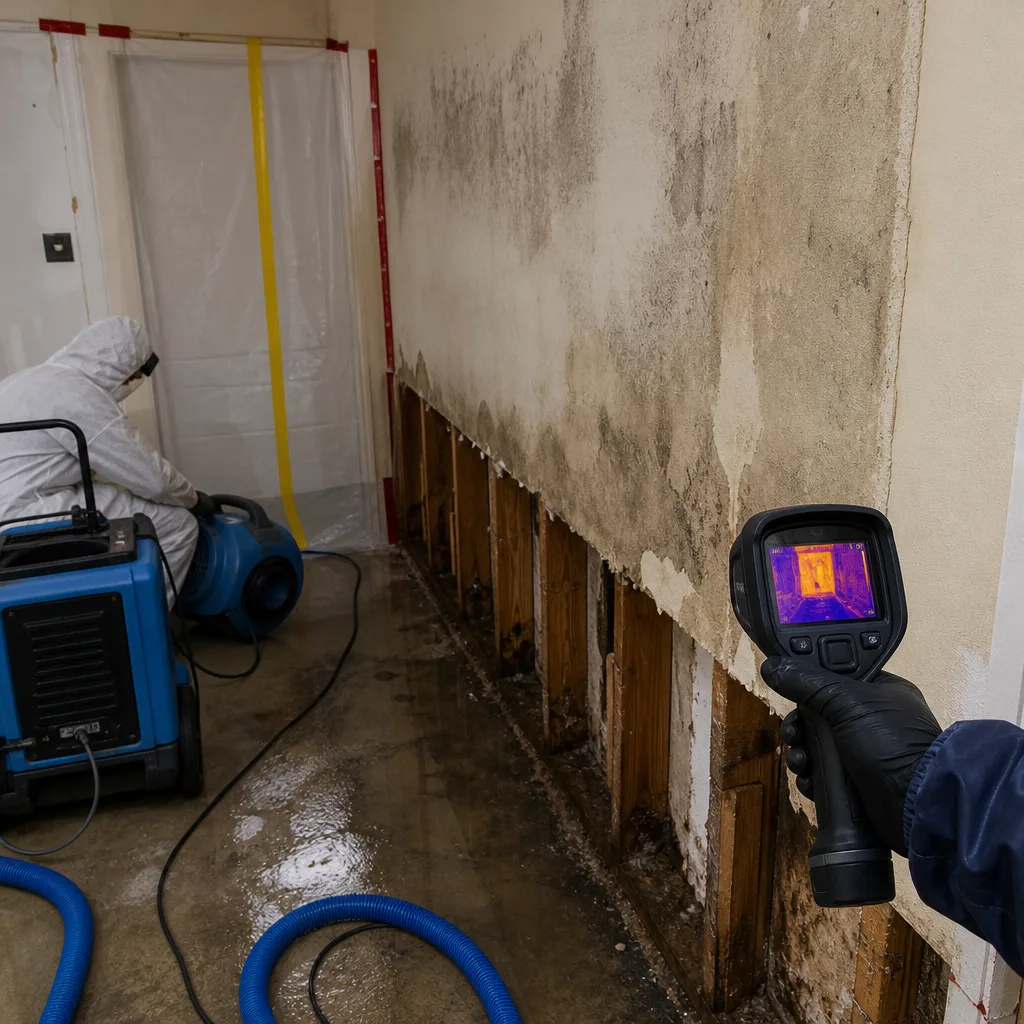
The contractors who get burned in this system are the ones who submit sloppy documentation. A photo of wet drywall with no moisture meter reading in the frame is worthless to an adjuster. A photo with a ThermoPro showing 38% moisture content in the baseboard is a line item that gets paid.
Common Mistakes to Avoid
- Accepting the first bid without checking equipment counts. If your 400-square-foot loss estimate shows two air movers and one dehumidifier for a four-day drying period, the bidder is under-scoping to win the job. You’ll pay for it in mold.
- Classifying a loss yourself before the adjuster arrives. “It’s just clean water from the supply line” is a claim that’s often wrong on inspection. Let the moisture readings and contamination evidence drive the category call, not your assumption.
- Skipping the written scope agreement. A verbal agreement to “take care of everything” leaves you exposed when the invoice arrives. Get the line items in writing before work starts.
- Comparing Newport Beach bids to inland California pricing. Your sister in Rancho Cucamonga paid $3,200 for her water loss. Your home near the Back Bay will cost more because the labor market, material requirements, and disposal costs are different. Comparing against the wrong market leads to bad decisions.
- Ignoring the drying log. Every legitimate mitigation job includes daily moisture readings documented over time. If your contractor can’t produce a drying log at the end of the job, they weren’t following an IICRC S500 process, and your drying was guesswork.
- Treating mold as a DIY project. Bleach on visible mold doesn’t address the conditions that created it, and Newport Beach’s humidity means recurrence is near-certain without proper containment and moisture control. A $75 bottle of concrobium is not a substitute for a $2,000 remediation.
- Paying the full invoice before the equipment is removed. Progress payments are standard in restoration. Full payment before the final moisture reading confirms drying targets were hit means you’ve surrendered your leverage.
When to Call a Professional
Any water loss that has penetrated beyond the surface of a single room, any visible mold growth larger than 10 square feet, and any fire that involved structural materials all warrant a professional assessment. Water that has wicked into drywall in a Newport Beach home will not dry on its own in the marine air. If you can see mold, it means the conditions for growth already existed for days or weeks. The assessment call takes an hour, and it either gives you a clear scope to work with or peace of mind that the problem is smaller than it looked. Guild Water Damage offers free estimates in Newport Beach. Call (855) 855-9631 and a credentialed technician will walk the loss with you, document the moisture map, and give you a written scope before anything gets cut or dried.
Frequently Asked Questions
Water damage restoration in Newport Beach costs between $2,400 and $7,800 for a typical Category 1 loss affecting 300 – 500 square feet, with Category 3 losses running $6,000 to $11,000 at that same size. The final price depends on equipment days, water category, and the rebuild scope. Call (855) 855-9631 for a free estimate with line-item pricing.
Most homeowner policies in Newport Beach cover sudden and accidental water damage, mold remediation resulting from a covered loss, and fire damage restoration, subject to your deductible and policy limits. The key variable is whether the damage resulted from a sudden event or from long-term neglect, because gradual leaks are typically excluded. Document everything before cleanup begins and let your restoration contractor coordinate directly with your adjuster.
Same-day assessment is available for active water losses in Newport Beach, and the assessment is what protects your financial position. The mitigation itself (extraction, equipment setup, initial drying) typically starts within 24 hours of your call. Every hour of delay increases the moisture saturation depth in drywall and flooring. Call (855) 855-9631 as soon as you detect the loss.
If the moisture map shows water has wicked into wall cavities or under flooring, you need remediation, not cleaning. Surface cleaning addresses what you can see, while the hidden moisture continues to support mold growth. An IICRC-certified technician with a moisture meter can map the actual affected area in under an hour. The assessment is free, and it means you’re not guessing.
Your restoration contractor should handle the adjuster communication as part of their scope. That includes submitting the Xactimate estimate, filing supplementals for hidden damage, and providing the photo documentation and moisture logs that support your claim amount. A contractor who expects you to negotiate with the carrier yourself is leaving the hardest part of the job to the person least equipped to handle it.
Three factors drive the Newport Beach premium: labor rates for certified technicians and rebuild trades run 20 – 35% above inland markets, coastal-grade materials (moisture-resistant drywall, closed-cell insulation, mold-inhibiting primer) cost more than standard building products, and disposal fees in coastal zones include environmental surcharges that don’t apply inland. A bid that looks 30% high against an Irvine comparison is often just correctly specified for a coastal home.
The Bottom Line
Restoration pricing in Newport Beach rewards homeowners who evaluate bids for completeness rather than price. The real financial risk in this market isn’t paying 10% more than a competitor’s quote. It’s signing a bid that omits the equipment days, material specs, or water category classification that determines whether your home is actually dry when the invoice is paid. A scope that hits IICRC S500 drying targets with professional-grade equipment, coastal-grade materials, and full documentation costs what it costs, and that cost is almost always lower than a secondary mold claim six months later. Get the written scope before work starts. Get the drying log when it ends. And call (855) 855-9631 if you want a credentialed assessment before you make any decision. Browse more guides & resources for Newport Beach homeowners.
Written by the team at Guild Water Damage, serving Newport Beach since 2017.
See the difference
 Before
 After
 Before
 After
 Before
 After