Last updated October 30, 2026
 Water damage drying
 Fire & smoke cleanup
 Mold remediation
 Storm response
 Sewage cleanup
 Reconstruction
Free visual inspection and a written scope of work before any mitigation begins - photos, moisture readings, and drying logs go in your claim file
The scope we write is the scope we bill. Anything new gets shown to you, in writing, before we touch it.
Get your free estimateWater Damage Restoration Maintenance Checklist for Newport Beach Homeowners
The most common source of water damage in Newport Beach isn’t a storm surge or a burst pipe. It’s a slow supply-line failure behind a washing machine or under a bathroom sink that drips for three weeks before anyone notices. In our experience responding to hundreds of coastal Orange County properties, the homes that avoid major Water Damage Restoration share one trait: the owner checks specific failure points on a schedule matched to local conditions, not a generic spring-and-fall calendar. This guide gives you that schedule, built around the components that actually fail first in a salt-air, high-humidity coastal climate. You’ll learn which five items to inspect monthly, which systems need seasonal attention, and how to document your baseline so a future insurance claim doesn’t turn into a dispute over what’s new damage versus pre-existing wear.
Restoration work we handle
Quick Answer
A Newport Beach water damage prevention checklist should prioritize monthly visual checks of supply lines, appliance connections, and under-sink areas; quarterly HVAC condensate drain flushing and water heater fitting inspections for salt-air corrosion; and annual documentation of baseline moisture readings with photos. For deeper prevention strategies, see our Water Damage Restoration Troubleshooting: Common Problems and How to Fix Them. Homes built before 1980 need semi-annual crawl space and sub-slab vapor barrier checks. The single highest-impact habit is replacing braided steel supply lines every 5 years, not 10, because coastal humidity accelerates internal hose degradation even when the exterior looks fine.
Table of Contents
- Monthly Supply Line and Appliance Connection Checks
- HVAC Condensate Drain Lines: The Newport Beach Failure Point
- Salt-Air Corrosion: Inspection Points Inland Checklists Miss
- Crawl Space and Sub-Slab Moisture for Pre-1980 Homes
- Documentation Protocol: Baseline Moisture Readings and Photos
- A Seasonal Inspection Calendar for Newport Beach
- Common Mistakes to Avoid
- When to Call a Professional
- Frequently Asked Questions
- The Bottom Line
Monthly Supply Line and Appliance Connection Checks
Braided steel supply lines are not lifetime components. The stainless braid protects the rubber inner hose from abrasion, but it does nothing to stop the rubber from degrading internally. In Newport Beach’s coastal humidity, that degradation runs about twice as fast as it does in inland cities like Riverside or Temecula. A hose rated for 10 years inland will typically start showing internal cracking at year 5 here, which is why we tell every homeowner we work with to swap supply lines on a 5-year cycle regardless of how the exterior braid looks.
Your monthly check takes about 10 minutes and covers five specific points:
- Washing machine hoses: Pull the machine out far enough to see the full length of both hoses. Look for rust on the braid, any bulge in the rubber near the connection fittings, and mineral deposits where the hose meets the valve. If you see green or white crust forming at the connection, the rubber washer inside is failing.
- Under-sink supply lines: Run a dry paper towel along the full length of each braided line, then check the towel. Any dampness means the hose has a pinhole leak that will fail completely within weeks, not months.
- Toilet supply lines and fill valves: Check the floor around the toilet base for any warping or discoloration in vinyl or laminate. A slow fill-valve leak often travels under the flooring and shows up yards away, which is why the floor inspection matters more than the visible valve.
- Dishwasher supply and drain connections: Open the cabinet door and check the junction box under the sink. A slow dishwasher leak often shows as condensation on the cabinet wall or a slight musty smell before any visible water appears.
- Water heater supply fittings: Check the threaded connections at the top of the tank for any sign of weeping. In coastal air, these fittings corrode from the outside as well as the inside, and the external corrosion accelerates stress on the threads.
Set a recurring calendar reminder for the first Saturday of each month. Consistency matters more than thoroughness: the point is to catch a failure at the drip stage, before it becomes a restoration project. If you do find active water intrusion, Water Damage Restoration in Newport Beach is the service that handles exactly this scenario, and our IICRC-certified process starts with containment and moisture mapping, not demolition.
HVAC Condensate Drain Lines: The Newport Beach Failure Point
Newport Beach HVAC systems run more days per year than almost anywhere else in the country. The marine layer keeps temperatures moderate enough that systems cycle constantly rather than running hard for a few summer months and resting all winter. That near-continuous operation means your condensate drain line produces water year-round, and any slowdown in flow creates a backup that spills into the air handler pan, the plenum, or the ceiling below a second-floor unit.
A healthy condensate line flows steadily while the system runs. An early blockage shows up as a thin trickle, intermittent dripping, or no flow at all while the unit is clearly running. Here’s how to check yours quarterly:
- Locate the primary drain line exit. It’s typically a white PVC pipe exiting near the outdoor condenser unit or a dedicated drain stack. During a cooling cycle, you should see a steady, thin stream of water.
- Check the secondary line. If your secondary drain (often located above a window or garage door) is dripping, the primary line is already blocked and you’re running on the backup. This is an emergency, not a maintenance item.
- Inspect the air handler pan. Open the access panel or look through the filter slot. Any standing water in the pan means the drain is compromised and the pan’s own drain path is partially blocked.
- Flush with warm water, not bleach. Bleach corrodes PVC glue joints and can crack the pipe over time. Pour 2 cups of warm water into the cleanout tee every 3 months. If the water doesn’t drain quickly, you have a clog that needs mechanical clearing.
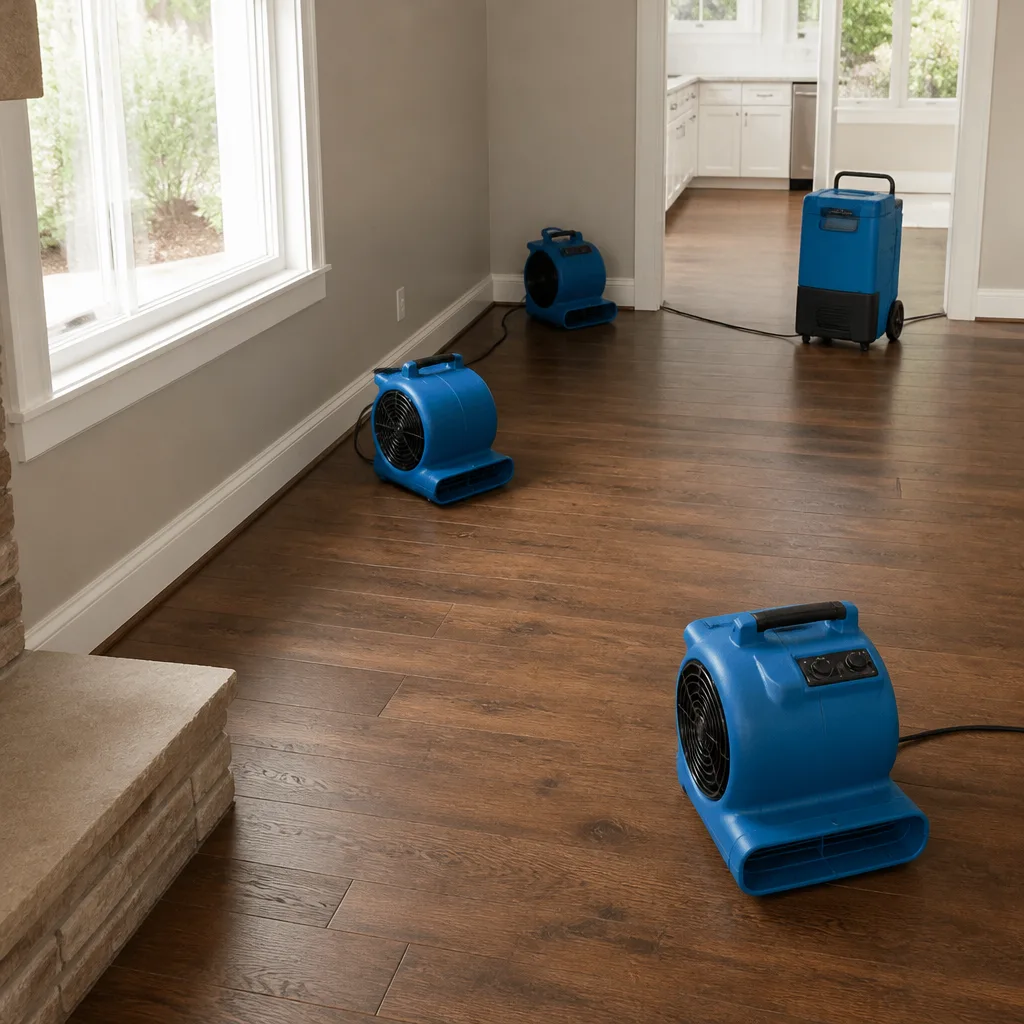
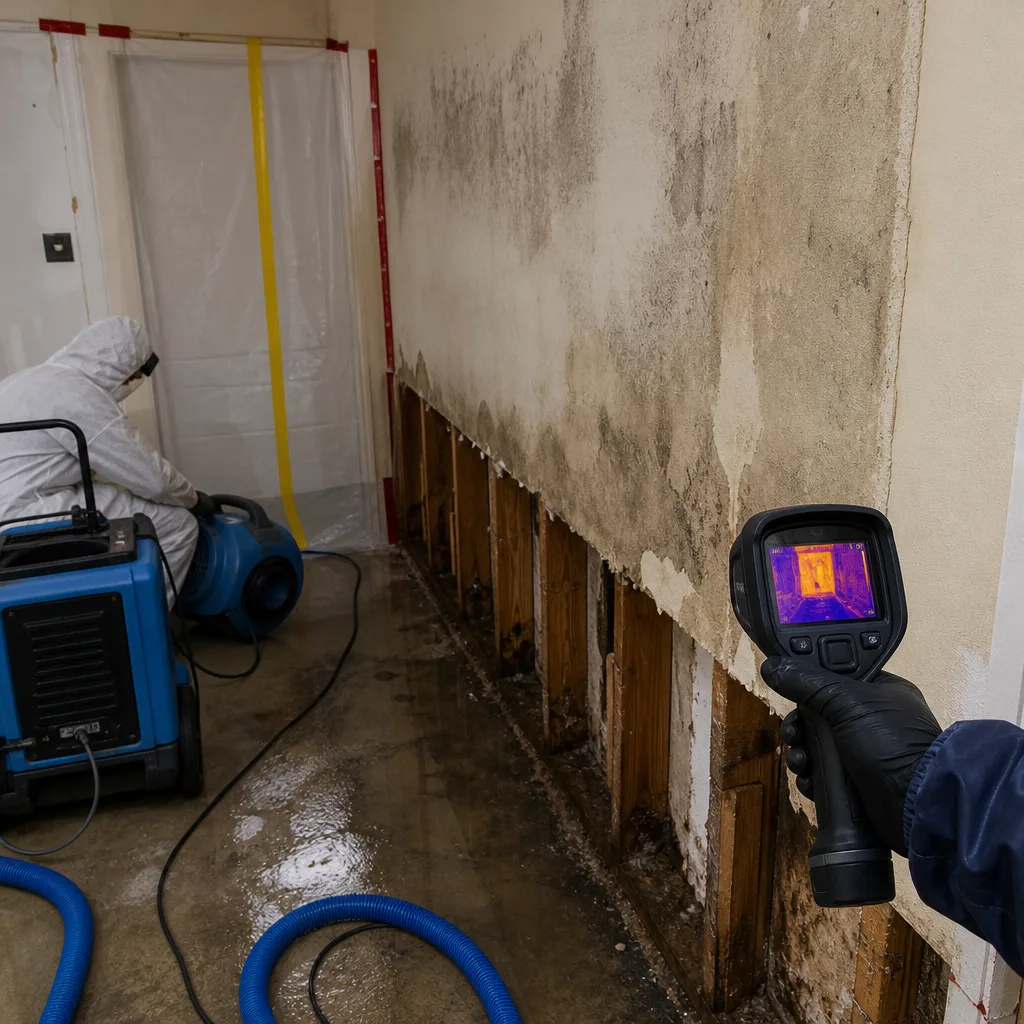
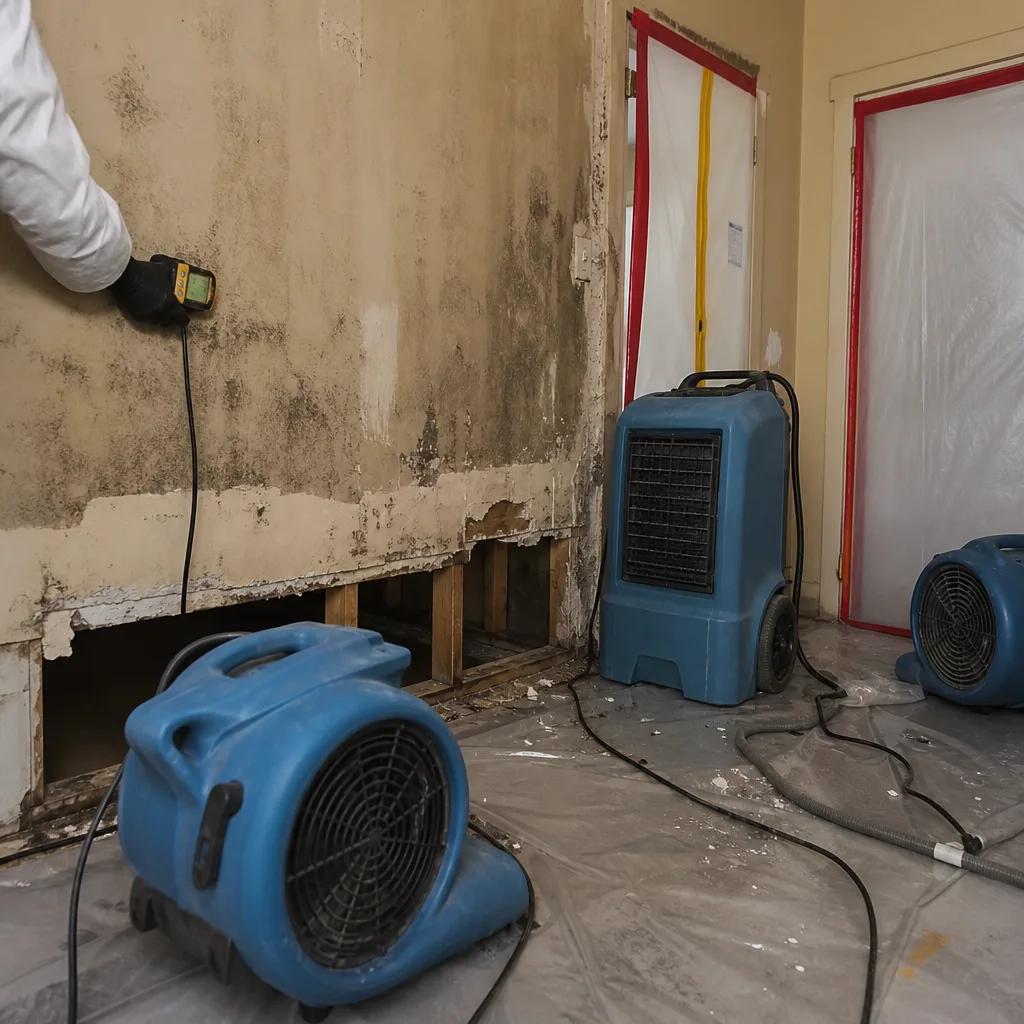
In our experience in Newport Beach, condensate failures spike in late summer, when systems have been running hard for 4-5 months and biological growth inside the line has had time to establish. Balboa Island, Corona del Mar, and other low-lying neighborhoods see the highest humidity levels and the fastest biofilm growth. A clogged condensate line that overflows for even one full day can saturate drywall, insulation, and subflooring, and by the time it’s visible on the ceiling it’s already been wet for longer than that. We run professional-grade Dri-Eaz and Phoenix drying equipment on exactly these losses, because the damage profile is almost always larger than the visible stain suggests.
Salt-Air Corrosion: Inspection Points Inland Checklists Miss
Most homeowner maintenance guides are written for inland climates and skip salt-air corrosion entirely. Newport Beach properties sit in a continuous airborne salt environment, which means metal fittings, threaded connections, and even the solder joints in copper supply lines degrade on an accelerated timeline. The corrosion cycle works like this: salt particles settle on metal surfaces, marine-layer humidity keeps them damp, and the resulting electrolytic reaction eats away at the metal far faster than dry inland air ever would.
Add these five inspection points to your routine, which are the ones inland checklists never mention:
- Hose bibs and exterior spigots: Check for white, powdery corrosion around the threaded outlet and the packing nut. A corroded hose bib can fail at the wall, sending water into the wall cavity behind the stucco or siding. In Newport Beach, we see this failure most often on west-facing walls, where prevailing ocean breezes deposit the most salt.
- Water heater fittings: The threaded connections at the top of the tank, the pressure relief valve, and the drain valve are all corrosion points. Look for any green or white buildup where dissimilar metals meet: brass fittings on steel tanks, copper flex lines on brass nipples. If the corrosion looks structural rather than surface-level, replace the fitting before it fails under pressure.
- Washing machine supply valves: The shutoff valves behind the washer are brass and sit exposed to whatever air circulation the laundry room gets. In coastal homes, these valves seize and corrode at the stem, which means they can’t be shut off when an emergency arises, and the valve body itself can crack at the solder joint.
- Undersink shutoff valves: Same failure mode, higher consequence. A seized under-sink valve means you can’t isolate a leaking supply line without shutting off the whole house. Test each valve quarterly by turning it a quarter-turn closed and back open. If it resists or drips from the stem, replace it proactively.
- Copper pipe solder joints in unconditioned spaces: Garages, utility closets, and exterior walls all expose copper to salt-air corrosion at the joints. Look for green staining or crusty white deposits at any exposed solder point. A pin hole in a copper joint can spray a fine mist for months before anyone notices.
This is not a theoretical concern. We’ve responded to multiple Newport Beach water losses where the root cause was a salt-corroded hose bib that failed at the wall connection, flooding a garage or lower-level room while the homeowner was at work. The Injectidry cavity-drying technology we operate on these losses can dry inside the wall cavity without opening up the whole wall, which preserves more of the original structure and reduces the repair scope. But the better outcome is catching the corrosion before it becomes a leak, and that means looking at these fittings specifically, monthly, with salt air in mind.
Crawl Space and Sub-Slab Moisture for Pre-1980 Homes
Newport Beach has a substantial stock of homes built between 1950 and 1980, and almost none of them have the vapor barriers that current building code requires. Vapor barrier requirements in California residential construction came into the code in the late 1970s, which means any home built before roughly 1980 was constructed without the plastic sheeting that blocks ground moisture from migrating up into the floor framing and living space.
If your home sits over a crawl space and predates 1980, add these checks to a semi-annual schedule (once in late spring, once in late fall, matching the two seasons when Newport Beach humidity peaks):
- Check for visible moisture or standing water. In the late spring, after the marine layer season, condensation on the underside of floor joists is common in unconditioned crawl spaces. Any beading or dripping water warrants investigation, not just monitoring.
- Look for wood staining or fungal growth on the joists and subfloor. Dark staining that follows the grain of the wood is an early moisture marker. Actual fungal growth, even small spots, means the wood has been wet long enough to support colonization and needs professional assessment.
- Inspect the ground surface. Damp, dark soil that clings to your fingers when you press it means groundwater is rising or drainage is insufficient. Dry, light-colored soil is what you want to see.
- Check foundation vents for blockage. Many older Newport Beach homes have inadequate or blocked venting, which traps moisture inside the crawl space. Clear any debris, but be aware that some older homes were designed without adequate vent counts and may need mechanical dehumidification anyway.
Sub-slab moisture checks apply to homes on concrete slabs with no crawl space. A moisture meter pressed against the slab surface can reveal elevated moisture content that will eventually migrate up through flooring. This matters most for wood floors on slabs, which is a common configuration in many Newport Beach neighborhoods including Newport Heights and Lido Isle. A slab moisture reading above 4% on the meter’s wood scale warrants a professional assessment. RIA-member restoration firms like ours are trained in these moisture-mapping protocols specifically because the association’s standards are built around scientific measurement, not visual inspection.
Documentation Protocol: Baseline Moisture Readings and Photos
The difference between a smooth insurance claim and a denied one often comes down to documentation. Adjusters need to determine whether damage is new or pre-existing, and homeowners who can show a dated baseline of their property’s condition have a much stronger position. Here is the documentation protocol we recommend to every Newport Beach homeowner, regardless of whether they’re currently dealing with a loss. For more guides & resources on protecting your property, visit our blog:
- Establish a baseline now, before anything goes wrong. Buy a basic pinless moisture meter (reliable units start around $40 at any hardware store). Take monthly readings at three fixed points in each room: the wall adjacent to any plumbing fixture, the floor near any exterior door, and the ceiling below any second-floor bathroom.
- Log the readings with date and conditions. Note the outdoor weather, indoor temperature, and whether the HVAC system has been running. A reading of 12% in August during a marine-layer week means something different than 12% in January during a dry Santa Ana stretch.
- Photograph everything on a fixed schedule. Once per quarter, photograph each supply line connection, water heater fitting, hose bib, and the area under every sink. Keep photos in a cloud folder with date stamps. When a failure happens, you’ll have visual proof of what the area looked like before, which removes any ambiguity about pre-existing damage.
- Store the baseline in a format you can share. A simple spreadsheet works fine. The critical fields are date, location, moisture reading, and a photo link. When you file a claim, this becomes your evidence package.
We’ve worked claims in Newport Beach where this documentation made the difference between a covered restoration and a contested one. A homeowner who can show three years of quarterly photos and moisture logs offers the adjuster something invaluable: proof the damage is acute and new, not chronic and ignored. That distinction changes the entire conversation. The Guild Water Damage home approach to restoration always begins with the same kind of baseline documentation, so when we arrive on a loss, we’re already speaking the same language as the adjuster.
A Seasonal Inspection Calendar for Newport Beach
Newport Beach’s climate doesn’t follow the four-season model most checklists assume. The marine layer peaks from late May through July, Santa Ana winds hit in the fall, and the winter months bring occasional heavy rain events between long dry spells. Here is the inspection calendar calibrated to how Newport Beach properties actually respond to the seasons:
Monthly (year-round): Supply line checks, under-sink inspections, hose bib visual checks, water heater fitting inspection, and any exposed pipe joint checks. This is the core routine that catches slow leaks at the drip stage.
Late May through July (marine layer season): Bi-weekly HVAC condensate drain checks. This is when continuous condensation production meets maximum humidity, and the biological growth inside drain lines accelerates dramatically. Also check any exterior door thresholds and window frames for swelling or sticking, which signals elevated indoor humidity levels.
September and October (pre-Santa Ana): Deep clean HVAC drain lines and replace any supply lines approaching the 5-year mark. Santa Ana winds dry everything out and can crack aged rubber hoses faster than any other season. The month before the first Santa Ana event is the right time for proactive replacement.
November through February (rainy season): Clear all exterior drains, check roof gutters and downspouts, and inspect the grade around the foundation for any pooling. Newport Beach homes on sloped lots, especially in Newport Coast and Pelican Hill, are vulnerable to runoff intrusion when heavy rain hits the hillsides. Check your drainage path before the first major storm, not after.
Common Mistakes to Avoid
- Using a 10-year replacement cycle for supply lines. Coastal humidity cuts the useful life of braided steel hoses in half. Replace at 5 years, every time, regardless of how the exterior braid looks.
- Pouring bleach into HVAC condensate lines. Bleach corrodes PVC and creates weak points at the glue joints. Use warm water for routine flushing, and have the line professionally cleared if it’s slow.
- Checking for water damage only where it’s visible. By the time water shows up on a ceiling or wall, the damage behind it is already 3-5 times larger than the visible stain. Monthly checks of supply lines catch failures before they reach visible surfaces.
- Assuming a home inspection catches everything. Home inspectors check for code violations and obvious defects, but they don’t document baseline moisture readings or flag marginal supply lines that may fail in a year or two. Your own monthly ritual is the more meaningful safeguard.
- Ignoring the secondary HVAC drain line. A dripping secondary line means the primary is blocked and the backup is in use. This is a same-day emergency, not a note for next weekend.
- Skipping the documentation step. Even diligent homeowners who check everything often fail to log what they see. Without dated baselines, future repair work is harder to scope and an insurance claim becomes a negotiation rather than a straightforward process.
- Waiting until after the first rain to check drainage. Once runoff is flowing, it’s too late to fix a clogged drain or regrade soil around the foundation. Newport Beach’s first heavy rain of the season always comes sooner than expected.
When to Call a Professional
Some failures demand professional assessment the moment they’re discovered. Any active water intrusion that has been running for more than 24 hours, water that has reached drywall or flooring, any visible mold growth, or a musty odor that persists after drying the area is a restoration situation, not a maintenance issue. Similarly, if your moisture meter reads above 15% in wood flooring or above 20% in drywall, the material is saturated and needs professional drying. Mold Remediation in Newport Beach becomes relevant when visible growth appears or when damp conditions have persisted for more than 48 hours, because mold colonization starts quickly in Newport Beach’s climate. Guild Water Damage offers free estimates in Newport Beach; call (855) 855-9631 and our IICRC-certified team will assess the situation with professional moisture mapping equipment, not guesswork.
Frequently Asked Questions
Check braided steel supply lines monthly by touch and by visual inspection, and replace them every 5 years regardless of appearance. Coastal humidity degrades the internal rubber roughly twice as fast as inland conditions, which makes the 5-year replacement cycle the single most important habit on this checklist.
Slow supply-line failures behind washing machines and under sinks are the most common cause of water damage in Newport Beach, not storms or burst pipes. These leaks drip undetected for days or weeks because the water travels under flooring or into wall cavities before becoming visible.
A clogged condensate line shows up as a stopped or reduced water flow at the drain exit during cooling cycles, water in the air handler pan, or a dripping secondary drain line above a window or garage door. Flush the line with warm water every 3 months to clear early blockages before they become overflows.
If your home was built before 1980, it likely has no vapor barrier, and one should be professionally evaluated for installation. A vapor barrier blocks ground moisture from migrating up into floor framing, which is a chronic source of hidden moisture damage in older Newport Beach homes.
Coverage depends on your policy language and whether the leak was sudden or gradual. Many policies exclude damage from leaks that occurred over weeks or months, which is why monthly inspections and documentation of your baseline condition are so important in Newport Beach. Photo logs and dated moisture readings strengthen a claim by proving damage is acute, not chronic.
Shut off the water source if it’s safe to do so, remove any items that can be moved, and call a professional restoration contractor immediately. Water spreads through building materials fast, and the first 24-48 hours determine how much material can be dried and saved versus torn out and replaced. Call (855) 855-9631 for an exact quote; estimates are free.
The Bottom Line
Newport Beach homes face a specific set of water damage risks that inland checklists don’t address. Salt-air corrosion attacks fittings and joints, constant HVAC runtime clogs condensate lines faster than anywhere else in California, and pre-1980 construction lacks the vapor barriers that keep crawl space moisture in check. The prevention routine that actually works here is monthly supply-line inspection, quarterly condensate flushing, semi-annual crawl space checks for older homes, and disciplined documentation of your baseline condition. None of this is complicated, and all of it is cheaper than restoration. Fire Damage Restoration in Newport Beach and water restoration both start the same way when prevention fails, and prevention always costs less. If you find something concerning during any check, call (855) 855-9631 for a professional assessment before it becomes a full-scale loss.
Written by the team at Guild Water Damage, serving Newport Beach since 2017.
See the difference
 Before
 After
 Before
 After
 Before
 After