
Last updated October 30, 2026
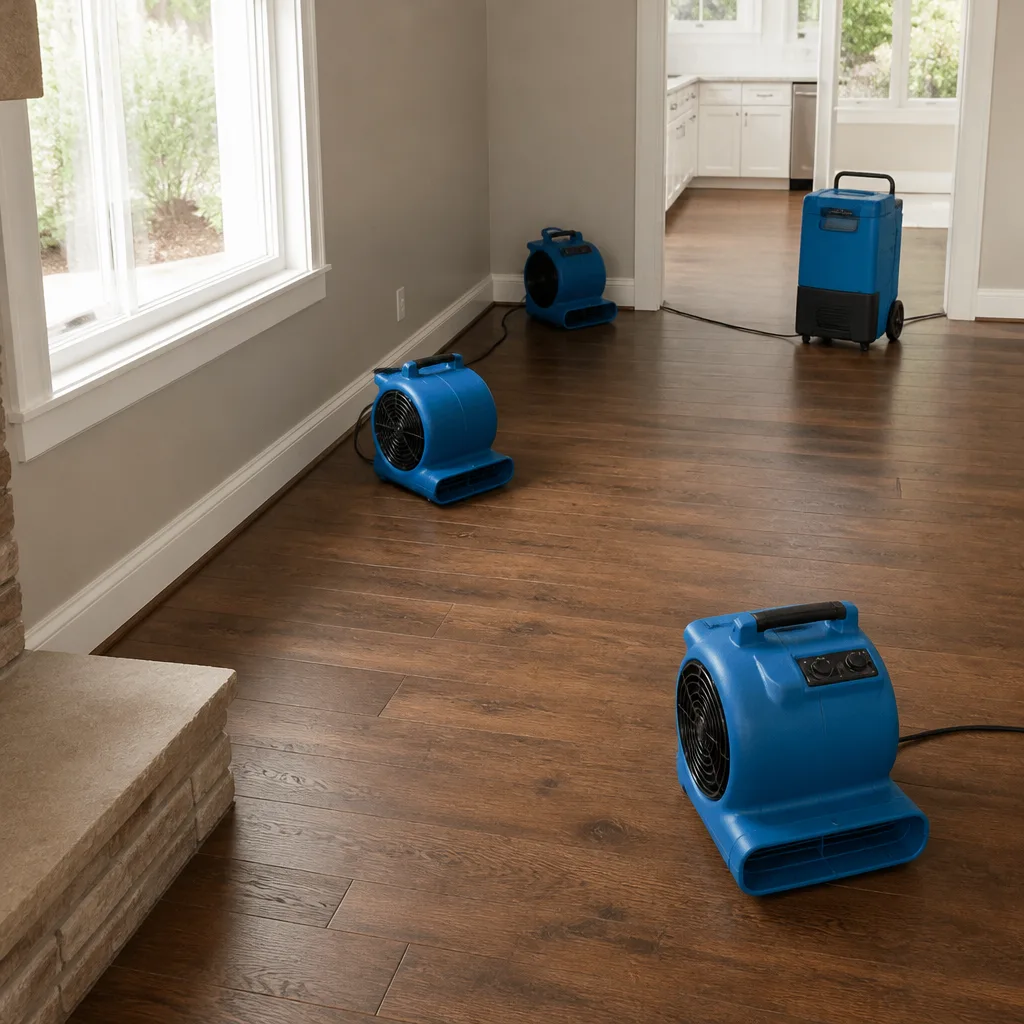 Water damage drying
 Fire & smoke cleanup
 Mold remediation
 Storm response
 Sewage cleanup
 Reconstruction
Free visual inspection and a written scope of work before any mitigation begins - photos, moisture readings, and drying logs go in your claim file
The scope we write is the scope we bill. Anything new gets shown to you, in writing, before we touch it.
Get your free estimateDamage Restoration Warning Signs: A Newport Beach Homeowner’s Reference Guide
Buckling hardwood floors in Newport Beach get misattributed to “normal humidity expansion” roughly 60% of the time. That’s a problem, because cupping that persists after September is almost always a sub-floor moisture issue requiring professional measurement, not seasonal patience. Coastal air does strange things to houses, and it also does strange things to a homeowner’s instincts: the same salt-laden breeze that makes a deck silver also masks the smell of mold, and the same marine layer that keeps your garden green also hides the slow weep of a pinhole leak behind drywall. This guide is built for that reality. You’ll learn how to read the specific warning signs that present differently in Newport Beach’s coastal climate, when a stain is history and when it’s a live feed, and which numbers on a $30 moisture meter mean it’s time to call a credentialed restoration contractor. For more guides & resources, see our blog.
Quick Answer
The most common damage restoration warning signs in Newport Beach homes are persistent wood floor cupping after summer ends, efflorescence that reappears within months of cleaning, paint bubbling that recurs in the same location, and musty odors you can isolate to a specific wall quadrant. In a coastal slab-on-grade home, any of these signals warrants a professional moisture assessment within 2 to 3 weeks, because salt air masks early-stage mold and humidity patterns hide active leaks far longer than they would inland.
Restoration work we handle
Table of Contents
- Efflorescence vs. Active Moisture Migration on Slab Homes
- Reading Paint Bubbling Patterns: Supply-Line Weeps vs. Condensation
- Musty Odor Triangulation: Finding Mold Before You See It
- Ceiling Stain Aging: Reading Ring Patterns in Water Stains
- Using a Pin Moisture Meter Like a Professional
- Wood Floor Cupping, Crowning, and Sub-Floor Signals
- Window Condensation That Should Concern You
- Common Mistakes to Avoid
- When to Call a Professional
- Frequently Asked Questions
- The Bottom Line
Efflorescence vs. Active Moisture Migration on Slab Homes
Newport Beach has a lot of slab-on-grade construction, particularly in the tracts built between the 1950s and early 1980s. Slab homes have one predictable vulnerability: moisture moves up through concrete by capillary action, and that moisture carries dissolved salts with it. When the water evaporates at the surface, the salts stay behind as a white, chalky powder called efflorescence. Here’s the distinction most homeowners and even some contractors miss: efflorescence is not itself damage, but it is a billboard advertising where moisture is currently moving. The question is whether that moisture movement is ongoing or historic.
In our experience in Newport Beach’s coastal tracts, we see three distinct scenarios:
- Historic efflorescence: Powder wipes off easily with a dry cloth or stiff brush, stays gone for a year or more, and leaves no staining on the concrete. This is cosmetic. A $200 concrete sealer often resolves it.
- Active decorative efflorescence: Powder reappears within 30 to 60 days of cleaning, even during Newport Beach’s drier months (September through November). The slab is wicking moisture, but the water source may be landscape irrigation, gutter splash-back, or seasonal groundwater.
- Active structural moisture migration: Powder reappears in weeks, often accompanied by a darker “shadow” staining on the concrete, tiny paint blisters at the baseboard line, or a persistent cooler wall temperature in that quadrant. This is the scenario where the fix escalates from a sealer to full remediation, which in Newport Beach typically runs $8,000 to $20,000 depending on the extent of the water source correction.
The salt-air complication: homes within a mile of the ocean accumulate airborne salt on exterior concrete that looks almost identical to efflorescence. But exterior salt deposits from ocean air occur on the windward face only and wash off with rain. Efflorescence from slab moisture appears anywhere on the foundation perimeter and is damp, not dry and crystalline. If you can taste the deposit and it’s pure salt, it’s likely coastal. If it’s bitter and slightly metallic, that’s mineral content from your slab.
For a deeper read on how slab moisture behaves in a coastal home, see Water Damage Restoration in Newport Beach, which covers slab drying techniques in detail.
Reading Paint Bubbling Patterns: Supply-Line Weeps vs. Condensation
Paint bubbling tells stories. The location, shape, and recurrence rate are diagnostic information if you know how to read them. In Newport Beach homes, we look for three specific pattern types before recommending invasive inspection.
- Linear bubble lines running vertically down a wall or along a ceiling seam. These suggest a slow supply-line weep, often from a pinhole leak in copper or CPVC piping. The water follows the pipe run, and the paint releases along that line. These bubbles are usually small (dime-sized or smaller), tightly clustered, and may be wet to the touch. In Newport Beach’s pre-1980 housing stock, original copper lines with pinhole corrosion are common, and a linear bubble line is one of the earliest visible signals.
- Wide, flat blisters spanning several inches, often appearing seasonally. These point to condensation or vapor drive rather than a plumbing leak. The water isn’t being pushed through the wall; it’s condensing on the back of the paint film. In coastal Newport Beach, this pattern appears on north-facing walls, rooms over unconditioned garages, and bathrooms where vent fans are undersized. These blisters are usually dry, papery, and the paint chips easily.
- Recurring bubbles in the same exact location after repainting. This is the pattern we’re most interested in. If you’ve patched and repainted a spot twice and the bubble returns within a few months, there is an active, continuous water source behind that specific point. It’s not a one-time event. In a slab home, that source is frequently a shower pan failure or a supply line running through the wall from a crawlspace or attic.
The paint itself matters, too. Oil-based paints (common in pre-1970 Newport Beach homes) fail differently than modern latex: they crack and craze before they bubble. If you see blistering on a surface you know was painted with latex, the moisture source is newer than the paint job. That timeline helps restoration teams like ours isolate when the leak began.
Musty Odor Triangulation: Finding Mold Before You See It
Musty odor is the earliest reliable mold indicator, and it arrives weeks or months before visible growth. But Newport Beach presents a specific detection problem: daily ocean breezes ventilate homes in a way inland homes don’t experience, and salt air masks the smell. Many homeowners describe the odor as “a beach cottage smell” and dismiss it, not realizing that a healthy Newport Beach home should smell neutral, not musty.
Here’s the triangulation method we teach our clients during inspections:
- Close all windows and doors for 4 hours, then walk the house nose-first. The goal is to let the odor build to detectable levels. Coastal ventilation diffuses odor; closed rooms concentrate it.
- Sniff at three heights in each room: floor level, waist level, and ceiling level. Mold odor rises with warm air, so ceiling-level detection points to an attic or ceiling cavity source. Floor-level detection suggests slab moisture or sub-floor growth. Waist-level smells usually indicate wall cavity issues.
- Map the quadrant. Stand in the center of each room and move toward the odor. When the smell intensifies as you approach a specific wall, note which wall and which third of that wall. That’s your quadrant. In our Newport Beach work, odor-quadrant mapping correctly identifies the mold source room about 80% of the time before we even remove a baseboard.
The type of mustiness matters, too. A sharp, ammonia-like mustiness points to bacteria, usually from sewage or gray water. A sweet, earthy smell indicates mold growth on wood or paper surfaces. A sour, fermenting smell suggests a water-damaged insulation batt. These distinctions help our IICRC-certified team determine the right remediation scope before opening a wall.
For homeowners who want to know what happens after a mold source is identified, our Mold Remediation in Newport Beach guide covers the containment and removal process step by step.
Ceiling Stain Aging: Reading Ring Patterns in Water Stains
A ceiling stain isn’t a yes/no question; it’s a timeline. Water stains develop concentric rings as they grow and dry, grow and dry. In Newport Beach’s wet-winter/dry-summer cycle, those rings are surprisingly legible if you know what to look for.
- A single, uniform ring with no inner variation: This is a historic one-time event that has fully dried. The edges are crisp, the center is even in color, and the stain doesn’t change month to month. In a home purchase, this stain warrants a note but not a flag, assuming a moisture meter reads dry at the surface.
- Multiple concentric rings with darkening outer edges: This is a recurring leak. Each ring represents a wet-dry cycle. The darker the newest outer ring, the more recent the moisture. Newport Beach’s winter rainstorms (December through March) create these patterns on roofs, and irrigation overspray creates them year-round.
- A stain that has bleed marks or drip lines extending beyond the main stain: The water is moving along the drywall or plaster surface, suggesting the leak is not a simple vertical drip but a lateral flow from a pipe or roof valley. These stains often appear in corners and along seam lines.
- Stain with visible surface texture change: cracking, peeling, or sagging: The drywall or plaster is compromised. The stain is old enough that the material has lost structural integrity, or the leak is heavy enough to saturate the board. This is a priority inspection, and if the sagging is above a high-traffic area, it can be a safety hazard rather than just a maintenance item.
Real estate context: if you’re reading this as a prospective buyer in Newport Beach, know that standard home inspections do not catch most active leaks. See our How to Hire a Damage Restoration Contractor in Newport Beach: A Step-by-Step Guide for vetting professionals. A stain that the seller’s disclosure calls “historic” should still be measured with a pin moisture meter. In our experience, roughly one in four “historic” stains we inspect on purchased homes are active. Sellers are usually reporting what they believe to be true, not hiding anything; they just never measured.
Using a Pin Moisture Meter Like a Professional
A mid-range pin moisture meter costs $25 to $40 at any hardware store, and it will tell you more about your Newport Beach home’s health than any visual inspection. The principle is simple: two small pins penetrate the surface, and the meter measures electrical resistance between them. Water conducts electricity, so lower resistance equals higher moisture. Here’s how to use one correctly.
- Buy a meter that reads wood and drywall. The $20 models with fixed pin depth work fine for baseboard and drywall readings. The $60+ models with adjustable depth are for professionals.
- Calibrate your baseline. Every Newport Beach home has a normal moisture range depending on season and proximity to the ocean. Take readings in 10 dry locations around the house (high on interior walls, away from plumbing). Average those. That’s your baseline.
- Read baseboards at floor level in rooms adjacent to bathrooms, kitchens, and exterior walls. Push the pins firmly into the baseboard at a 45-degree angle, just above the floor line. Record the number. A reading more than 3 to 4 points above your baseline in any baseboard area warrants investigation.
- Read the drywall itself, not just the baseboard. Water wicks upward through drywall. A baseboard reading may be normal while the drywall 2 inches up is saturated. Take readings at 6-inch intervals up from the floor.
- Map the readings. Write numbers directly on the wall in pencil. A pattern of readings that increases as you move toward a corner, a plumbing wall, or an exterior wall points to the source. A scattered pattern of slightly elevated readings across a wide area points to ambient humidity rather than a leak.
What numbers matter: wood moisture content above 20% is the threshold where mold can begin to grow on wood surfaces. Drywall above 17% is concerning. But context matters more than absolute numbers. A Newport Beach home in August with central air running will naturally read 2 to 3 points higher on exterior walls than a home in January. That’s why baseline calibration matters.
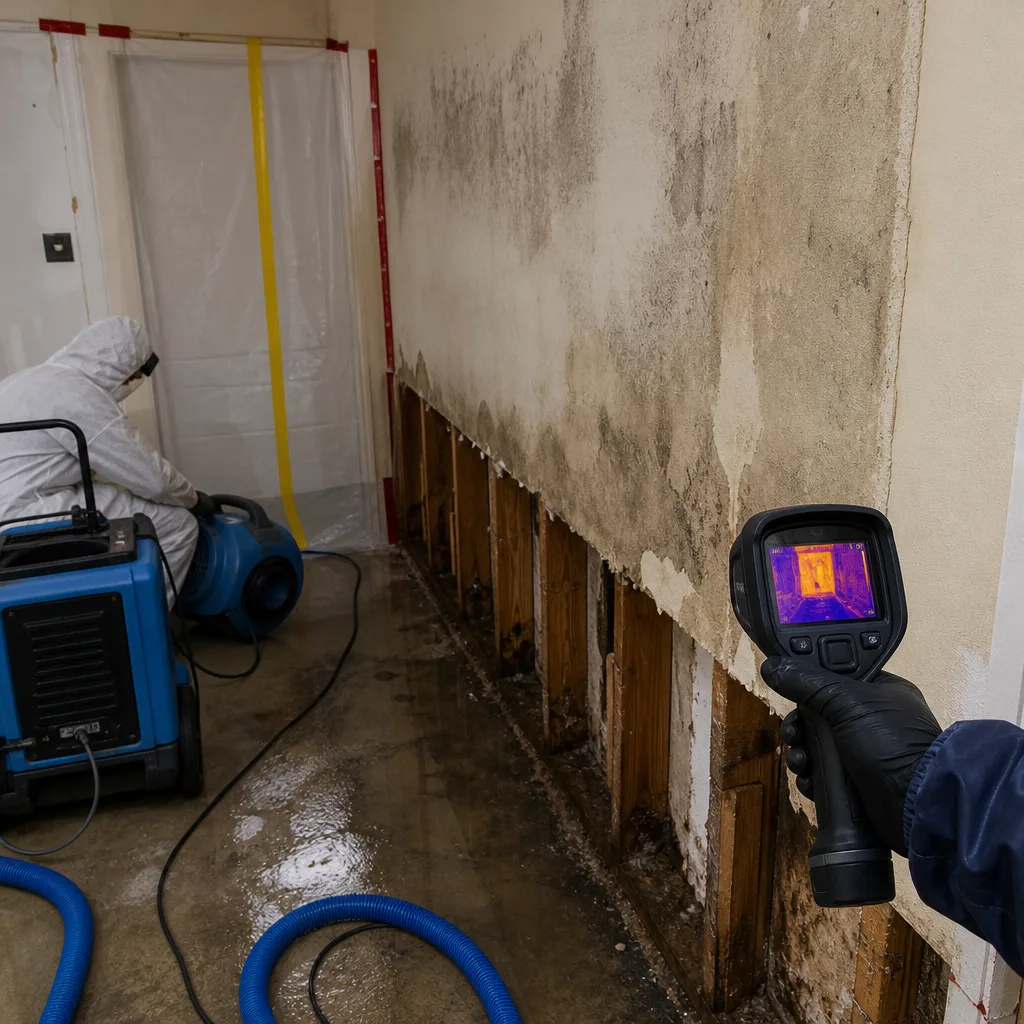
A caveat: pin meters measure only the surface. If moisture is trapped behind a vapor barrier or deep in a wall cavity, a pin meter can read normal while a hidden problem grows. That’s where professional-grade tools like thermal imaging and Dri-Eaz penetrating moisture meters come in. We run these as part of every assessment, because the difference between “surface dry” and “cavity wet” determines whether the fix is a dehumidifier or a full-dry water damage restoration project.
Wood Floor Cupping, Crowning, and Sub-Floor Signals
Hardwood floors are Newport Beach’s version of a moisture alarm system. They’re the building component most responsive to humidity changes, and they telegraph moisture problems earlier than drywall, paint, or trim. The vocabulary matters, because different distortions indicate different problems.
Cupping is when the edges of each board rise higher than the center, creating a concave “U” shape across the width of the board. In coastal homes, cupping happens when the underside of the flooring is wetter than the top surface. That means the moisture source is below: slab moisture, sub-floor water, or a crawlspace that’s too damp. Seasonal humidity changes can cause mild cupping that resolves when the air dries. But persistent cupping that does not flatten out by late September in Newport Beach, after the summer marine layer season ends, indicates sub-floor moisture. We see this constantly in homes with slab foundations where no vapor barrier was installed before the wood was laid.
Crowning is the opposite: the center of the board rises higher than the edges. Crowning usually appears after someone has sanded a cupped floor too soon, before the boards had dried. Now the top has been removed while the moisture imbalance remained, and the boards reverse their curve. If you see crowning, someone refinished the floor over an active sub-floor moisture problem. The floor needs professional drying before any repair work.
Joints that open and close seasonally are normal in Newport Beach. Joints that stay open, or that gape wider than a dime, signal a sustained moisture deficit or excess. Wide, consistent gapping in summer points to a house that is too dry (over-air-conditioned). Wide, consistent gapping in winter points to the wood having dried from a previously wet state, possibly after a leak that was never properly dried.
Our non-invasive drying approach matters here, because traditional “fixes” for cupped floors involve sanding and refinishing, which destroys the floor’s character and does nothing about the moisture below. The Injectidry systems we run can dry wood flooring from the underside without removing or sanding boards in many cases. Not every floor can be saved, but the ones that get dried properly, rather than cosmetically patched, stay flat for years. That’s the distinction between restoration and repair.
Window Condensation That Should Concern You
Some window condensation in Newport Beach is normal. The marine layer pushes humidity levels to 70 to 80% on summer mornings, and single-pane windows in older homes will collect moisture on the inside during those conditions. But there are condensation patterns that signal real problems.
Condensation between the glass panes: This is a failed window seal, and it will not resolve. The insulating gas has leaked out, the window no longer insulates, and the moisture inside the unit is now trapped. This is a window replacement item, not a restoration issue, but it matters because failed seals on multiple windows can mask higher interior humidity by absorbing it visibly.
Condensation on interior walls, not just windows: This is a red flag. When the air’s dew point is reached on a wall surface rather than glass, the wall is colder than it should be. In Newport Beach, that usually means one of three things: missing or water-compromised insulation in that wall cavity, an air-conditioning duct leak blowing cold air behind the wall, or moisture wicking through the wall from the outside. Any of those requires a professional look.
Persistent condensation on the exterior surface of windows in summer: This is actually a good sign in a coastal climate. It means your home is cool enough inside that the glass surface is below the outdoor dew point, and it indicates your air conditioning is working. Homeowners sometimes panic over this, but it’s harmless.
The signal to act on: condensation that reappears every morning in the same interior locations, especially when paired with visible dampness at window sills or baseboards below those windows. That pattern suggests the wall assembly is collecting moisture, not just the air. A professional assessment with Phoenix or XPOWER dehumidification equipment will determine whether the fix is an HVAC adjustment or a structural drying project.
Additional Warning Signs Most Guides Miss
A few more signals that are specific to Newport Beach’s coastal environment and don’t fit neatly into the categories above:
- Baseboards that pull away from the wall at floor level. This happens when the sub-floor or slab is wet enough to swell the flooring material, pushing the baseboard outward. In slab homes, the baseboard gap often widens seasonally with groundwater.
- A door that sticks only in certain seasons. Wood frames swell with humidity. But a door that has started sticking in October, when the air dries out, points to moisture inside the wall, not ambient humidity.
- Termite frass mixed with moisture staining. Subterranean termites in coastal Southern California are drawn to moisture. If you see small, gritty piles of frass near a stained baseboard, you may have both a moisture problem and a termite problem, and the moisture problem is what brought the termites. Dry-wood termite droppings are hard and elongated; subterranean frass mixed with moisture looks like damp coffee grounds.
- Nail pops appearing in horizontal lines. Drywall nails pop when the board moves or when the underlying framing swells. A line of nail pops at exactly 16 or 24 inches apart, following a wall stud line, suggests that stud is wet and swelling. Random nail pops are structural settling. A straight line of pops is moisture.
If any of these signals appear alongside the primary indicators above, the timeline for professional assessment shortens. Multiple independent signals in the same area of the house is the strongest single predictor of an active problem we see. One signal might be noise; three signals in the same quadrant is a diagnosis.
Common Mistakes to Avoid
- Wiping away efflorescence and considering the problem solved. The powder is a symptom of water movement. If it returns within months in Newport Beach’s dry season, the water source is continuous, not seasonal.
- Painting over recurring bubbles without identifying the water source. Paint is a sealant, but it’s a cosmetic one. The moisture behind the bubble doesn’t care about your new paint; it just finds a new path to the surface, usually within a few months.
- Waiting for visible mold before acting on a musty odor. By the time mold is visible on surfaces in a coastal climate, the colony has often been growing for 6 to 12 months. Odor is the early-warning system, and it’s the cheapest time to address the problem.
- Assuming an “historic” stain on a home inspection report is safe. Historic is the inspector’s polite word for “unmeasured.” If it hasn’t been measured with a moisture meter, it hasn’t been ruled out.
- Running a dehumidifier indefinitely instead of locating the moisture source. A dehumidifier controls symptoms. It doesn’t dry a wall cavity, a slab, or a sub-floor. You’re spending electricity to manage a problem that’s getting worse behind the surface.
- Using a non-pin moisture meter on drywall. The pinless meters are great for quick scans of wood, but they read through materials and average a wide area. For drywall and baseboard precision, a pin meter gives more reliable data at the specific points that matter.
- Assuming coastal homes are “naturally humid” and therefore safe. Newport Beach’s marine layer does raise ambient humidity, but a healthy home still dries out between events. Persistent dampness is not the new normal; it’s a signal.
When to Call a Professional
You should call a professional restoration contractor when any of these conditions are true: you have three or more warning signals appearing in the same area of the house; you have recurring bubbles, stains, or efflorescence that return within two months of being cleaned and repainted; your pin meter readings at baseboards are 4 or more points above your baseline in multiple locations; or a musty odor persists in a closed room after ventilation. These are not conditions that resolve with patience, paint, or dehumidifiers. Guild Water Damage offers free estimates in Newport Beach, and we’ll send an IICRC-certified technician to measure and document the problem before any work is proposed. Call (855) 855-9631 to schedule.
Frequently Asked Questions
The most reliable early indicators are recurring paint bubbles in the same location, baseboards that pull away from the wall, musty odors you can isolate to a specific wall section, and pin moisture meter readings that are 4+ points above your home’s baseline. In Newport Beach’s coastal climate, these signals often appear slowly and get masked by ambient humidity, which is why measuring beats guessing.
Water damage from a clean-water leak smells musty or earthy, while sewage or gray-water damage smells sharp and ammonia-like. In Newport Beach, ocean breezes can dilute these odors, so the most reliable detection method is to close the house for 4 hours and then sniff at floor, waist, and ceiling height to map the source.
Water damage restoration in Newport Beach typically ranges from $2,500 to $7,000 for moderate, contained incidents, and from $8,000 to $20,000 or more for slab moisture migration or multi-room floods. Before deciding on a path, read our DIY vs Professional Damage Restoration: The Newport Beach Homeowner’s Decision Guide. The exact number depends on the water source, the materials affected, and how long the water has been present. Call (855) 855-9631 for a free on-site estimate.
Yes. Mold grows in dark, damp cavities behind drywall, under flooring, and inside wall assemblies where it remains invisible for months. In Newport Beach homes, the first sign is often a persistent musty odor rather than visible colonies. That’s why odor triangulation and moisture measurement are the earliest and most reliable detection methods.
Efflorescence itself is cosmetic, but it can indicate active moisture migration through the slab. If the powder wipes away and stays gone for a year or more, a sealer may be all that’s needed. If it returns within weeks, reappears with dark staining, or is accompanied by baseboard gaps and paint blisters, the slab is wicking moisture and may require professional remediation.
We dispatch IICRC-certified technicians to Newport Beach properties every day, and our phone line is answered live. For active water intrusion, the first hours matter, because mold begins colonizing wet surfaces within 24 to 48 hours in coastal humidity. Call (855) 855-9631 and we’ll get a technician out to measure, document, and start mitigation as quickly as possible.
Most Newport Beach homeowners insurance policies cover sudden and accidental water damage, such as a burst supply line or an appliance overflow, but not gradual leaks, slab moisture, or maintenance-related seepage. We document every job with moisture readings, photographs, and written scopes that support direct claim submission to your adjuster. The simplest way to know is to call us first: (855) 855-9631.
The Bottom Line
Newport Beach homes fail differently than inland homes, because the coastal environment masks the early warning signs: salt deposits mimic efflorescence, ocean air dilutes musty odors, marine-layer humidity gets blamed for what is actually sub-floor moisture, and wet winters followed by dry summers create stain patterns that look historic when they’re still active. The homeowners who catch damage early are the ones who measure rather than guess: a $30 pin moisture meter, baseline readings across the house, and a willingness to investigate recurring bubbles, stains, and musty quadrants before they become visible mold colonies or structural failures. When those measurements point to a problem, the fix is not paint, sealer, or patience. It’s professional assessment from a contractor who runs documented, certification-backed protocols and commercial-grade drying equipment. That’s the Guild standard. Call (855) 855-9631 when you’re ready to know what your house is actually telling you.
Written by the team at Guild Water Damage, serving Newport Beach since 2017.
See the difference
 Before
 After
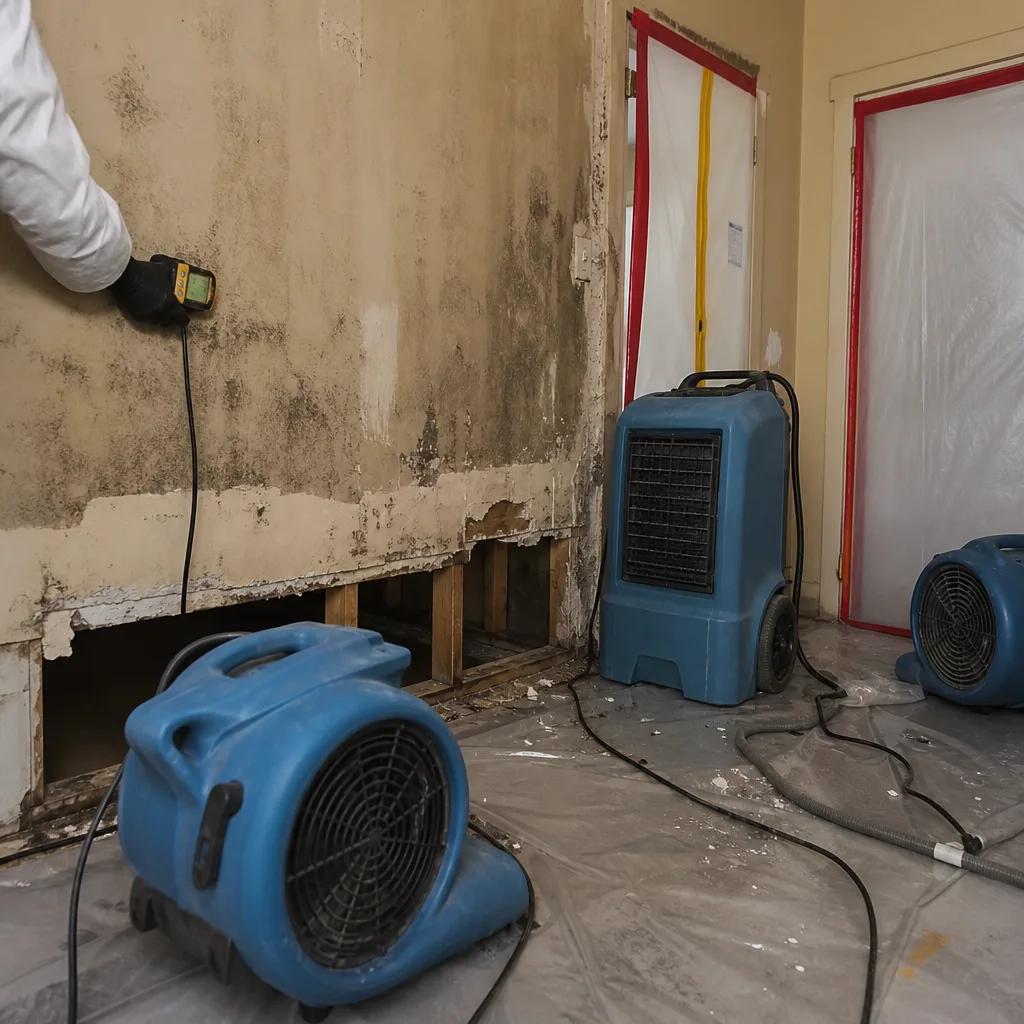 Before
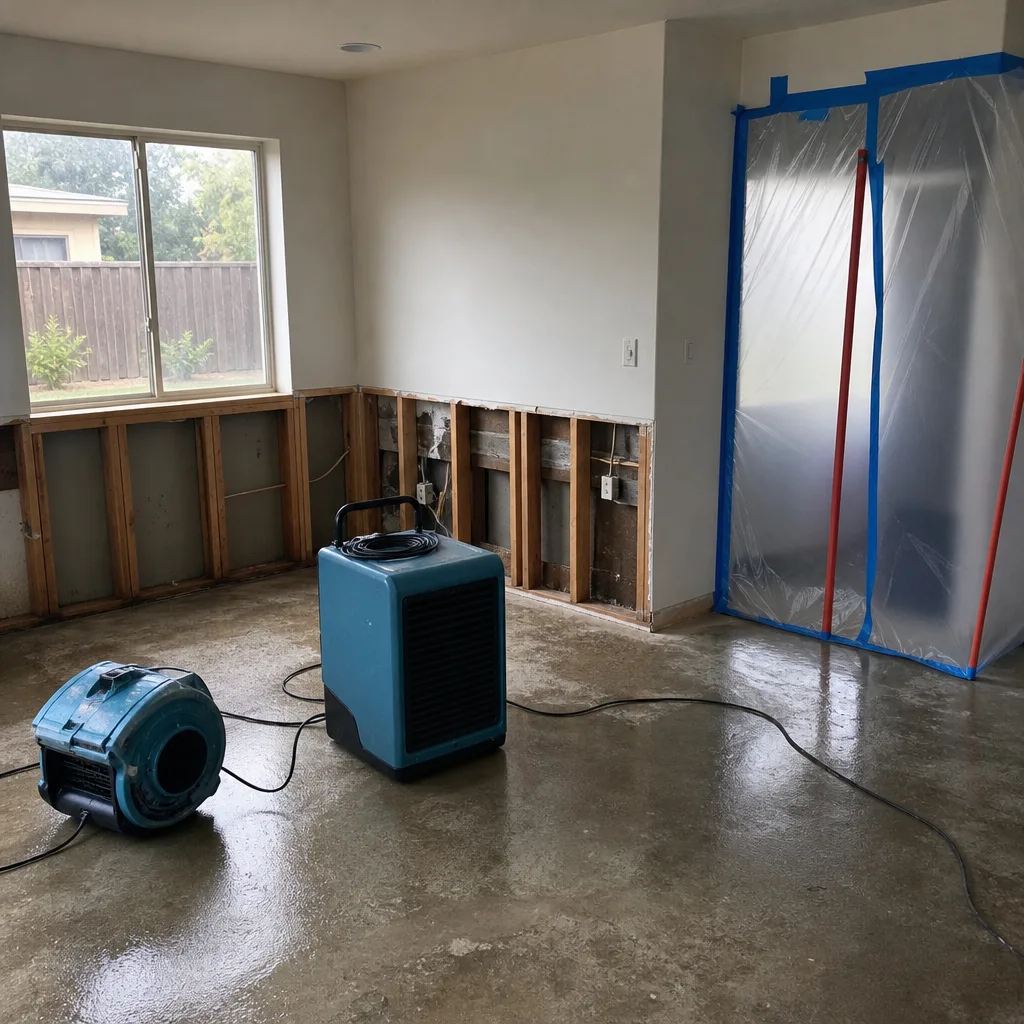 After
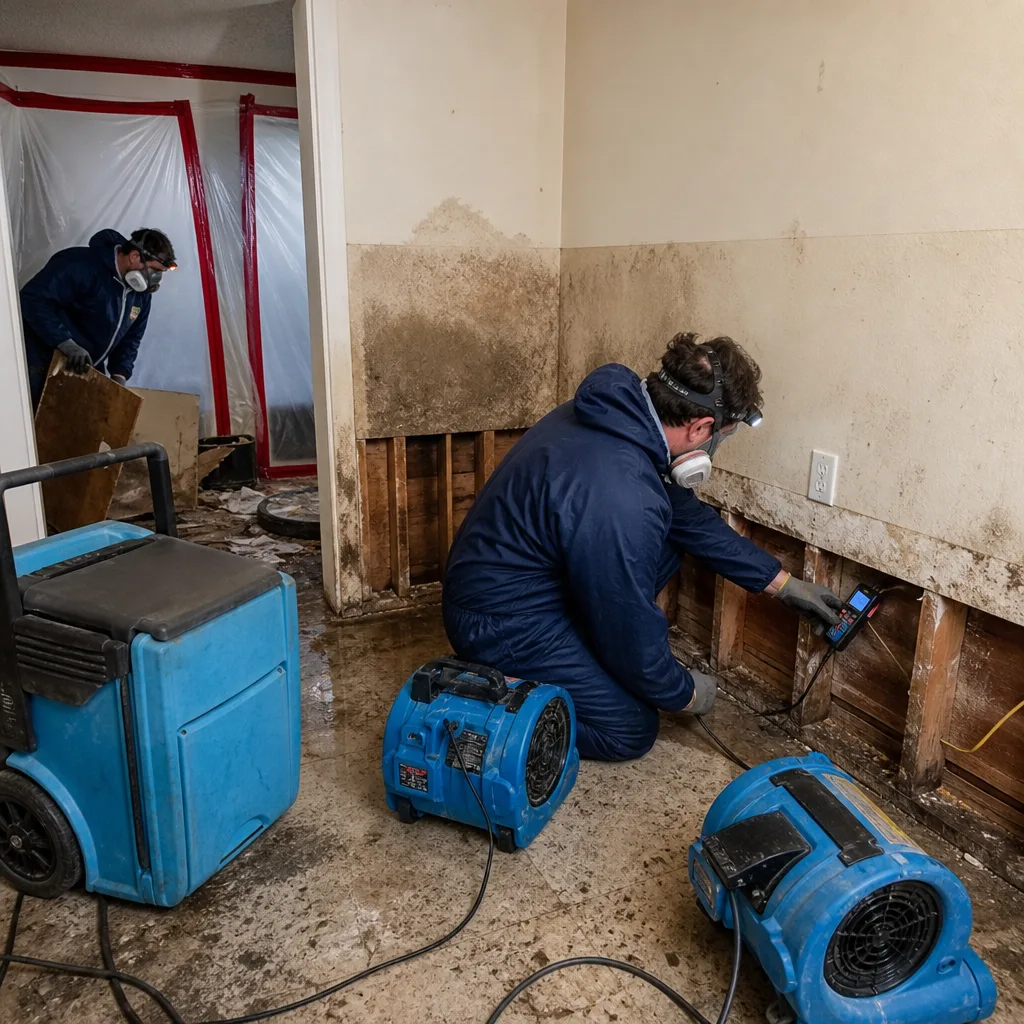 Before
 After