Last updated October 30, 2026
 Water damage drying
 Fire & smoke cleanup
 Mold remediation
 Storm response
 Sewage cleanup
 Reconstruction
Free visual inspection and a written scope of work before any mitigation begins - photos, moisture readings, and drying logs go in your claim file
The scope we write is the scope we bill. Anything new gets shown to you, in writing, before we touch it.
Get your free estimateDIY vs Professional Damage Restoration: The Newport Beach Homeowner’s Decision Guide
Most homeowners who attempt DIY water damage restoration don’t fail because they lack effort. They fail because a consumer dehumidifier physically cannot move water out of a wall cavity fast enough to prevent mold. The machine runs for days, the wall feels dry to the touch, and three weeks later the baseboard smells musty and the drywall shows staining at the bottom edge. This guide explains where the real line sits between what a homeowner can safely handle and what requires commercial equipment, using Newport Beach’s specific climate, housing stock, and insurance realities as the reference point. By the end, you’ll know exactly which tasks are yours, which are not, and how to avoid the three most expensive DIY mistakes we see in coastal Orange County homes.
Restoration work we handle
Quick Answer
DIY restoration is appropriate for clean-water extraction within the first 30 to 60 minutes, content removal, documentation, and shutting off utilities. Professional restoration becomes necessary when water has penetrated wall cavities, flooring, or subflooring, when the source is contaminated (Category 2 or 3), or when standing water has been present more than 24 hours in Newport Beach’s humid coastal climate. The determining factor is equipment physics, not homeowner effort: consumer dehumidifiers cannot achieve the grain depression required to dry structural cavities before mold colonizes, typically within 48 to 72 hours.
Table of Contents
- The Equipment Threshold: Why Consumer Dehumidifiers Fail Structural Drying
- What Homeowners Can Safely Do Themselves
- Newport Beach Humidity and the Shrinking DIY Window
- Category 1, 2, and 3: When Water Is Not Just Water
- Non-Invasive Cavity Drying: What Injectidry Changes
- Insurance Implications of a DIY Attempt
- The Real Cost Comparison: DIY vs Professional
- Common Mistakes to Avoid
- When to Call a Professional
- Frequently Asked Questions
- The Bottom Line
The Equipment Threshold: Why Consumer Dehumidifiers Fail Structural Drying
A standard big-box dehumidifier removes moisture at 70°F and 60% relative humidity. Those are its rated conditions, printed on the box and verified in a laboratory. The problem is that the inside of a wet wall cavity rarely holds those conditions. A wall cavity with water-saturated drywall and insulation typically sits at 55°F to 65°F with relative humidity above 80%, sometimes approaching 90% in the first 24 hours after a leak. At those temperatures and humidity levels, a consumer refrigerant dehumidifier’s extraction rate drops by 50% to 70% compared to its rated capacity. It runs continuously, fills its bucket or drains its hose, and moves a fraction of the water the math requires.
The metric professionals use is called grain depression. A grain is a unit of water vapor: 7,000 grains equals one pound of water. Grain depression measures the difference between the moisture content of the air entering the dehumidifier and the air leaving it. Low-grain refrigerant dehumidifiers (LGRs) used by water damage restoration contractors in Newport Beach maintain a grain depression of 90 to 140 grains at the low temperatures and high humidity levels found inside wall cavities. A consumer dehumidifier manages 20 to 40 grains under those same conditions, and often less as the coil temperature drops below the dew point and frost formation begins. That’s not a marginal difference. It means the professional machine removes three to five times more water per hour from exactly the conditions that exist during structural drying.
We’ve measured the gap many times. A homeowner runs two consumer dehumidifiers in a flooded bedroom for four days, the visible floor feels dry, and then a moisture meter reads 22% to 28% wood moisture content in the base plate of the wall. Mold needs 17% to 20% and about 48 to 72 hours. The drying window closes while the machines are still running. That’s not an effort problem. It’s thermodynamics.
What Grain Depression Means in Practice
- Above 100 grains of depression: Dries wall cavities and subflooring fast enough to prevent mold colonization. Requires LGR or desiccant equipment.
- 40 to 80 grains of depression: Can dry open air and surface materials. Struggles with enclosed cavities and dense wood.
- Below 40 grains of depression: Consumer-grade equipment territory. Suitable for humidity control in non-damaged spaces, not structural drying.
Rental equipment from the hardware store falls into the last two categories. It’s better than nothing when the alternative is standing water and open windows, but it does not close the gap. The question in Newport Beach restoration isn’t whether you’re willing to put in the hours. It’s whether your equipment can pull water out of a wall cavity faster than biology pulls it into mold spores.
What Homeowners Can Safely Do Themselves
Before the professional equipment discussion, let’s be clear about what a homeowner in Newport Beach can absolutely handle. These tasks are safe, effective, and in many cases critical in the first hour after a leak or flood. They don’t require certification, and doing them quickly reduces the total scope of the loss.
- Stop the water source. Shut off the valve at the fixture if you can find it. If you can’t, shut off the main water supply at the street or at the house. For roof leaks, tarp the opening from inside the attic if you can safely access it, or call a roofer for emergency tarping. Every minute the source runs adds water to the loss.
- Cut power to affected areas if water has reached outlets, switches, or electrical panels. This is a utility shutoff task, not a repair. If you can’t safely reach the breaker panel without standing in water, leave it alone and call an electrician. Do not touch outlets or switches in wet areas even if the breaker is off until the system has been inspected.
- Extract standing water with a wet-vac within the first 30 to 60 minutes. A consumer wet-vac rated for liquid removal can pull 5 to 12 gallons per pass depending on the model. This is genuinely useful for clean-water events like a supply line break or an overflowing bathtub. It reduces the water load before drying equipment arrives or before you decide whether to engage a contractor.
- Remove salvageable contents from affected rooms. Furniture, rugs, boxes, electronics, and clothing should come out if they’re sitting in or near water. Move them to a dry, ventilated area. Take photos of everything before you move it, because your insurance documentation starts now. Digital photos with timestamps are acceptable to insurers and adjusters.
- Document everything with photos and video. Photograph the water source, the extent of standing water, the condition of baseboards, drywall, flooring, and any contents. Include a wide shot of each room and close-ups of visible damage. This documentation is the basis of your claim and protects you if the scope grows during drying.
- Open cabinet doors and remove drawer contents in affected kitchen and bathroom areas. Closed cabinets trap moisture and create mold-friendly microclimates. Removing contents and opening doors speeds evaporation and reduces damage to stored items.
These six tasks, done promptly, meaningfully reduce the final restoration cost. They do not dry wall cavities. They do not prevent mold in saturated drywall. They do not handle contaminated water. They buy time and reduce the water load, which matters. But they are not a substitute for the drying phase.
Newport Beach Humidity and the Shrinking DIY Window
Newport Beach’s climate works against DIY drying in ways that inland Southern California cities don’t face. The marine layer keeps relative humidity high, especially in the evening and early morning hours along the Balboa Peninsula, Lido Isle, and Corona del Mar. When outdoor humidity sits at 70% to 85%, open-window drying and fan-only approaches move moisture around rather than removing it. A fan blowing humid air across wet drywall speeds evaporation at the surface, but the water vapor has nowhere to go in a high-humidity room. It recondenses on cooler surfaces, creating secondary damage in areas that were never wet.
The mold colonization window runs 24 to 48 hours for most species, with some strains germinating within 18 hours in ideal conditions. Newport Beach homes, particularly older construction along the Balboa Peninsula and in Newport Heights, often have enclosed eaves, minimal venting, and stucco or wood siding that limits natural air exchange. Outdoor humidity above 70% means passive drying methods (windows open, fans running) may never get the indoor air dry enough to pull moisture from wall cavities at all. In a dry inland climate like Riverside or San Bernardino, a homeowner might close the window and run a decent dehumidifier and see reduction within 48 hours. In Newport Beach, the same effort can stall indefinitely.
The practical implication: if you discover water damage on a humid August evening in Corona del Mar, you have less time to make the DIY-or-professional decision than a homeowner in Irvine does on a dry October afternoon in terms of relative humidity conditions, though both need to act within the first 24 hours anyway. Both still need to act within the first 24 hours. The Newport Beach homeowner just has less margin for a slow DIY drying attempt to work.
This is also why professional drying protocols in coastal Orange County typically include sealed containment and ventilation control, not just dehumidification. The goal is to create a dry microclimate inside the affected room, independent of the humid outdoor air. A consumer dehumidifier in an open room with humid Newport Beach air coming through windows and door gaps cannot establish that microclimate. A professional setup with containment plastic, negative air pressure where appropriate, and LGR dehumidifiers with calculated cubic-feet-per-minute airflow can.
Category 1, 2, and 3: When Water Is Not Just Water
Water damage is classified into three categories under the IICRC S500 standard, which is the reference document for professional restoration. The category determines the protocols, not just the equipment. Understanding these categories is essential because they draw bright lines around what is and isn’t a DIY candidate.
Category 1: Clean Water
Water from a broken supply line, a failed water heater, or an overflowing bathtub with no contaminants. In the first 30 to 60 minutes, homeowners can extract standing clean water with a wet-vac safely. If the water has sat for more than 24 hours or has contacted building materials, it degrades to Category 2 status regardless of the original source. Time, not just source, determines category.
Category 2: Gray Water
Water with significant chemical or biological contamination. Sources include dishwasher discharge, washing machine overflow, toilet overflow with no feces, and aquarium leaks. This water requires personal protective equipment and antimicrobial application after extraction. Carpet pad and any absorbent material contacted by Category 2 water is generally removed, not dried. DIY extraction without proper PPE and disinfection protocols creates a health risk in the home and may void coverage if the subsequent professional work identifies improper handling.
Category 3: Black Water
Sewage, flood water, or any water that has been standing long enough to support bacterial growth. Category 3 water requires full biohazard protocols: sealed containment, full PPE including respirators, removal of all affected porous materials, and disposal as contaminated waste. This is never a DIY situation. The health risk from sewage exposure includes hepatitis, E. coli, and parasitic infection. One credentialed contractor handles this from extraction through sanitation and mold remediation in Newport Beach.
What the Category System Means for Your Decision
- Category 1, less than 24 hours, visible standing water only: Homeowner extraction possible in the first hour, professional drying still recommended for wall and floor cavities.
- Category 1 that has soaked into walls, floors, or been present over 24 hours: Professional extraction and drying required.
- Category 2, any duration: Professional required. PPE and antimicrobial protocols not available to homeowners.
- Category 3, any duration: Professional required. Biohazard handling legally and medically significant.
Non-Invasive Cavity Drying: What Injectidry Changes
Traditional structural drying usually requires removing baseboards, drilling holes in drywall, and pulling wet insulation from wall cavities. This is invasive, adds to the repair scope, and increases the total restoration timeline. Injectidry systems change that math. The Injectidry approach uses vacuum panels and injection ports to create negative pressure inside wall cavities, pulling dry air through the cavity and extracting moisture without removing the drywall itself. The system can dry wall cavities, subflooring, and other enclosed spaces that a traditional air-mover-and-dehumidifier setup cannot reach effectively.
The practical difference for a Newport Beach homeowner is scope reduction. If a supply line breaks inside an exterior wall in Newport Heights, a traditional approach may require opening the wall, removing insulation, drying, then reinstalling insulation and re-drywalling. With Injectidry cavity drying, we can often dry the cavity in place, preserving the original wall assembly and cutting repair costs by a meaningful margin. The phrase we use internally is “preserve more, tear out less,” and it’s been a differentiator for us in a market where many homeowners assume any wall that gets wet must be opened up.
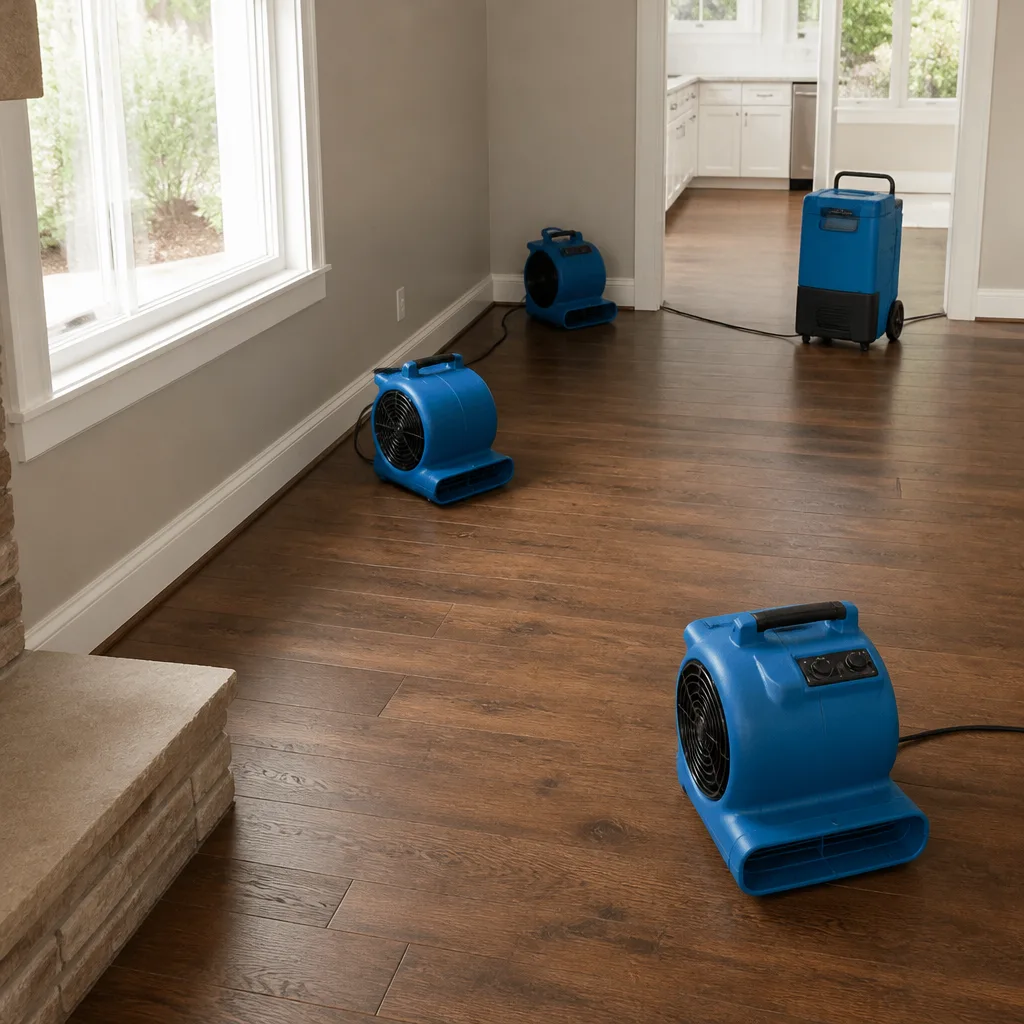
This is not equipment you can rent or buy at a consumer level. Injectidry systems are distributed through restoration supply houses to certified contractors. Combined with professional-grade dehumidifiers from Phoenix, XPOWER, and B-Air, the drying capacity is in a different category from anything available at a big-box rental counter. The equipment matters because the physics matters. You cannot simulate grain-depression-level drying with a rental dehumidifier and a box fan, no matter how long you let them run.
Insurance Implications of a DIY Attempt
The insurance conversation around DIY restoration is where we see homeowners create avoidable problems. The issue usually isn’t the initial claim. It’s what happens when a DIY drying attempt fails, and a professional is called in weeks later to address mold growth or continued moisture. The adjuster looks at the timeline. The professional documents moisture readings, mold colonization, and the condition of building materials. The adjuster then has to determine what portion of the current damage is from the original loss and what portion resulted from incomplete drying after the homeowner took over the restoration process.
In practice, this creates coverage disputes. The insurer may argue that the original water loss would have been fully covered if professionally dried within the first 48 hours, but the mold growth and secondary damage that developed during the DIY drying period is attributable to the homeowner’s actions or inactions, not the original covered loss. These disputes are hard to win because the documentation timeline works against the homeowner. The professional documentation shows the mold growth happened after the homeowner’s DIY attempt.
An IICRC-certified restoration firm, by contrast, uses moisture meters, thermal imaging, and drying logs that establish a baseline and track drying progress. The documentation shows that drying was initiated within the appropriate window, executed to standard, and completed at the appropriate dryness levels. If mold appears later, the documentation supports that it wasn’t for lack of proper drying. This matters specifically in Newport Beach, where the coastal humidity means mold is a frequent enough occurrence that insurers scrutinize underlying documentation carefully.
Photo documentation also matters. If you do any DIY work before the adjuster arrives, take photos of everything first. The initial condition, the water level, the affected materials, the contents. Without that documentation, the adjuster works from what they can see when they arrive, which may be after you’ve thrown away the damaged carpet pad, cut out drywall, or rearranged furniture. Document before you act.
The Real Cost Comparison: DIY vs Professional
The financially naive comparison is easy: two rental dehumidifiers and a wet-vac cost $150 to $300, while a professional restoration company in Newport Beach costs $3,000 to $10,000 depending on the scope. But that’s comparing the cost of attempting something versus the cost of completing something. The relevant comparison is between the cost of proper professional drying and the cost of DIY drying that fails and then requires professional remediation of the secondary mold damage on top of the original water damage.
Here’s the math we see repeatedly in coastal Orange County. A homeowner handles a supply line break themselves. They rent dehumidifiers, run fans, and after five days the visible surfaces feel dry. Cost: $250 in rentals plus their time. Three weeks later there’s a musty odor and staining at the baseboards. A mold inspection and testing run $400 to $800. Remediation of mold in a single wall cavity, including containment, removal, and treatment, often runs $2,500 to $5,000 in Newport Beach. Then the wall cavity still needs drying and the removed materials need replacement. Total secondary cost: $6,000 to $10,000 or more, and now the insurance company is asking why the initial loss wasn’t professionally dried.
Compare that with professional drying on day one. The Guild Water Damage home page explains our full approach, but the short version is that we arrive with commercial LGR dehumidifiers, air movers, and moisture meters. We document the baseline, set the drying plan, and monitor daily until the moisture readings hit the target. The drying phase for a typical room-sized loss runs two to four days. The cost is predictable, and the documentation supports the insurance claim. When drying completes to the documented standard, the secondary mold problem doesn’t develop.
Professional restoration is the less expensive option when the comparison includes the probability-adjusted cost of failure. The equipment threshold isn’t an opinion. It’s the reason the insurance industry pays for professional drying rather than reimbursing homeowners for rental dehumidifiers.
Common Mistakes to Avoid
- Assuming a dry surface means a dry wall cavity. Drywall can feel dry to the touch at the surface while the wood framing behind it holds 25% moisture content. Surface dryness is not a drying metric. You need a moisture meter reading from inside the cavity, which requires specialized equipment.
- Running a consumer dehumidifier without sealing the room. In Newport Beach’s humid coastal air, an open room with a consumer dehumidifier is fighting a losing battle. The machine pulls water out of the air, humid outdoor air replaces it, and the drying rate stays flat. Professional drying uses sealed containment to create a controlled environment.
- Using a household fan instead of an air mover. Household fans move air at 2,000 to 4,000 cubic feet per minute in open space. Professional air movers from companies like Phoenix and XPOWER move 2,500 to 5,000 CFM at the surface where evaporation actually happens, with directional airflow that targets wet materials. The difference in drying rate is 4x to 8x.
- Waiting to decide while mold colonizes. The 24 to 48 hour mold window is not a recommendation; it’s a biological reality. In Newport Beach’s humidity, the window compresses. If you’re unsure whether to call, call. An hour on the phone costs nothing. A week of hesitation can mean the difference between drying and remediation.
- Throwing away damaged materials before documentation. Every item you remove before photos are taken is an item the adjuster cannot verify. That’s money you leave on the table. Document first, remove second, and keep a written inventory.
- Attempting Category 2 or 3 water removal with household equipment. Dishwasher water, toilet overflow, and any standing water over 24 hours contain biological contaminants. Without proper PPE and antimicrobial protocols, you’re spreading contamination through the house. This is a health decision, not just a restoration decision.
- Assuming insurance will cover secondary damage from a failed DIY attempt. Most policies cover the original covered loss, not the consequences of incomplete restoration performed by the policyholder. The adjuster’s job includes determining what damage is covered, and a DIY attempt that demonstrably failed shifts the burden.
When to Call a Professional
Call a professional restoration company when water has penetrated beyond the visible surface, when the source is anything but clean water, when the loss covers more than one room, or when more than 24 hours have passed since the water event began. Our Water Damage Restoration Maintenance Checklist for Newport Beach Homeowners helps you assess these warning signs early. Also call if you see any of these signs: bubbling drywall, warped baseboards, musty odor within days of the event, water staining on ceilings below a bathroom or kitchen, or any electrical exposure to water. Newport Beach homes with elevated foundations, which are common in the older neighborhoods, often hide water in subflooring and joists where no visible surface damage appears for weeks.
Guild Water Damage offers free estimates in Newport Beach. Call (855) 855-9631. We’ll assess the scope, take moisture readings where appropriate, and tell you honestly whether professional drying is necessary or whether your situation is manageable with homeowner-level effort. No obligation, no overselling. The assessment itself is documented and useful for your insurance file.
Frequently Asked Questions
Mold colonization typically begins within 24 to 48 hours of water exposure, and Newport Beach’s coastal humidity can compress that window by keeping materials at ideal moisture levels once they’re wet. Acting within the first 24 hours, with either professional drying or careful extraction and ventilation, is the most effective way to prevent mold from becoming part of the loss.
A rental dehumidifier is not capable of the grain depression required to dry wall cavities and subflooring before mold colonizes, regardless of how long it runs. It can help with surface drying and open-room humidity control, but structural drying requires LGR or desiccant equipment used by certified contractors. In our experience, rental equipment consistently produces incomplete drying outcomes on cavity and subfloor losses.
Most standard homeowners policies cover sudden and accidental water damage from sources like a burst pipe or supply line failure, including the professional drying and restoration required to address it. The coverage depends on the source and the policy language, and documentation from an IICRC-certified firm strengthens the claim. Your adjuster can confirm coverage for your specific loss.
Water damage restoration is the drying and structural repair of water-affected materials, completed before or in the early stages of mold development. Mold remediation is the containment, removal, and treatment of established mold growth, which requires containment protocols and often involves demolition of affected materials. Timely professional drying prevents most situations from ever requiring remediation. We handle both under one roof at Guild Water Damage, which keeps the handoff clean if a water loss does progress to mold.
For Category 1 clean water losses, staying in the home is generally safe during professional drying, though the affected rooms may be noisy and humid. For Category 2 or 3 losses involving contaminated water, occupants may need to leave the affected areas or the home entirely during extraction and sanitization. A professional assessment determines the appropriate clearance for your specific situation.
Newport Beach’s marine layer keeps outdoor relative humidity at 70% to 85% during large portions of the year, especially in the morning and evening. This means passive drying and consumer equipment that might achieve adequate results in a dry inland climate often stall completely in coastal humidity. Professional drying in the Newport Beach area requires sealed containment and calculated airflow to create a controlled drying environment independent of outdoor conditions.
Professional water damage restoration in Newport Beach typically ranges from $3,000 to $10,000 depending on the affected square footage, the category of water, and whether structural drying or demolition is required. The cost is driven by equipment, labor, and the duration of the drying process. For an exact quote on your loss, call (855) 855-9631 for a free estimate.
The Bottom Line
The DIY-versus-professional decision for damage restoration in Newport Beach is decided by equipment physics before it’s decided by skill or effort. A homeowner who extracts standing water in the first hour, removes contents, documents everything, and calls a professional for structural drying has done everything right. A homeowner who attempts to dry a wall cavity with rental equipment is not failing for lack of trying; the equipment is not capable of the task. In coastal Orange County’s humidity, the margin for a slow drying attempt is thin. Mold waits. The professional calculation is straightforward: if water has entered wall cavities, subflooring, or any enclosed structural space, call (855) 855-9631 for a free Newport Beach estimate. For deeper reading on our full approach, see fire damage restoration in Newport Beach to understand how we handle complex losses end to end.
Written by the team at Guild Water Damage, serving Newport Beach since 2017.
See the difference
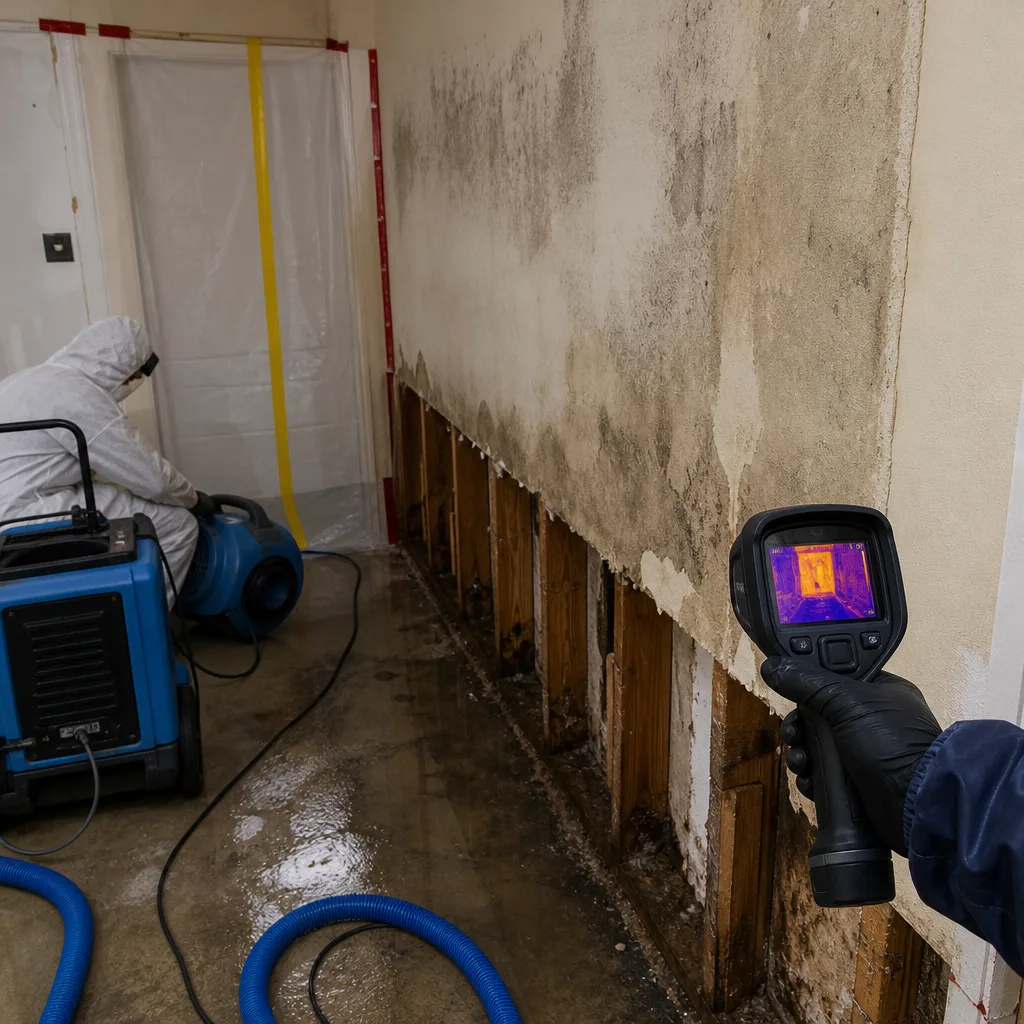 Before
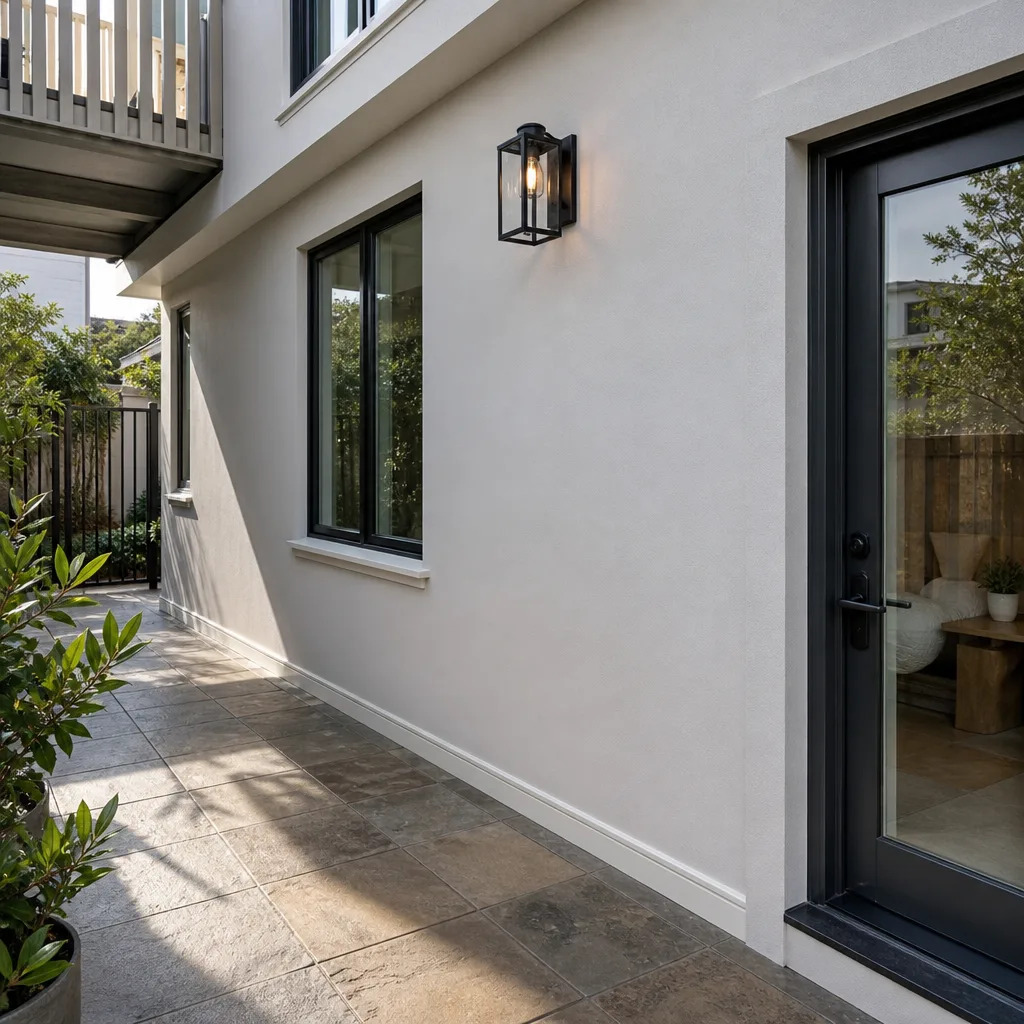 After
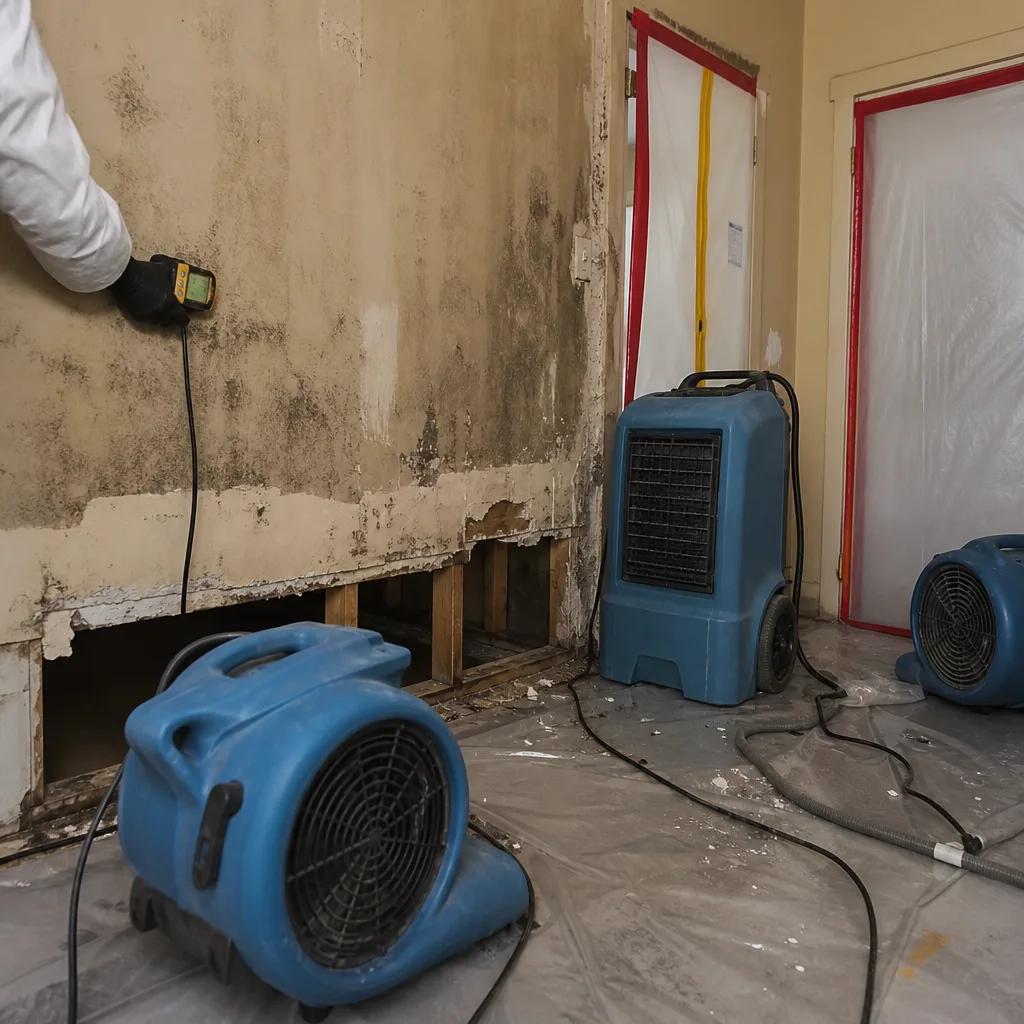 Before
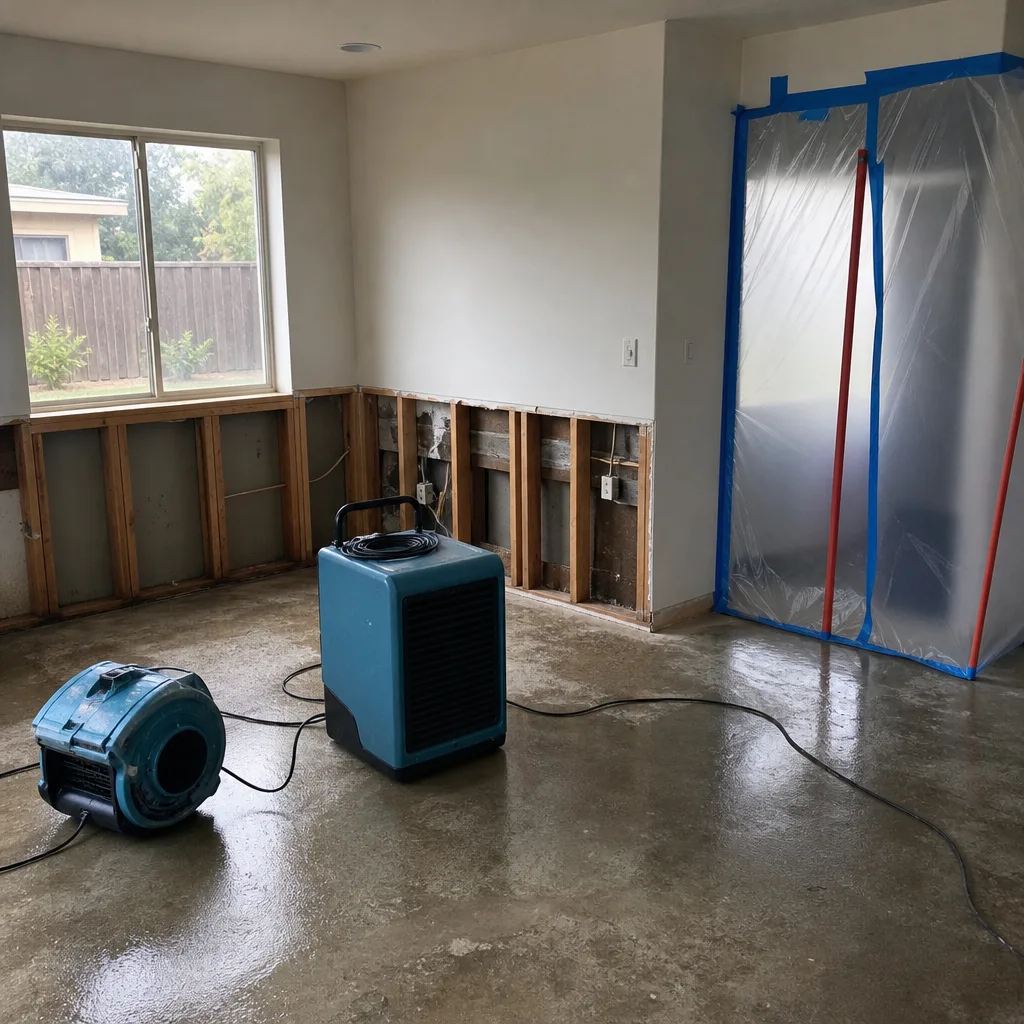 After
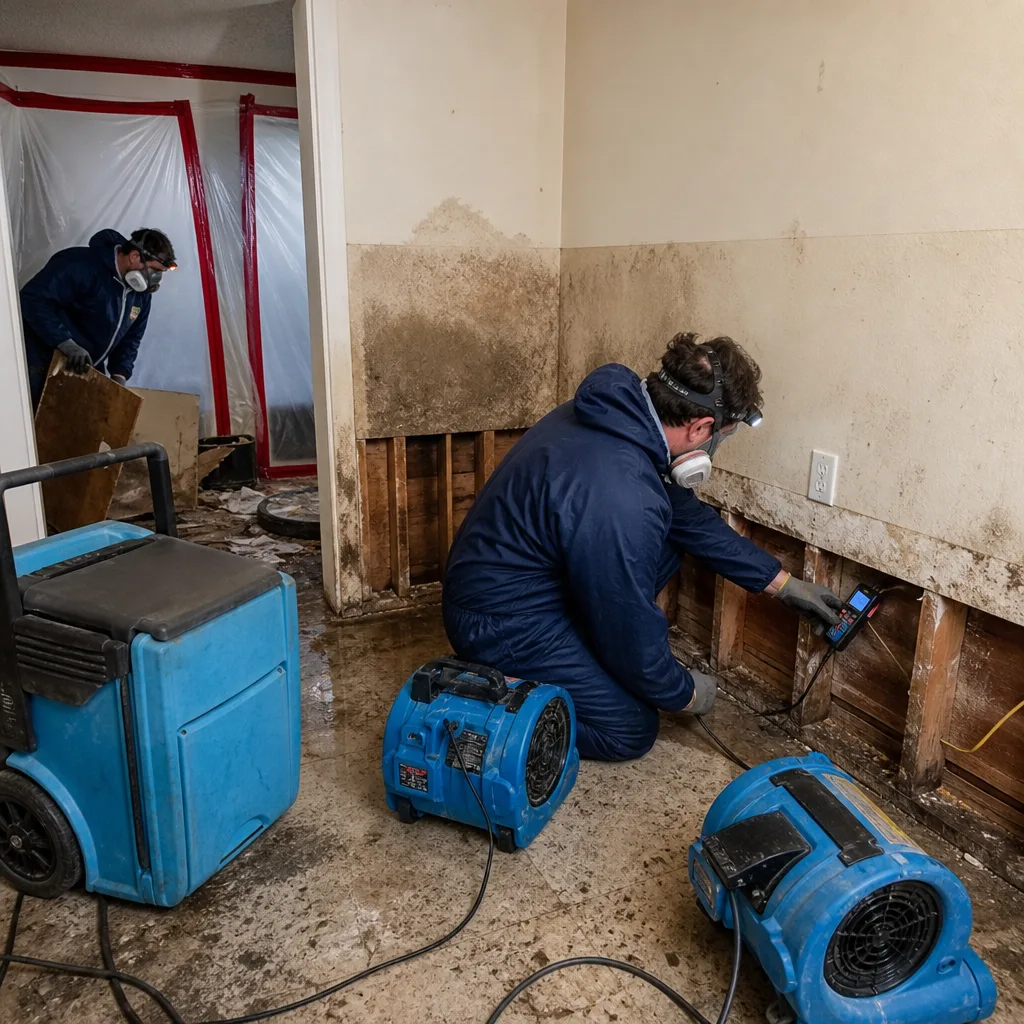 Before
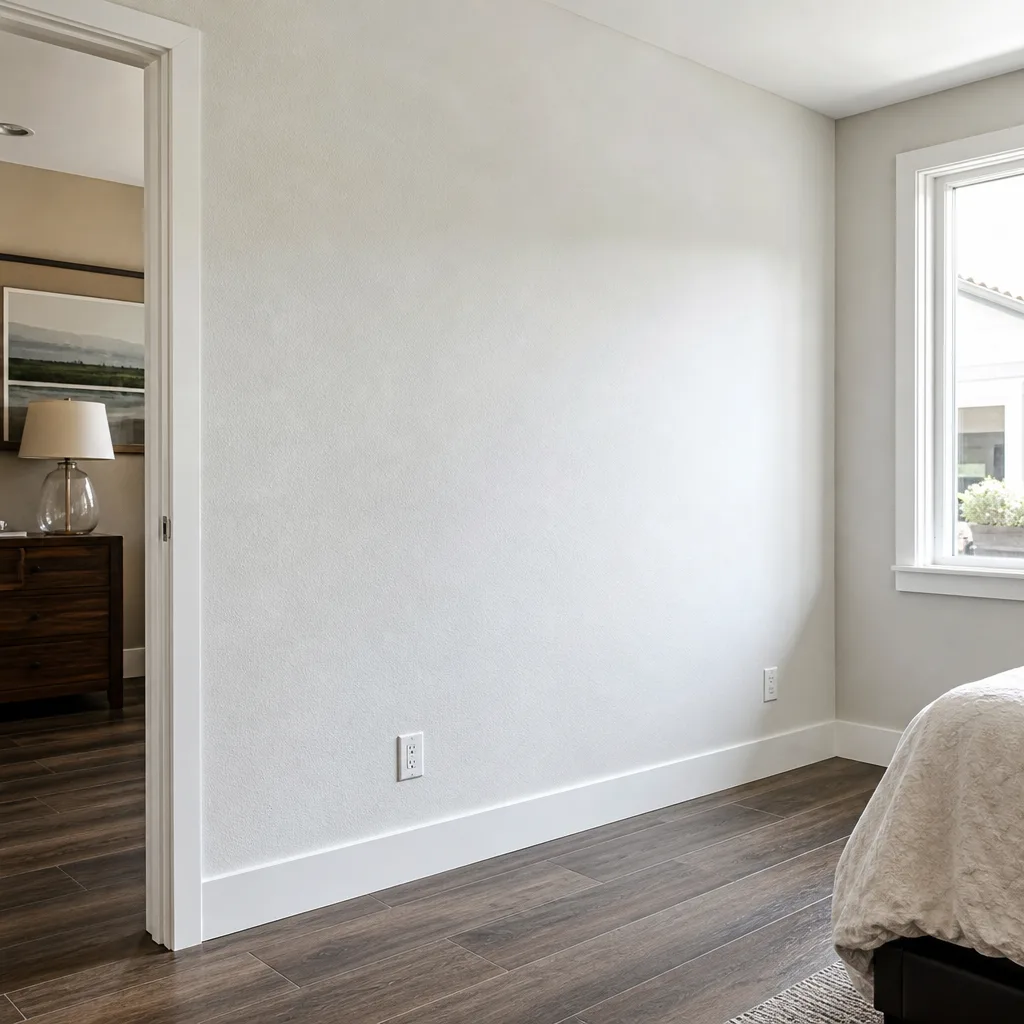 After