Last updated October 30, 2026
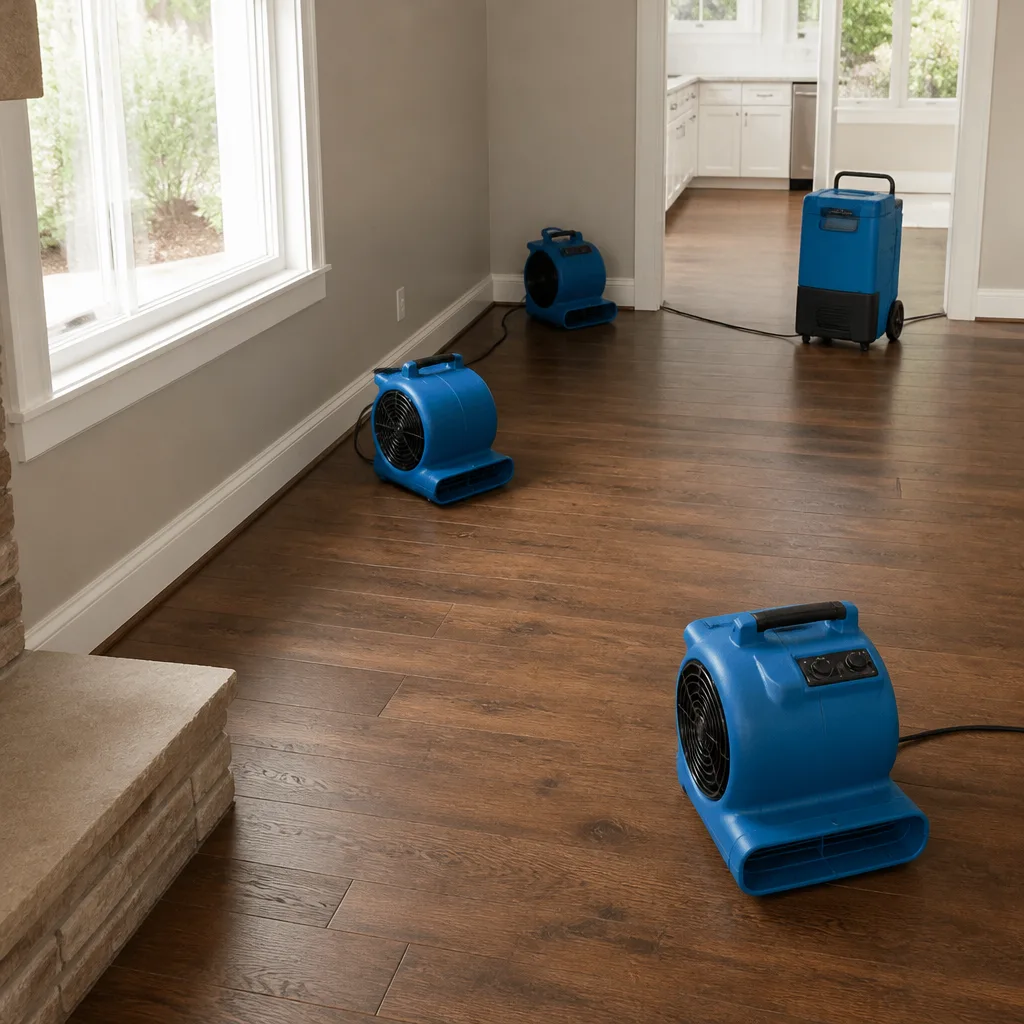 Water damage drying
 Fire & smoke cleanup
 Mold remediation
 Storm response
 Sewage cleanup
 Reconstruction
Free visual inspection and a written scope of work before any mitigation begins - photos, moisture readings, and drying logs go in your claim file
The scope we write is the scope we bill. Anything new gets shown to you, in writing, before we touch it.
Get your free estimateChoosing the Right Damage Restoration Brand: A Buyer’s Guide for Newport Beach
Here’s a fact most Newport Beach homeowners don’t know until it’s too late: the restoration company logo on the side of a truck tells you almost nothing about the person holding the moisture meter. National franchise brands dominate search results in coastal Orange County, and their marketing is polished. But the IICRC logo on a franchise website is a corporate-level credential. It does not mean the individual technician assigned to your Laguna Heights condo or Balboa Island property holds a WRT (Water Restoration Technician) or ASD (Applied Structural Drying) certification. In California, there is no mechanism that requires franchise operators to maintain the same certification level as their parent brand. This guide and our Complete Guide to Damage Restoration in Newport Beach give you a framework for evaluating restoration companies in Newport Beach that looks past logos, truck wraps, and Google ad spend, straight to the credentials and equipment that determine whether your home actually dries correctly.
Restoration work we handle
Quick Answer
The right damage restoration brand for a Newport Beach home is one where the individual technician, not just the company, holds IICRC certifications you can verify by name on the IICRC registry, and where the firm runs professional-grade drying equipment from brands like Dri-Eaz, Phoenix, or Injectidry. Ask for credentials by technician name, ask about their dehumidifier fleet by brand and capacity, and request a sample scope of work before signing anything.
Table of Contents
- How to Verify Individual Technician Credentials (The Step Most People Skip)
- The Equipment Inventory Test: Questions a Legitimate Firm Answers Without Hesitation
- Franchise vs. Independent Specialist in Newport Beach: Trade-Offs That Matter
- How to Read Google Reviews for Restoration Companies Without Getting Fooled
- The Scope-of-Work Test: What Documentation Reveals About a Restoration Firm
- Newport Beach-Specific Factors: Coastal Climate, Construction Types, and Code
- Insurance Coordination: What Separates a Credentialed Firm from a Hustle
- Common Mistakes to Avoid
- When to Call a Professional
- Frequently Asked Questions
- The Bottom Line
How to Verify Individual Technician Credentials (The Step Most People Skip)
When a restoration company says they’re “IICRC certified,” the natural assumption is that the person walking into your home holds the certification. In our experience in Newport Beach, that assumption fails more often than it holds. The IICRC (Institute of Inspection, Cleaning and Restoration Certification) certifies individuals, not companies. A franchise can market the parent brand’s credentials while staffing local crews with uncertified laborers. The franchise agreement does not require individual franchise employees to be certified.
Here is the verification process we recommend to every homeowner evaluating a water damage restoration company in Newport Beach:
- Ask for the full name of the technician who will lead your job. Not the company name. Not the franchise brand. The individual’s name.
- Go to the IICRC global locator at iicrc.org and search by that name. The registry lists certified individuals with their certification categories and expiration dates.
- Confirm the certification category matches your loss. WRT (Water Restoration Technician) is the baseline for water damage. ASD (Applied Structural Drying) is the advanced credential for drying structures. AMRT (Applied Microbial Remediation Technician) is the relevant credential for mold. A technician with only WRT certification should not be leading a mold remediation project in Newport Beach.
- Ask whether the technician will be on-site throughout the project or only at intake. Some companies send a certified estimator and then dispatch an uncertified crew for the actual work.
This single step filters out the majority of underqualified responders in the Orange County market. It takes five minutes. It is the difference between a credentialed drying process and a guy with a fan and a wet-vac who learned on YouTube.
The Equipment Inventory Test: Questions a Legitimate Firm Answers Without Hesitation
Restoration drying is not magic. It is applied physics. The equipment that removes moisture from air and structural materials has measurable specifications: dehumidifier capacity in pints per day, air mover CFM, and the configuration logic that determines placement. A firm that runs professional equipment can tell you exactly what they’re deploying and why. A firm that says “we use professional equipment” without specifics is likely renting big-box units or running underpowered residential gear.
When evaluating a restoration company in Newport Beach, ask these questions:
- What dehumidifier brands do you run, and what is the rated capacity of the units you’d deploy on my job? Professional brands include Dri-Eaz and Phoenix, which are specified by commercial restoration engineers. A serious answer includes a brand name and a number, like “Dri-Eaz LGR 3500i, 130 pints per day.” A vague answer is a red flag.
- How many air movers would you estimate for a loss of my square footage? There is a formula for this. The answer should reference cubic feet of affected space and the number of air changes per hour, not just “enough.”
- Do you run Injectidry or similar cavity-drying systems? Injectidry technology dries inside wall cavities and under subfloors without cutting open every affected surface. It is a specialized capability that most residential contractors in Orange County do not have. We run it at Guild Water Damage because it preserves more of the home and tears out less, which reduces repair scope after drying. If a company has never heard of cavity drying, they are behind the curve.
- How many dehumidifiers do you keep in inventory right now? A firm with four units total cannot handle a 3,000-square-foot coastal home with water migration across multiple rooms. Newport Beach losses in areas like Corona del Mar or Newport Coast often involve multi-level structures where water travels down through flooring systems. Equipment capacity matters.
The equipment conversation also reveals how the company thinks. A firm that can explain why they’re placing a dehumidifier in a hallway versus a bedroom is running a psychrometric process. A firm that cannot explain placement is guessing. Guessing in a Newport Beach home with stucco exterior walls and coastal humidity means secondary damage: warped hardwood, mold in wall cavities, and a bill that grows while you wait.
Franchise vs. Independent Specialist in Newport Beach: Trade-Offs That Matter
Newport Beach homeowners face a genuine choice between national franchise restoration brands and independent local specialists. Both models have real strengths. The decision should be based on what matters for your specific loss, not brand familiarity.
Franchise Benefits
- Standardized process documentation. Franchises typically have corporate manuals, standard operating procedures, and consistent reporting templates. For insurance adjusters, familiar documentation formats can simplify the claims process.
- National account relationships. Some franchises have pre-negotiated relationships with major insurance carriers, which can streamline approvals.
- Brand recognition. When you call a franchise, you know what you’re getting at the corporate level, because the brand has defined the process.
Franchise Weaknesses in the Newport Beach Market
- Local execution varies wildly. The franchise license is a business arrangement. The quality of the crew dispatched to your Corona del Mar property depends entirely on the local franchisee’s hiring and training standards.
- Technician certification is not guaranteed. As covered above, the corporate IICRC credential does not transfer to the individual technician.
- Corporate pricing models. Franchise overhead, royalty fees, and marketing costs are built into the price. You pay for the national ad campaign whether or not it benefited you.
Independent Specialist Benefits
- Owner-operated accountability. When the company owner is directly accountable for the work in your home, the incentive structure changes. Reputation is local and personal.
- Non-corporate pricing. Independent specialists in Orange County typically operate with less overhead than franchises, which means the same equipment and labor often costs less.
- Direct credential verification. Independent firms that hold IICRC certification, RIA membership, and IFA affiliation are making a deliberate investment in professional standards. At Guild Water Damage, our IICRC-certified process, RIA membership, and IFA affiliation represent three layers of professional accountability that most local restoration companies cannot claim.
The right choice for a Newport Beach homeowner is not “franchise or independent” as a blanket rule. It is “which specific company, under either model, can demonstrate individual technician credentials and professional-grade equipment before I sign.” That question cuts through the marketing noise.
How to Read Google Reviews for Restoration Companies Without Getting Fooled
Google reviews for restoration companies in Newport Beach are more gamed than almost any other home service category. The stakes are high, the transaction volume is lower than plumbing or HVAC, and the emotional intensity of a water or fire loss makes review volume a competitive weapon. Here is how to read the review patterns with a critical eye.
Signals of Manufactured Volume
- Review velocity spikes. A steady trickle of reviews over years is normal. An avalanche of 40 reviews in one month followed by silence suggests a review-generation campaign, not organic customer satisfaction.
- Generic language. Real restoration reviews mention specifics: “the dehumidifiers ran for four days in our living room,” “they dried the wall cavity behind the kitchen cabinets without tearing out the island.” Manufactured reviews say things like “great service” and “highly recommend.” The absence of detail is the tell.
- No mention of the loss type or timeline. A genuine post-loss review includes context: what happened, how long drying took, what the restoration process looked like. Vague praise without a loss narrative is suspicious.
Signals of Genuine Credibility
- Reviewers describe the documentation process. When a homeowner mentions the scope of work, the drying log, or the photo documentation provided to their insurer, that is a sign the company ran a professional process. Those details cannot be faked convincingly.
- Reviews from Newport Beach neighborhoods. Mentions of specific areas like Balboa Peninsula, Lido Isle, or Newport Heights signal local work, not a review farm. Look for reviews that reference actual Newport Beach locations.
- Responses from the company owner. When the owner responds to negative reviews with specifics rather than defensive boilerplate, that reveals how the company handles problems. Read the owner’s responses before trusting the five-star average.
- Mid-range reviews with nuance. Four-star reviews with caveats like “took a day longer than promised but the drying was thorough” are more credible than a wall of perfect fives. Restoration work is messy. Genuine reviews acknowledge the mess.
One more point that applies specifically to fire damage restoration in Newport Beach: look for review mentions of content cleaning and pack-out procedures. Fire losses involve soot that travels through the entire structure, not just the room where the fire started. Reviews that mention the content restoration process indicate a full-scope firm, not a smoke-and-paint contractor.
The Scope-of-Work Test: What Documentation Reveals About a Restoration Firm
The scope of work—detailed in our Damage Restoration Cost Breakdown: The Newport Beach Homeowner’s Reference for 2026—is the document that defines what will be done, how it will be done, and what it will cost. It is the single most revealing piece of paper in the restoration process. A professional scope reads like a technical specification. A weak scope reads like a sales estimate. Before you hire any restoration company in Newport Beach, ask to see a sample scope from a comparable loss in the area.
Here is what to look for, and why each element matters:
- Psychrometric data. A professional scope for water damage includes measured conditions: temperature, relative humidity, and specific humidity (grains per pound) in the affected area. These readings establish the drying goal and the basis for the equipment plan. If the scope contains no psychrometric measurements, the firm is not running a documented drying process. They are guessing, and the Guild standard we operate by at Guild Water Damage starts with measurement, not assumptions.
- Line-item equipment specifications. The scope should list the number of dehumidifiers, air movers, and specialty equipment (like Injectidry panels) with brand and model. “Drying equipment as needed” is not a scope. It is a blank check.
- Moisture mapping summary. A serious scope references a moisture map showing affected materials and their moisture content readings, with drying goals for each. This is the difference between drying what is wet and drying what tests wet.
- Demolition rationale. If the scope calls for removing drywall or flooring, it should explain why: the moisture content reading, the material type, the drying time constraint. Non-invasive drying via cavity systems should be considered before demolition is specified. The document reveals whether the firm defaults to “tear it out” or defaults to “preserve first.”
- Documented protocols. A professional scope references the standard it follows: IICRC S500 for water damage, S520 for mold remediation. These are codified industry standards, not suggestions. If the scope does not reference a protocol standard, the process is being invented on the job site.
The structure of the scope tells you more than any sales conversation. It reveals whether the company runs a documented, repeatable process or a technician’s intuition. In Newport Beach, where multi-million dollar coastal properties are the norm, the cost of intuition is measured in six figures.
Newport Beach-Specific Factors: Coastal Climate, Construction Types, and Code
Newport Beach presents restoration challenges that inland Orange County cities do not. The marine layer that rolls in from the Pacific keeps relative humidity elevated year-round, which slows natural drying and increases the risk of secondary mold growth in the 48 to 72 hours after water intrusion. A restoration plan for a Newport Beach home must account for this baseline humidity in the drying calculations. Drying goals that work in Irvine or Tustin may be insufficient in a Lido Isle beach cottage.
Construction types vary widely across Newport Beach neighborhoods. The older homes on Balboa Peninsula and in Newport Heights are often wood-frame structures with stucco exteriors and raised foundations, which respond differently to water damage than the newer concrete-and-steel construction in Newport Coast. Raised foundations allow water to migrate under the structure, where it can go unnoticed for weeks. Multi-level homes in Corona del Mar and Dover Shores present vertical water migration challenges: a second-floor supply line failure sends water down through floor systems, wall cavities, and ceiling assemblies, and each plane requires separate drying treatment.
Local code and permitting requirements also factor into restoration scopes. The City of Newport Beach has specific requirements for reconstruction work following water or fire damage, and a restoration firm that handles mitigation only will hand you off to a general contractor for the rebuild. That handoff creates coordination risk: two vendors, two schedules, two scopes. A full-spectrum firm that handles water damage, mold remediation, and restoration under one contractor eliminates that friction. When you evaluate a restoration company in Newport Beach, ask whether they can carry the project from mitigation through reconstruction or whether you’ll be managing multiple vendors on the same loss.
Coastal salt air also accelerates corrosion on exposed fasteners, electrical connections, and metal framing. A restoration professional familiar with Newport Beach properties knows to check for salt-related deterioration in addition to water damage. This is local knowledge that cannot be replicated by a call center dispatcher in another state.
Why This Matters for Your Decision
Every point in this section reinforces the same conclusion: the restoration company you choose should know Newport Beach, not just know restoration. The firm should be able to discuss marine-layer humidity, raised foundations, and vertical water migration in the same conversation where they discuss dehumidifier capacity and drying goals. That combination of local context and technical depth is the difference between a company that works in Newport Beach and a company that understands Newport Beach.
Insurance Coordination: What Separates a Credentialed Firm from a Hustle
Nearly every major restoration project in Newport Beach involves an insurance claim. The homeowner is not just hiring a restoration company. They are entering a three-party negotiation: homeowner, restoration firm, and insurance adjuster. How the restoration company handles this relationship tells you everything about their professionalism.
A credentialed firm approaches insurance coordination the way a surgeon approaches the operating room: documentation first, communication throughout, no surprises. Here is what that looks like in practice:
- Photo documentation before, during, and after. Every affected area is photographed before demolition or drying begins. The photos are timestamped and tied to the moisture map. This creates an auditable record for the adjuster.
- Direct adjuster communication. The restoration firm speaks directly with the insurance adjuster, providing technical explanation for the scope and answering questions about drying rationale. You, the homeowner, should not be the go-between translating technical details between your restoration company and your insurance company.
- A written scope agreed before work starts. This protects you from the all-too-common scenario where restoration work begins on a verbal estimate and the final invoice bears no resemblance to what anyone discussed. The scope is your contract. Insist on it.
- Direct insurance billing where applicable. Some restoration work can be billed directly to the carrier, reducing your out-of-pocket exposure. A firm with experience in the Newport Beach market knows how to structure this.
The counterpoint is the restoration company that treats insurance as an afterthought: they start demolition immediately without documentation, they communicate only through you, and they present a final invoice with line items no one agreed to. This is the model that gives the restoration industry its reputation problem. When you evaluate a company, ask them to walk you through a recent insurance claim in Newport Beach from first response to final payment. A professional can do this in five minutes with a sample file. A hustle cannot.
Common Mistakes to Avoid
- Hiring based on the first Google result without credential verification. The top-ranked restoration company in Newport Beach search results is not necessarily the best company. It is the company with the best SEO budget. Spend the five minutes verifying individual technician credentials on the IICRC registry.
- Accepting “we’re certified” without asking for names. Company-level certification claims are meaningless without individual technician verification. Ask for the name, look it up, then sign.
- Signing a work authorization without a written scope. In the panic of an active water leak, homeowners sign whatever is put in front of them. A work authorization without a scope is an open checkbook. Insist on the scope before the work begins.
- Choosing demolition-first companies without exploring non-invasive drying. Some restoration firms default to tearing out drywall and flooring because demolition is faster and more profitable than controlled drying. Injectidry cavity-drying preserves more of your home and reduces rebuild costs. Ask about it before agreeing to demo.
- Ignoring the marine-layer humidity factor in Newport Beach. A company that copies drying protocols from inland markets will under-dry a coastal home. The result is mold behind walls six months later. Choose a firm with specific Newport Beach experience.
- Treating all reviews as equally credible. A 4.9-star average with 200 vague reviews is less credible than a 4.6-star average with 40 detailed, loss-specific reviews. Read the reviews like a skeptic.
- Selecting separate vendors for water, mold, and fire work on the same loss. Multiple vendors mean multiple scopes, multiple schedules, and finger-pointing when something goes wrong. One credentialed contractor from mitigation through restoration is the cleaner path.
When to Call a Professional
Certain situations demand professional restoration immediately, and waiting compounds the damage. Call a restoration professional when water has been standing for more than 24 hours in a Newport Beach home, when mold is visible on more than 10 square feet of surface, when water has migrated through flooring into wall cavities or subfloor spaces, or when any fire has produced soot beyond the room of origin. Post-fire smoke damage travels through HVAC systems and wall cavities, and DIY cleaning products can set soot permanently into painted surfaces. If you suspect water in structural cavities or mold behind walls, do not drill inspection holes yourself in an occupied home, and never disturb suspect asbestos-containing materials in pre-1980 construction, common in older Balboa Peninsula and Newport Heights homes. Guild Water Damage offers free estimates in Newport Beach – call (855) 855-9631.
Frequently Asked Questions
Individual IICRC certification, verified by technician name on the IICRC global registry, is the single most important credential because it confirms the person doing the work has demonstrated technical competence in restoration standards, not just the company’s marketing department.
Water damage restoration in Newport Beach typically ranges from $2,500 to $8,000 for moderate mitigation projects, but coastal multi-level homes with extensive water migration can exceed $20,000 when rebuild work is included. The only accurate number comes from a measured scope of work based on psychrometric data, not a phone estimate. Call (855) 855-9631 for a free assessment with a written scope.
Franchise-level IICRC certification applies to the corporate entity, not necessarily the local technician assigned to your job, and there is no California requirement that franchise operators maintain individual certification at the same level. Always verify the individual technician’s name on the IICRC registry regardless of brand.
Injectidry is a cavity-drying system that forces controlled airflow inside wall cavities and under subfloors, drying structural spaces without cutting open every affected surface, which reduces demolition, preserves original materials, and lowers rebuild costs after water damage.
Reputable restoration firms in Newport Beach prioritize emergency response because every hour of standing water increases secondary damage, but response time varies by company workload and your location within the city. Always confirm the estimated arrival window when you call, and note that coastal areas like Balboa Peninsula may require additional transit time. Call (855) 855-9631 to check current availability.
Yes, insurance covers restoration work based on the documented scope and necessity of the work, not on whether the restoration company is a franchise or an independent, so the critical factor is the quality of documentation your restoration firm provides to your adjuster, including photo evidence, moisture readings, and a professional scope of work.
The Bottom Line
Choosing a damage restoration brand in Newport Beach comes down to verification (explore more guides & resources for additional help). Verify the individual technician’s IICRC credentials by name. Verify the equipment by brand and capacity. Verify the process by requesting a sample scope from a comparable loss. The franchise logo, the polished website, and the five-star review average are marketing outputs, not quality signals. A restoration firm that can show you individual certifications, name their dehumidifier fleet with specifications, and produce a scope built on psychrometric data is a company running a documented process. That process is what protects your home, your claim, and your rebuild budget. When the marine layer rolls in and the drying clock is running, the credentialed, equipment-capable specialist is the only rational choice in Newport Beach.
Written by the team at Guild Water Damage, serving Newport Beach since 2017.
See the difference
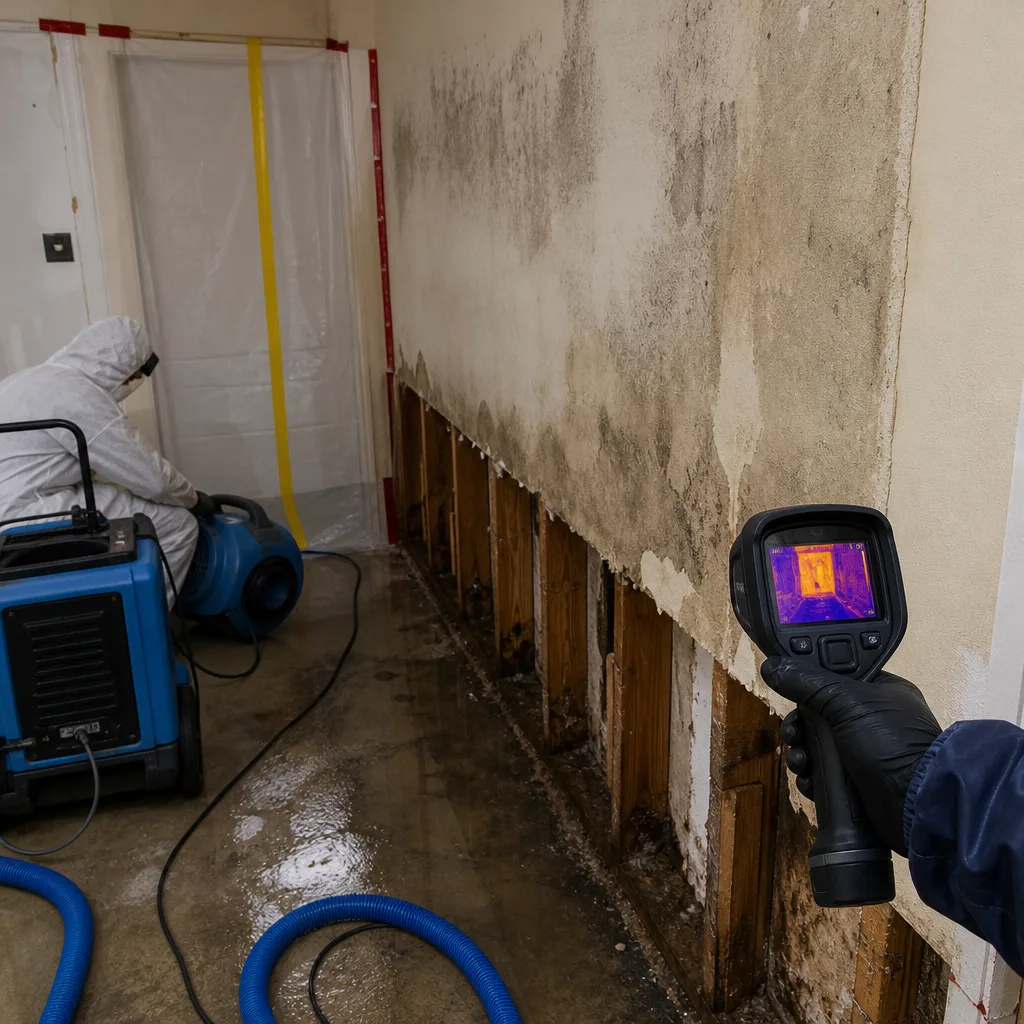 Before
 After
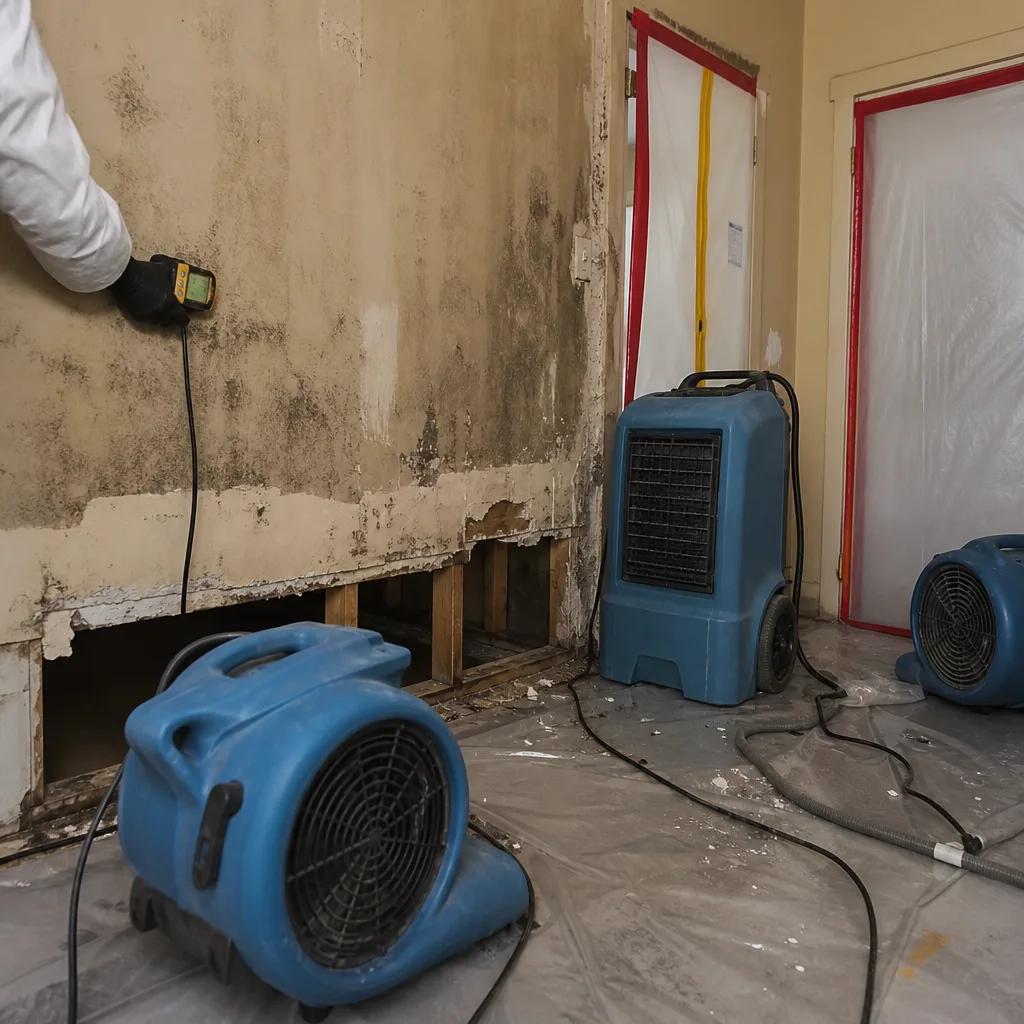 Before
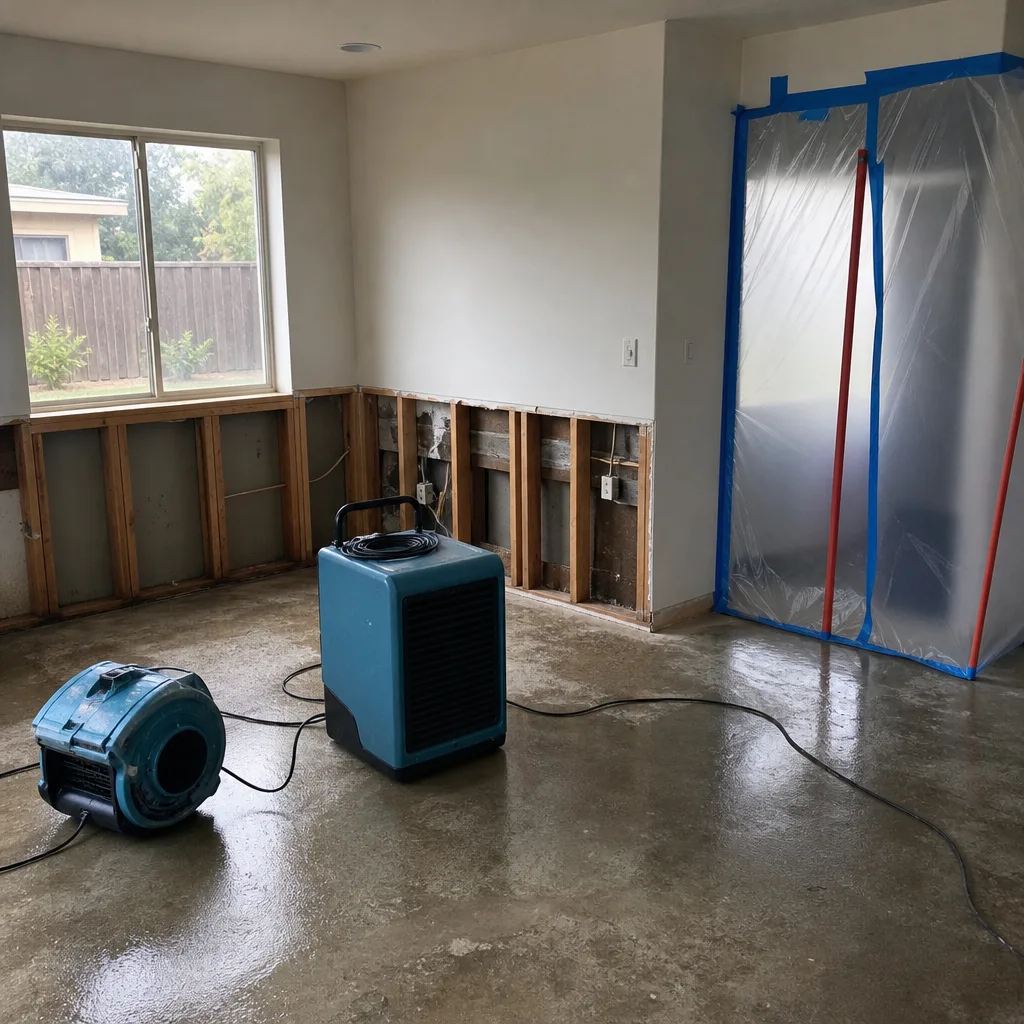 After
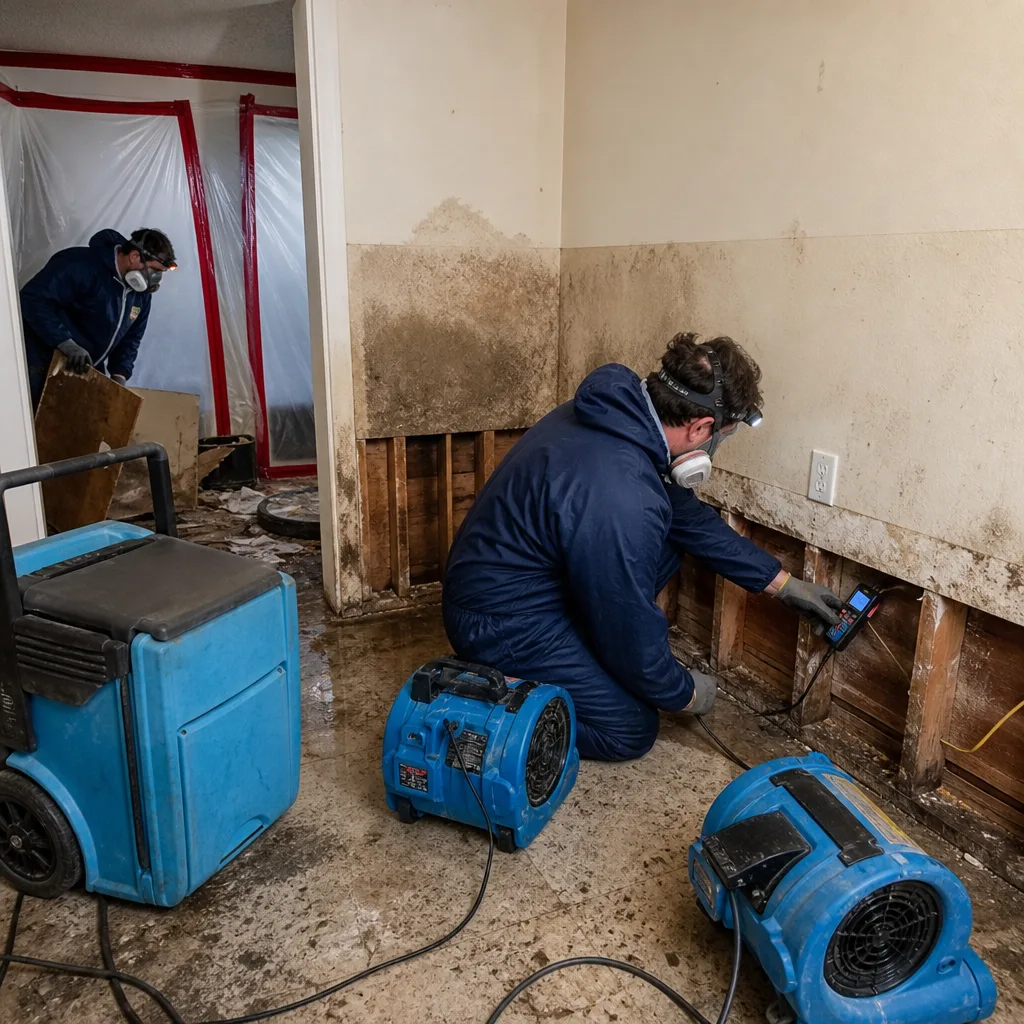 Before
 After